Rabari

Nanimarquina

2014

Rug

Description

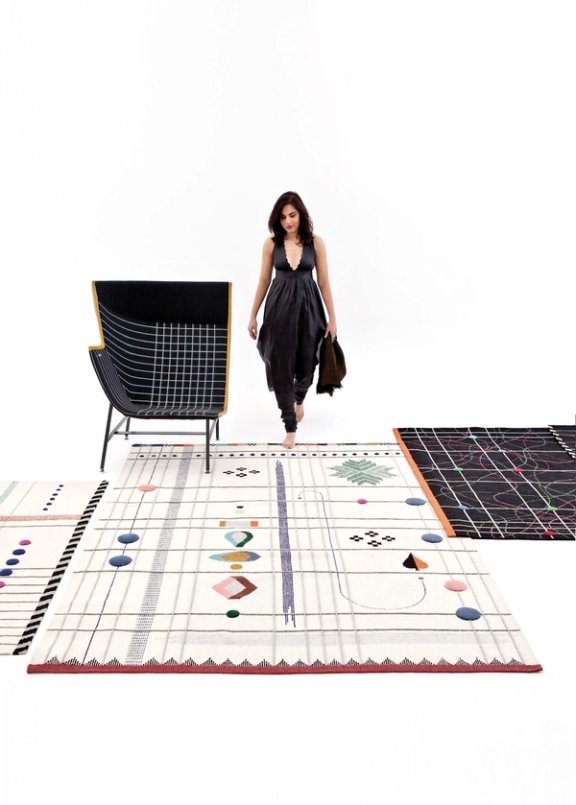
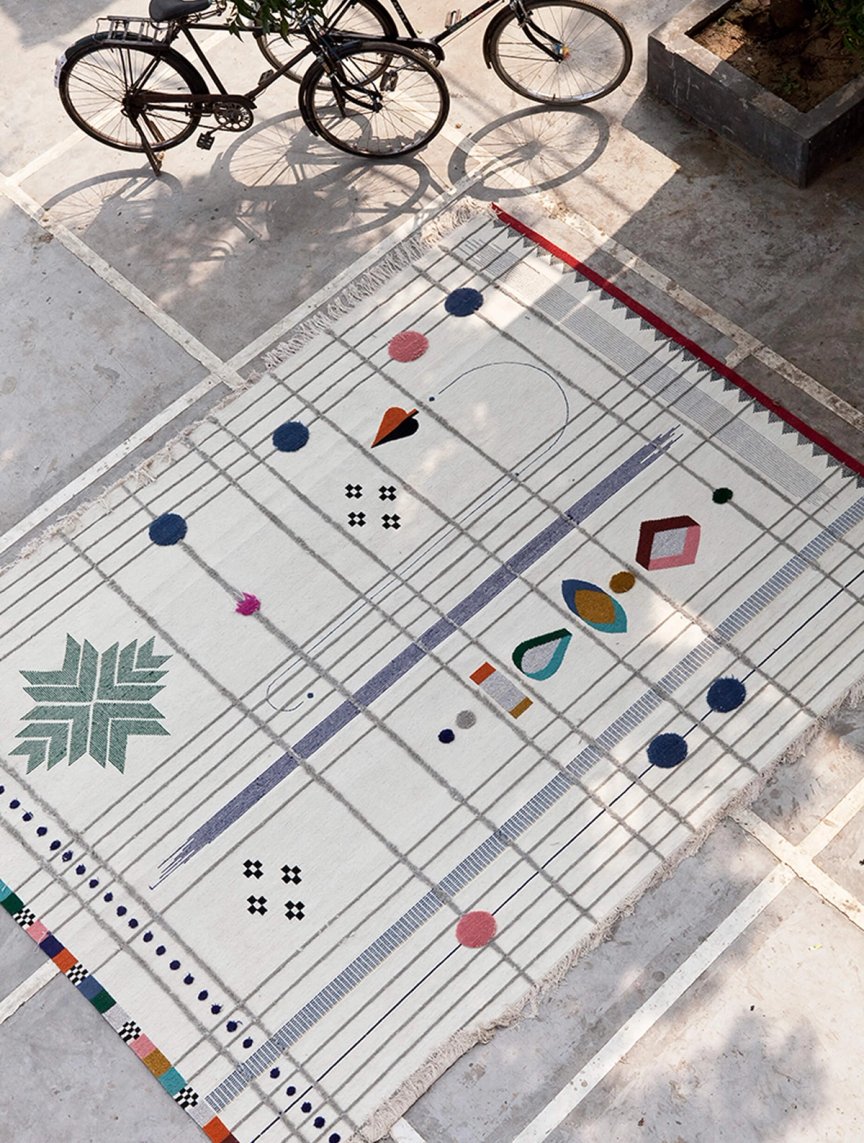
Doshi Levien created the Rabari collection for Nanimarquina as an evocation of the sensual, shimmering world of tribal embroidery from India. Nipa Doshi drew inspiration from the intricate craft of the Rabari nomadic community of Kutch, informed by memories of her aunt’s embroidery workshop in Ahmedabad, where 25 highly skilled women worked with glistening mirrors, metallic sequins, silk and cotton threads. Sitting together on rugs, surrounded by jewel-like elements scattered across the floor, their embroideries grew slowly through collaboration with Doshi.

For the Rabari rugs, Doshi Levien wanted to capture a sense of unfinished beauty – pieces that feel like studies in progress, where different techniques emerge gradually over time. The compositions reflect the spontaneity and freedom inherent in handwork: joyful, irreverent and unique.
Credits
Photos: Albert Font
 Drawing: Nipa Doshi
Rabari
The making process
(Fig 1)

The making process

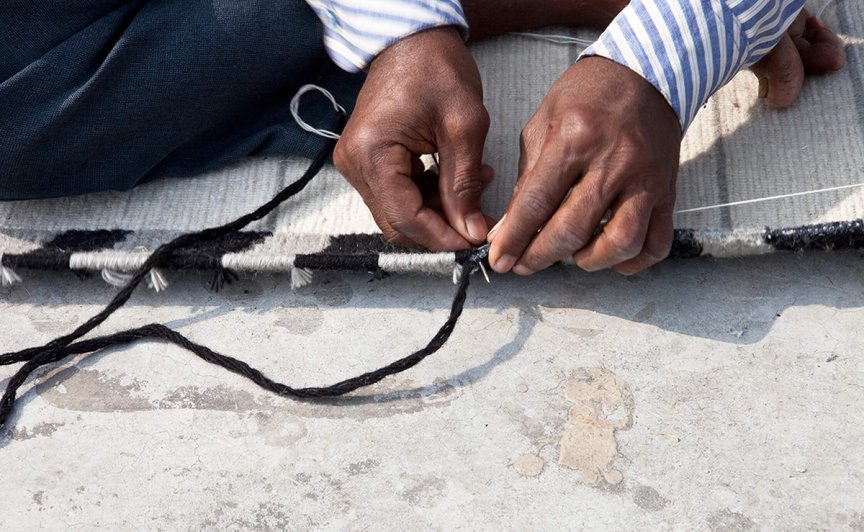
Rabari rugs are hand-woven and knotted, with the weaving itself taking up to four weeks for the larger sizes. The process begins with drawing the map while the yarns are dyed in parallel. From drawing the map and dyeing the yarns, to weaving, stretching, clipping and binding, the entire process takes around eight to ten weeks, involving multiple artisans working in harmony on the loom.
The making of Rabari
(Fig 2)

The making of Rabari

A short film created to mark the launch of Rabari, in which Nipa Doshi speaks about her approach to colour and the importance of beauty as an attitude.
Love of textiles
(Fig 3)

Love of textiles

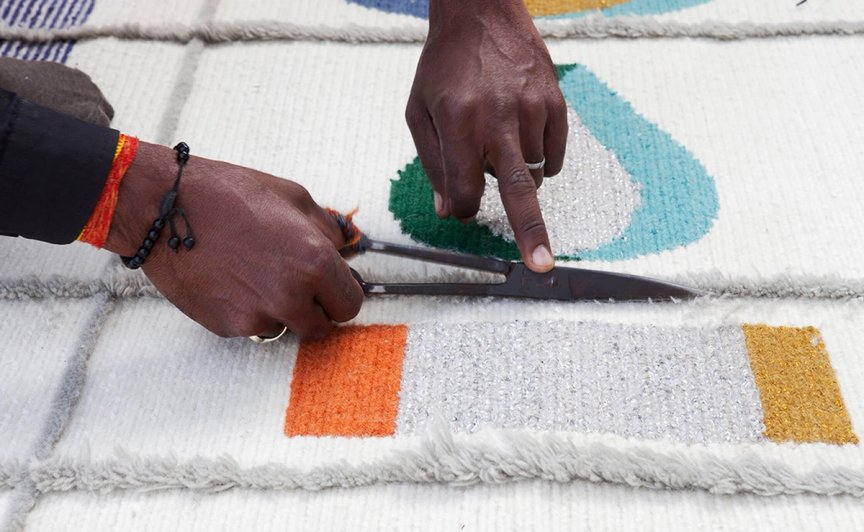
The maker’s hand skilfully cutting the pile lines on the Rabari rug. He wears a red and orange hand-spun sacred thread on his wrist.
The visual language emerges
(Fig 4)

The visual language emerges

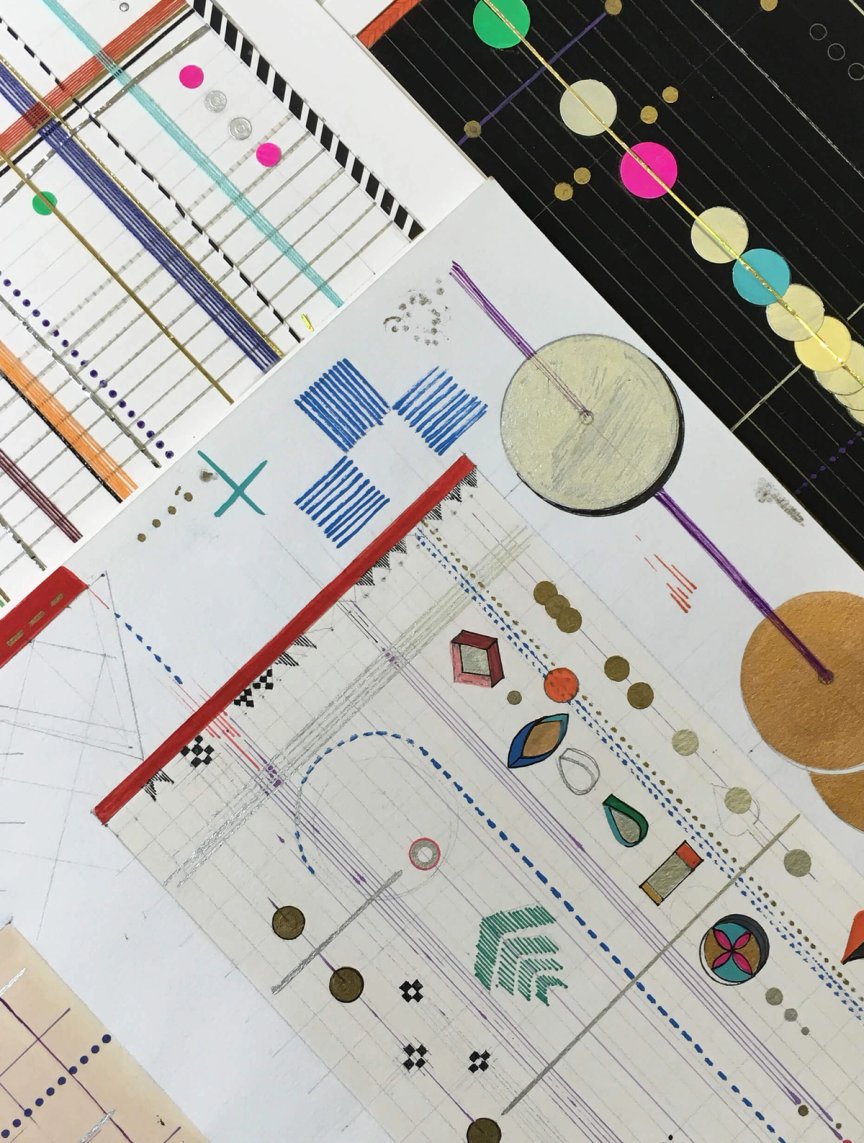
Nipa Doshi’s mixed-media paintings of the Rabari rugs for Nanimarquina, using coloured and metallic thread, gouache paints and metal foil. “Every colour is beautiful, it depends how and where you use it,” she says.
Rabari on the loom
Rabari on the loom
(Fig 5)

Rabari on the loom

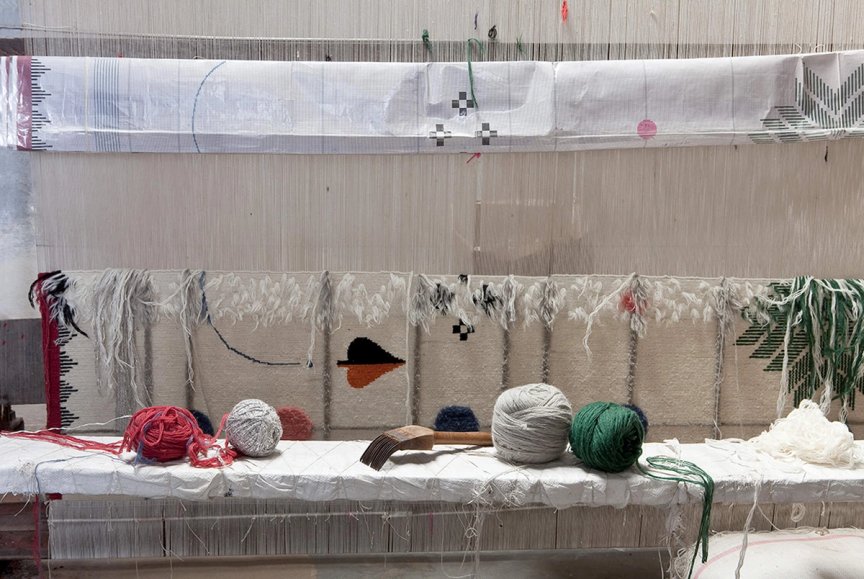
During weaving, two people usually sit at the loom together. For the largest sizes, up to three weavers can work side-by-side as Rabari rugs are woven horizontally.
Finishing the rugs
(Fig 7)

Finishing the rugs

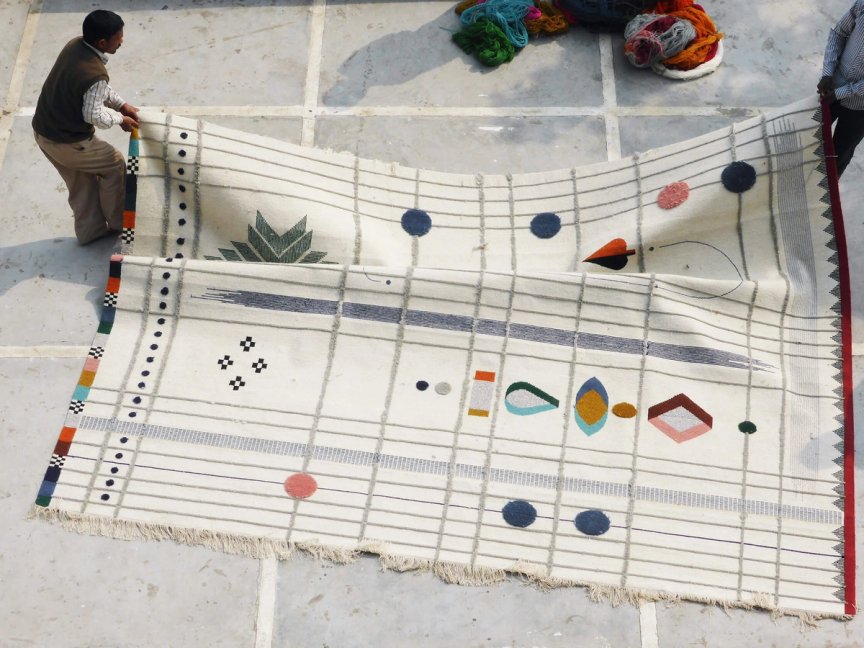
The rug is finished by clipping all the knotted parts – the dots and lines – and binding the edges, changing the binding colour for each section.