Essay
Melodic Framework
By Shanay Jhaveri
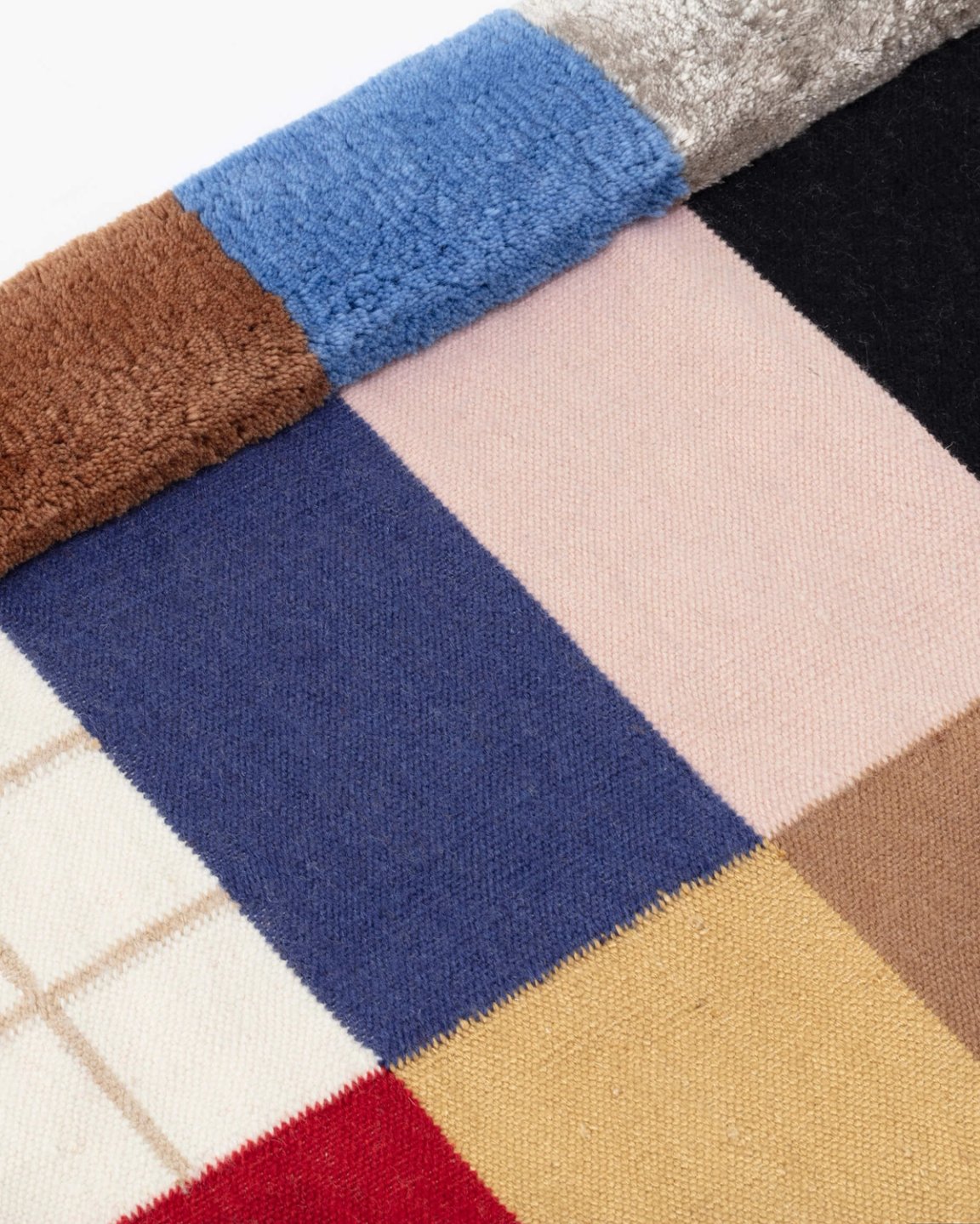
A dynamic checkerboard of reverberating modular colour sequences
Photography by Jonas Lindström
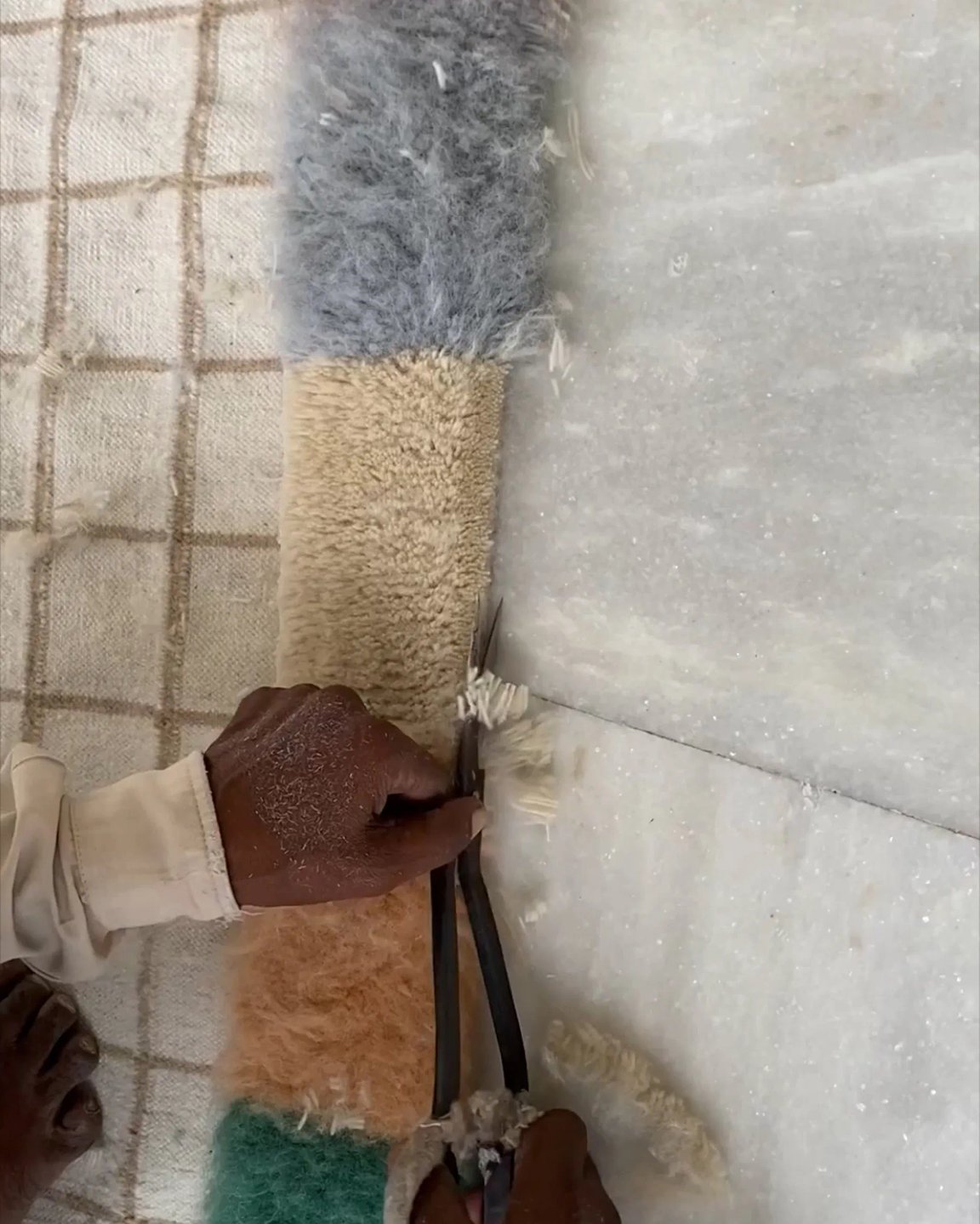
Finishing the edges of Raag
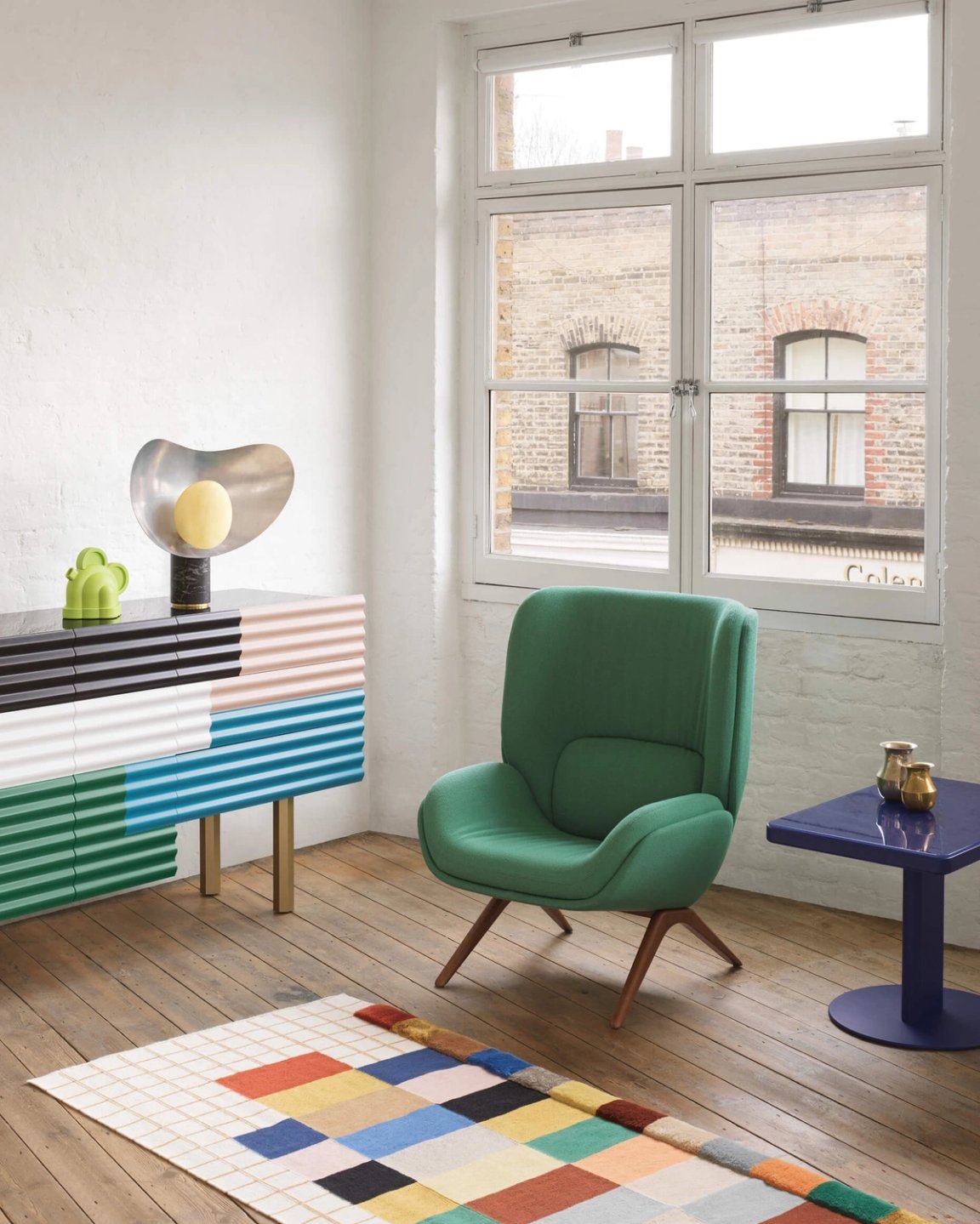
Rhythm and variation
A significant measure of Nipa Doshi and Jonathan Levien’s design practice has been built on a series of thoughtful exchanges between specific modernist vocabulary and traditional Indian artisanal techniques. Their newest collection of rugs made with CC-Tapis, Raag, is no exception.
The compositions of this group of six handwoven rugs in varying sizes evolved from Doshi’s meticulous sketches. Doshi and Levien regard drawing as a practice in itself, where they are able to experiment, allowing ideas to gestate for years before they manifest into actual pieces. For Raag, Doshi’s sketches that date back to 2022 were of slender, vertical bands of colour, assembled from the designers’ extensive Colour Library1 of bespoke colours they have mixed and developed in the studio. Doshi’s patchwork strips conjure up the vivid edges or borders typical of Indian textiles and garments, where the edge of a fabric is integral to its design and construction. The colour palette is an unusual combination of vivid and earthy tones.
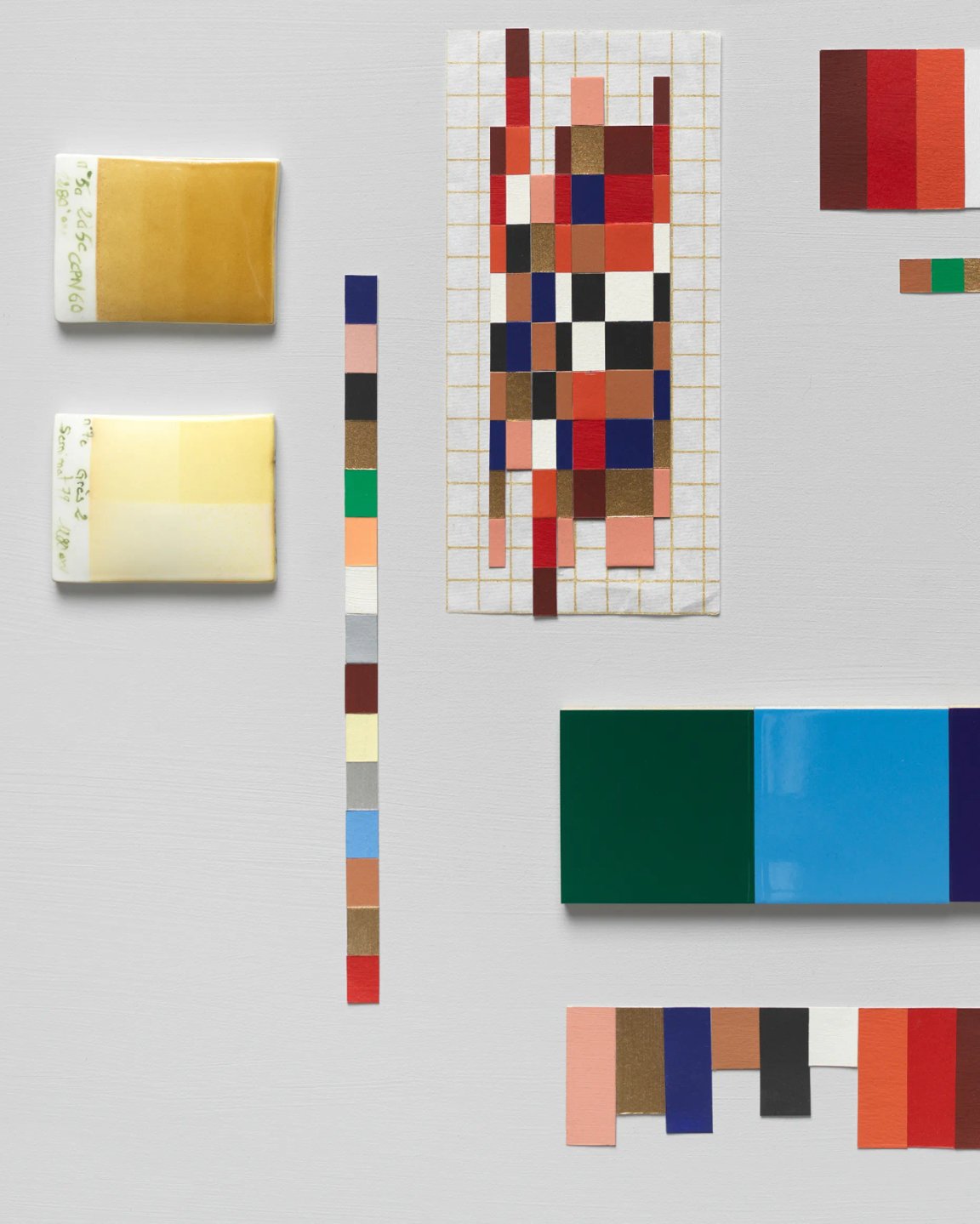
Nipa Doshi's sketches and colour composition
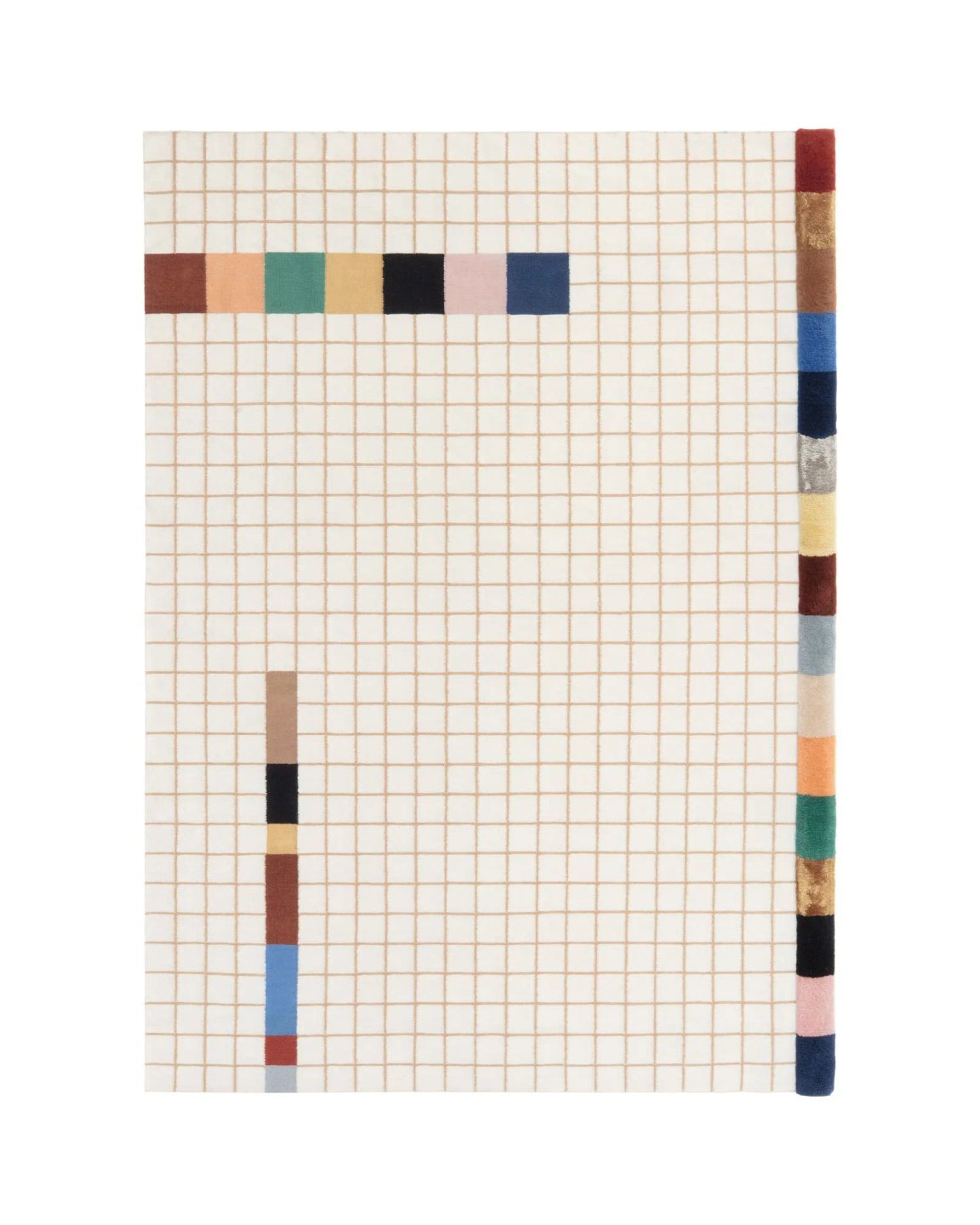
One of four designs in the Raag collection
The final compositions of the Raag rugs emerged from the playful moving around, overlaying and aligning of these bands of colour on a blank grid. The grid provided an essential foundation for Doshi and Levien within which they could improvise and determine their compositions – Doshi likening this relationship between the grid and their bands of colour to the way that the collection’s namesake raags, or melodic frameworks in Indian classical music, can be reinterpreted and elaborated by the performer while respecting the larger order of the composition2. The correspondence between the grid pattern and the structure of woven textiles themselves, where a grid is formed by the crossing of the warp and weft, has been something many modernist artists stretching back to Anni Albers and Lenore Tawney have identified and used as inspiration for their works3. Doshi Levien, by emphasising the critical importance of the grid in the creation of the abstract compositions and making it visible in the rugs themselves, situates its explorations within these lineages of modern artists. What those pioneering female modern practitioners did, and what Doshi Levien consciously builds upon, is recognising that abstraction, so central to the modernist paradigm, can be allied to particular historic weaving traditions, and by doing so challenge the hierarchies between fine art and craft.
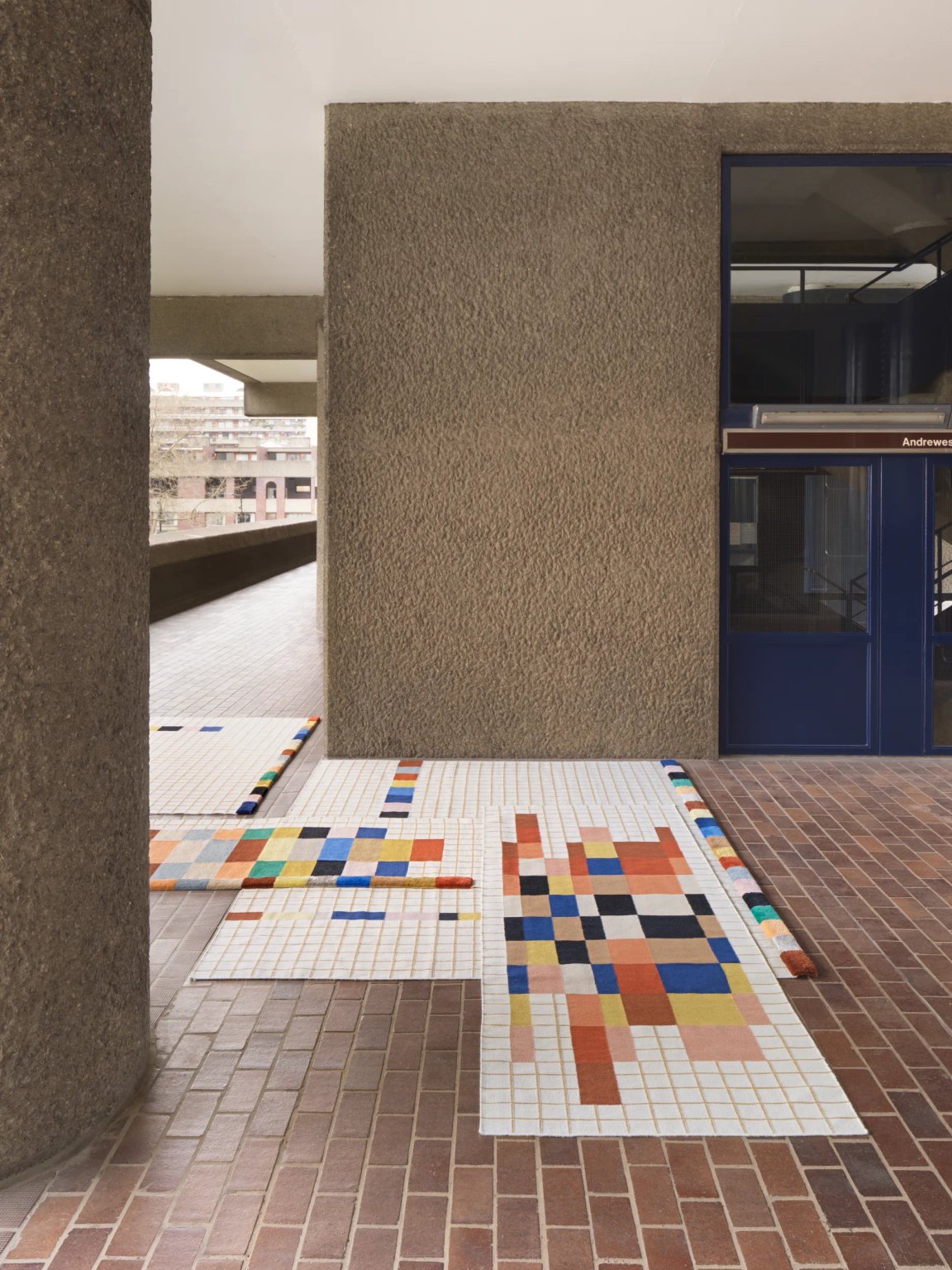
The rugs photographed in The Barbican
Woven fabrics have a storied place within Indian culture, with many modes and methods native to different parts of the country. Over a decade ago, Doshi Levien produced a series of Charpoy daybeds for Moroso, collaborating with master craftswomen in West India, creating meticulously hand-embroidered, woven and patchworked textile pieces. Every piece in the edition featured embroidered signatures of each artisan who worked on it4. Similarly, the Raag rugs have been handwoven in North India. Doshi and Levien have always acknowledged local artisans as essential collaborators in the interpretation and translation of these traditional handcrafts into contemporary design objects.
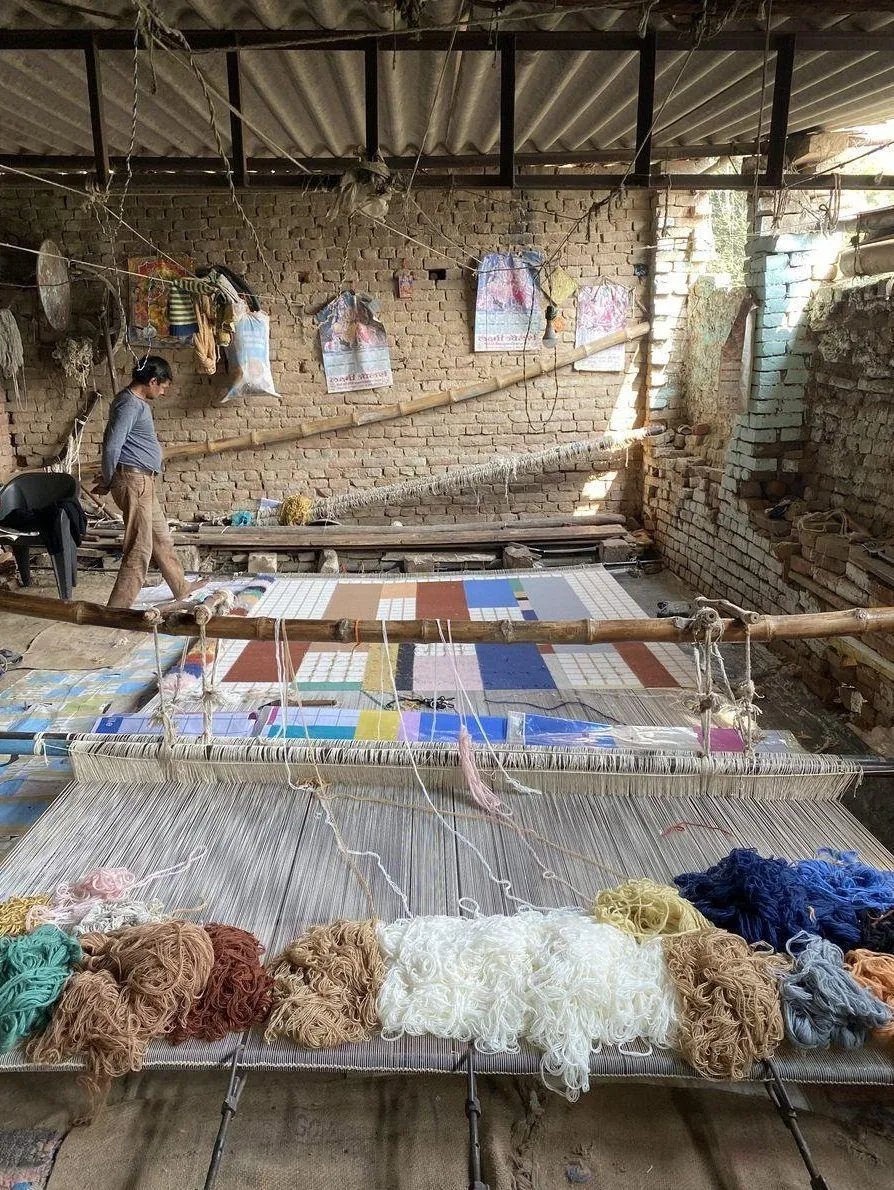
Weaving Raag rugs in North India
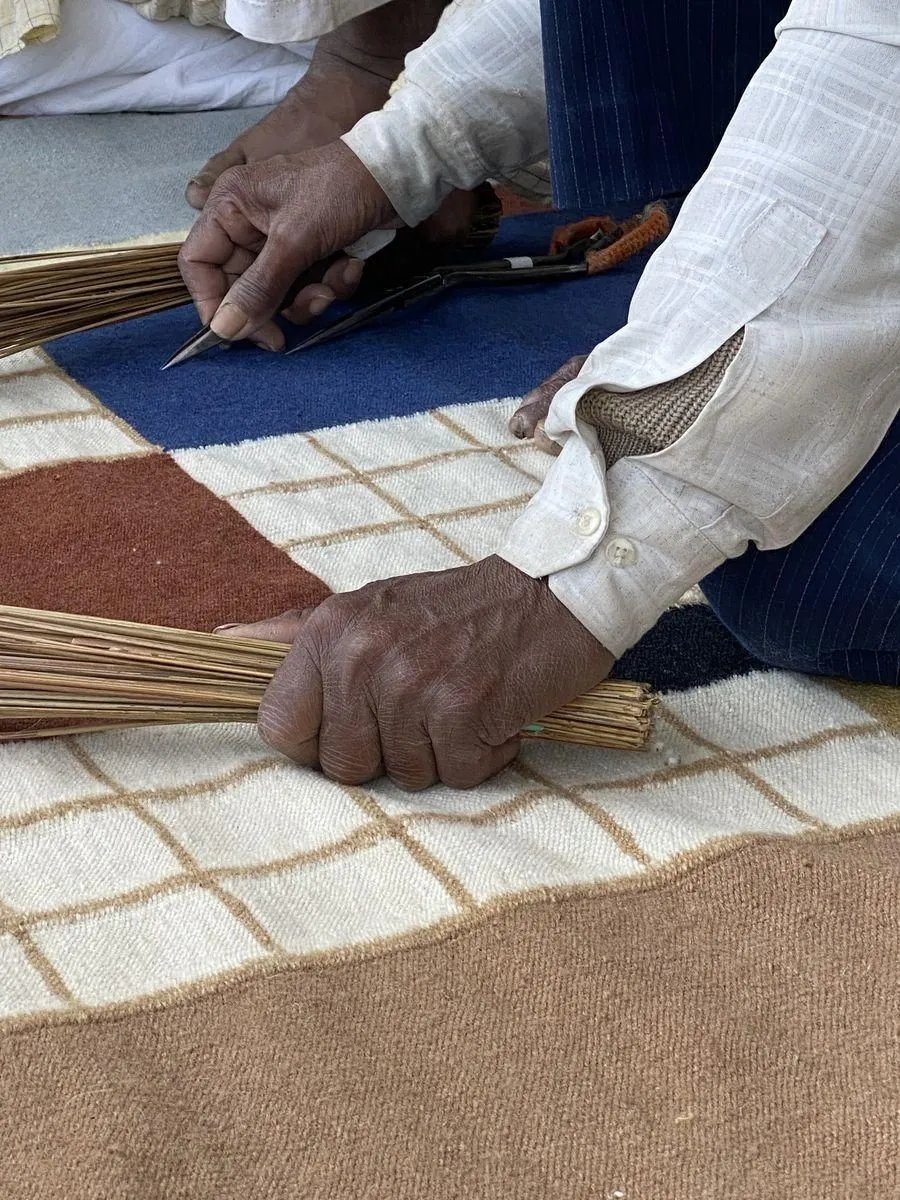
Handweaving in process
With Raag, Doshi Levien has once again demonstrated its commitment to an abstraction rooted in a modernistic aesthetic, coupled with a historic tradition of weaving and other textile techniques. The Raag rugs are shaped with a dynamic checkerboard of reverberating modular colour sequences with plentiful negative space, subverting expectations of “complete” compositions that follow the orthodoxy of symmetrical patterns. These are open compositions5, with an accent on the improvisatory, exemplifying how, with a certain restraint, those colours can be played with remarkable grace.
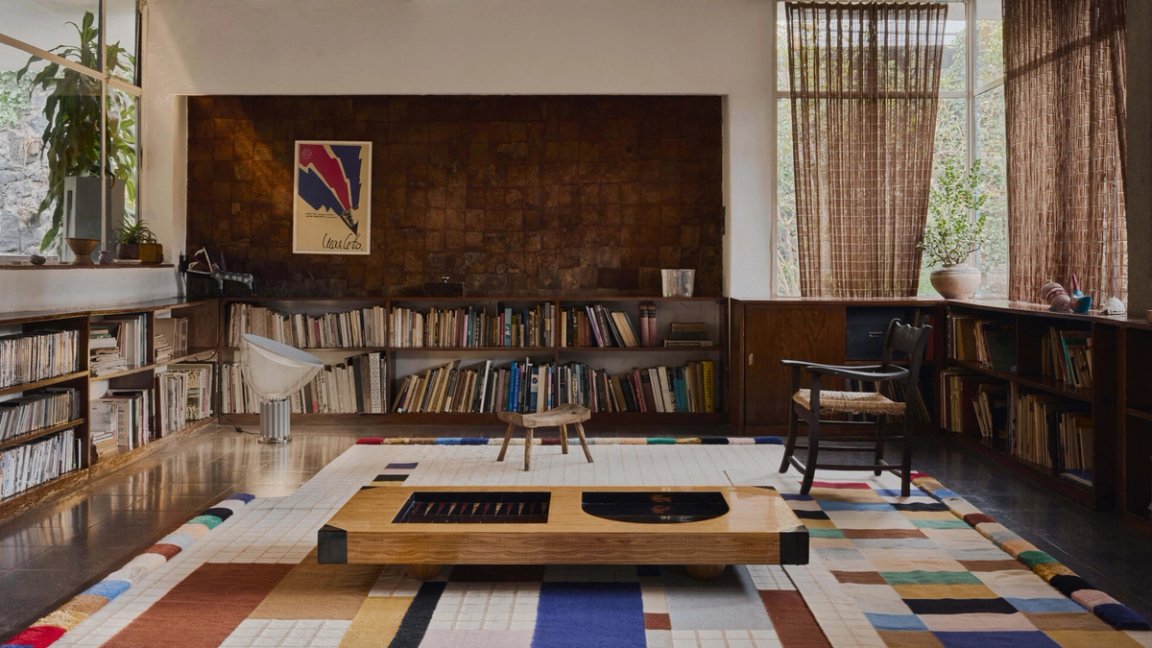
Colour compositions in context
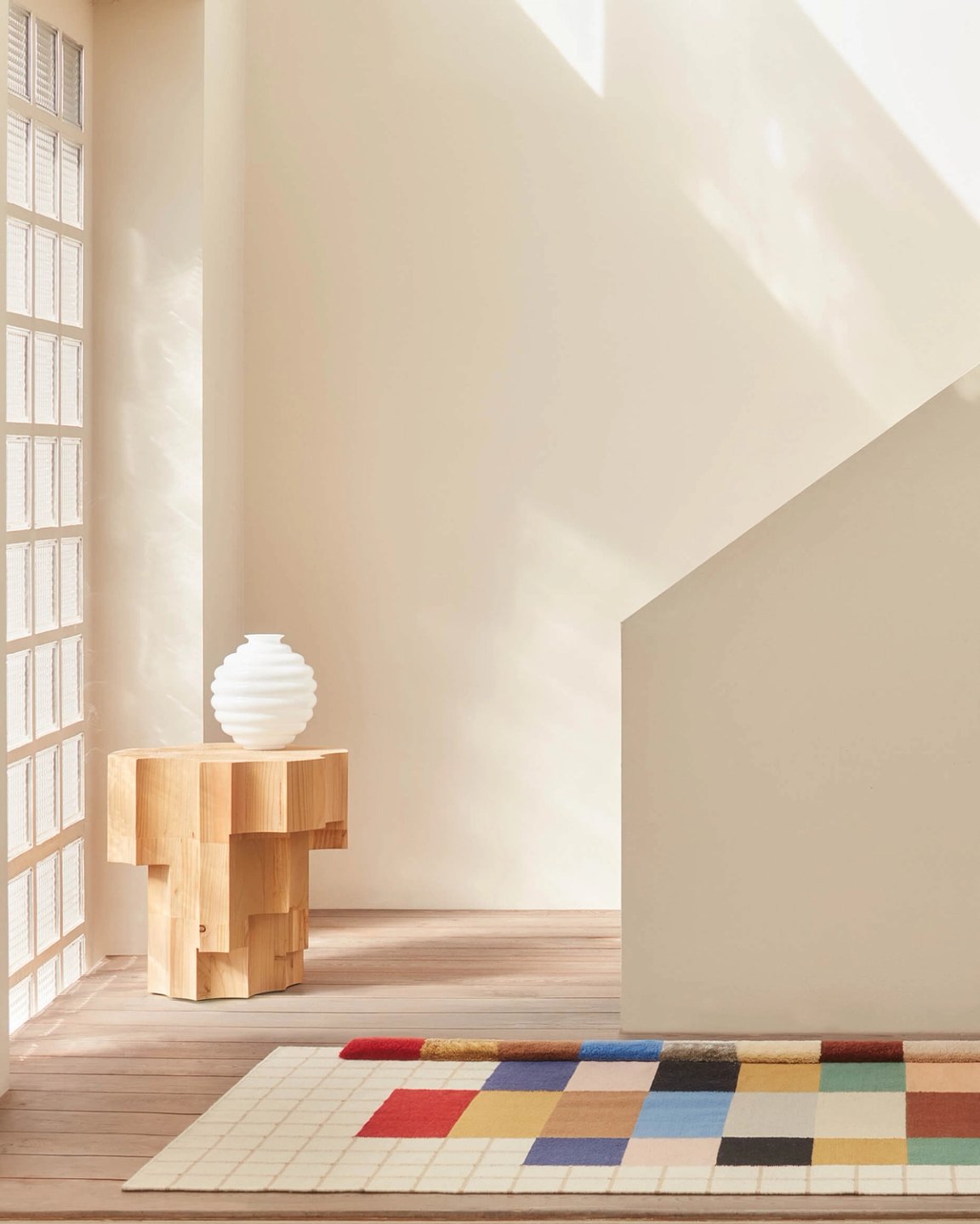
Open borders and subtle transitions