Essay
Apprentice
By Jonathan Levien
Learning from Makers
Photography by John Ross
- Jonathan Levien
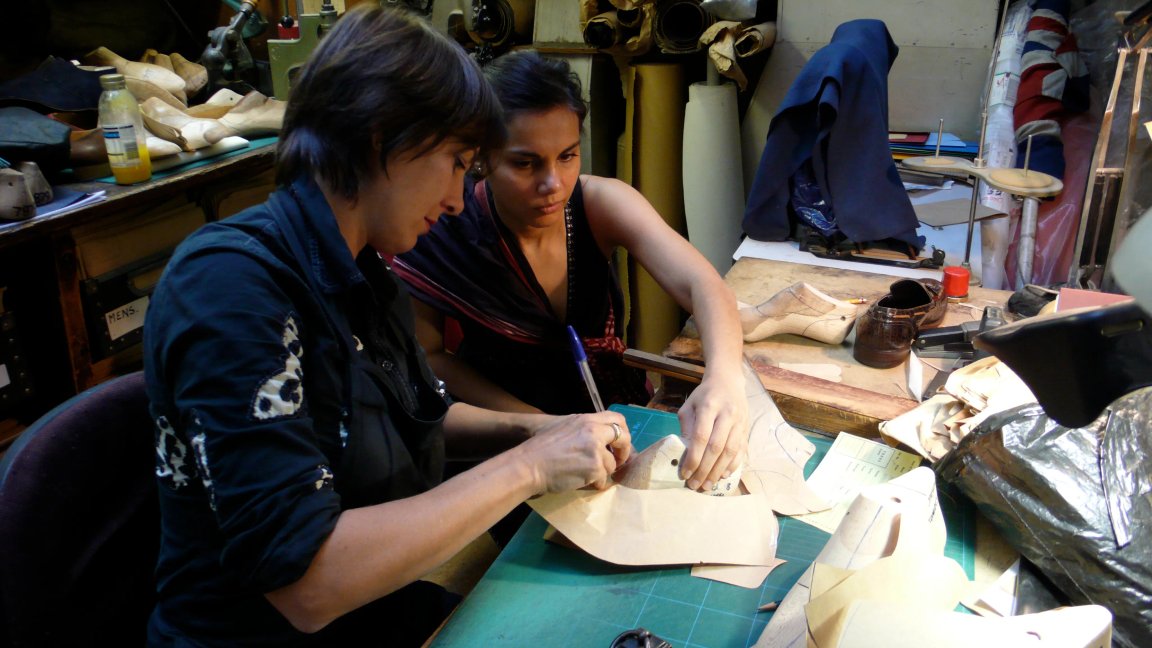
Nipa Doshi works alongside John Lobb's pattern cutter and closer
Nipa and I are always looking for opportunities to cultivate our love of beautifully made things. For us, design cannot be separated from the process of making1, and most of our projects are made in collaboration with European brands, where the dialogue with making can feel a little detached. Nipa and I wanted to find an opportunity closer to home: to make something in London and work side-by-side with makers. In parallel, we wanted to find a medium within which our individual skills could find equal expression. So we arrived at the idea of making shoes, which encapsulate a combination of pattern cutting and form making in relation to the human body. Our thinking was that if we were going to make shoes in London, we had to work with the best – which led us to John Lobb, makers of the finest hand-made shoes and boots, whose tradition of bespoke craft stretches back generations2.
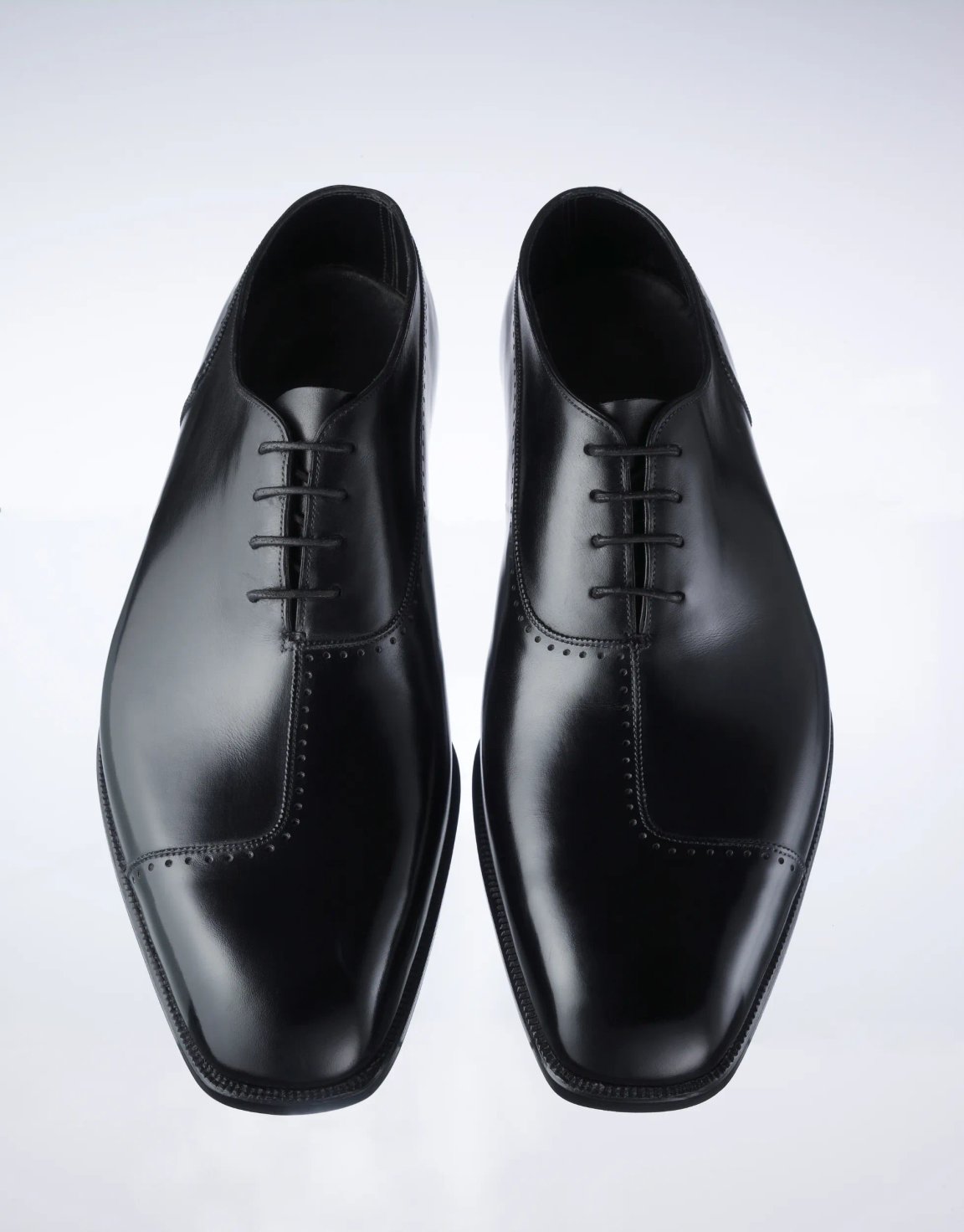
Black leather box calf
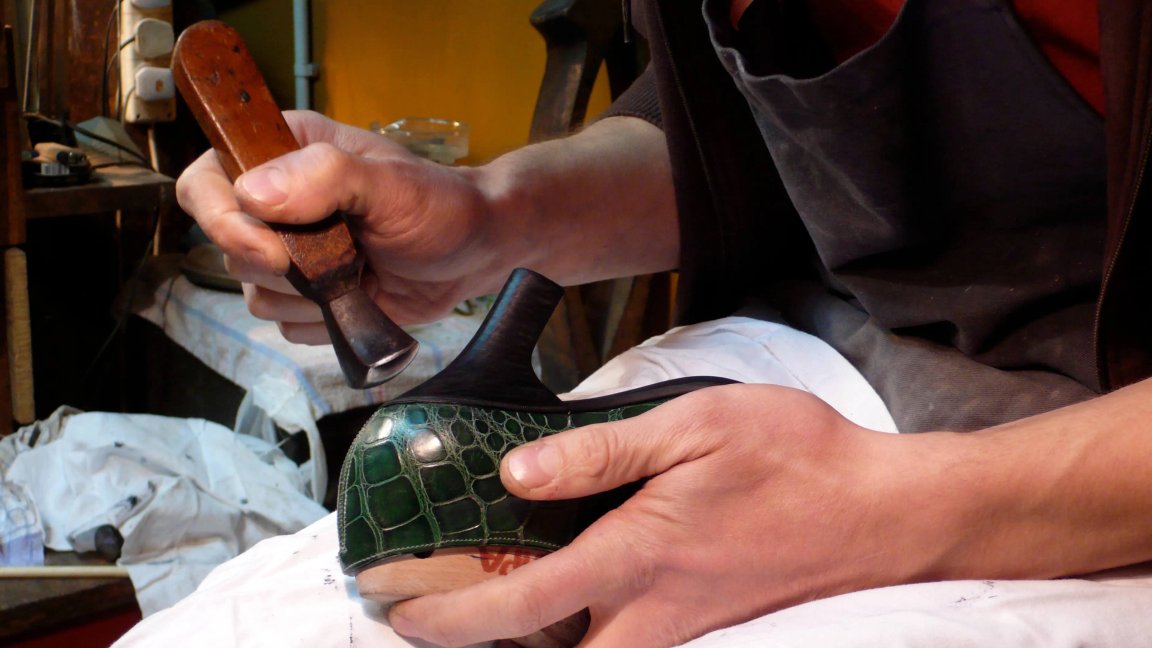
The maker refines the shoe
When we first approached John Lobb in St James’s, the idea of collaborating with designers was unfamiliar to them. Their process doesn’t normally involve “design” in the way we think of it. Customers enter the showroom, view examples of shoes in glass cabinets, and select details from different models. The shoemakers then combine these details into a bespoke pair. It is a system rooted in continuity – an evolving vocabulary of patterns, lasts and techniques that is shaped by tradition rather than external influence.
As such, when we proposed working together, there was a degree of scepticism. To find common ground, we brought with us sculpted cutlery that we had designed for Habitat years earlier. Jonathan Lobb, a last maker and the current owner of the company, immediately recognised the workmanship. He saw in the cutlery the same values that defined his own craft: precision, proportion and the sculpting of form3. This moment of recognition opened the door.
Spending time with the shoemakers gave us the feeling that we had stepped through a narrow door into a vast universe, with a number of highly skilled individuals each with their own specialism. We quickly realised that our ideas had to grow from their processes. The shoe revealed itself as both technical and sensual – its construction a meeting point of anatomy, engineering and leatherwork. The specialists included the fitter measuring the foot, the last maker sculpting wood into a replica of its form, the pattern cutter adjusting the leather, the clicker selecting the hides, and the maker stitching the sole. Each gesture was rooted in centuries of accumulated skill.
Our role was not to reinvent the shoe – it would have been meaningless to disregard such existing knowledge. Instead, we looked for ways to reinterpret existing methods and bring forward what was already there. We worked with their techniques and materials, emphasising what only John Lobb could do.
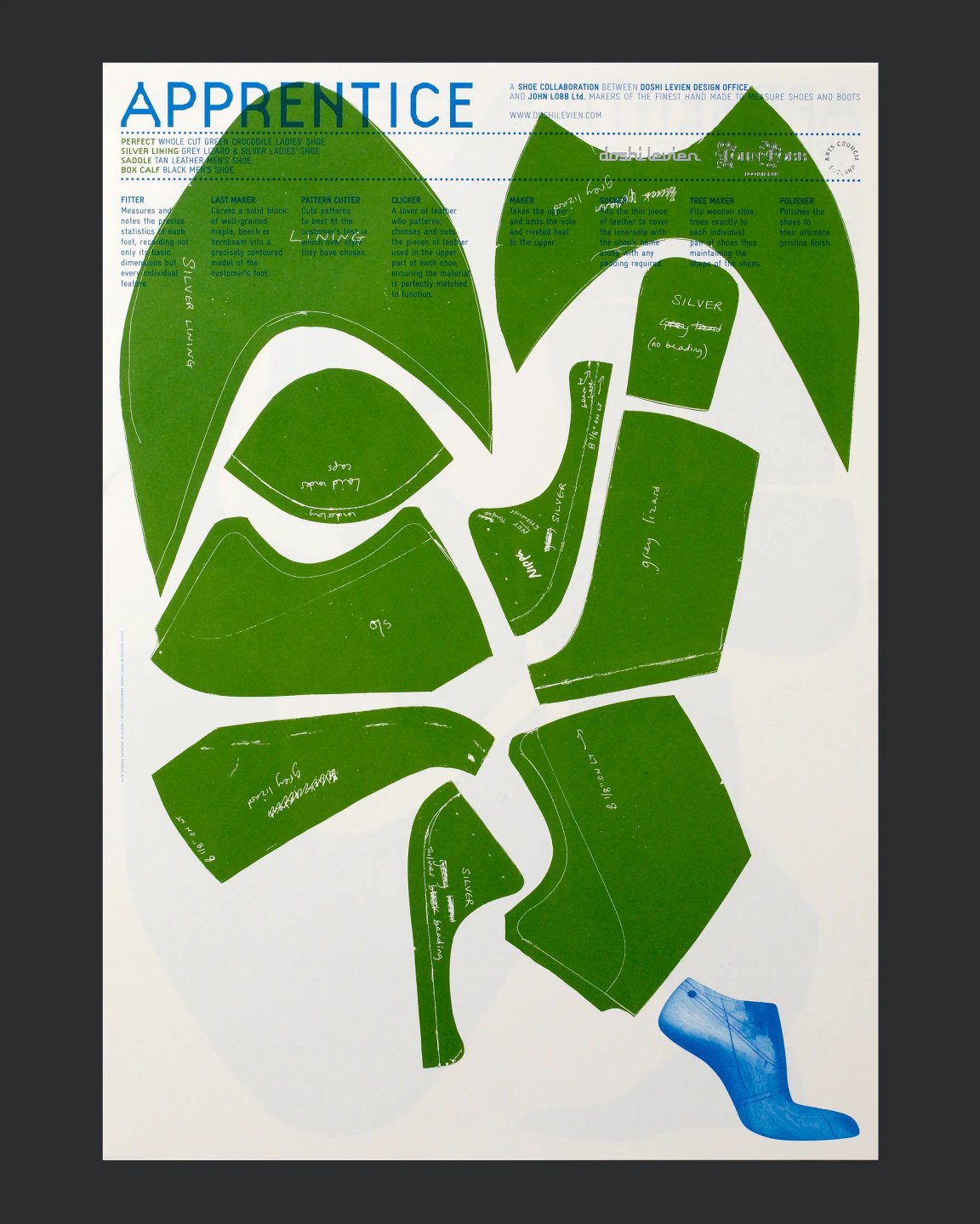
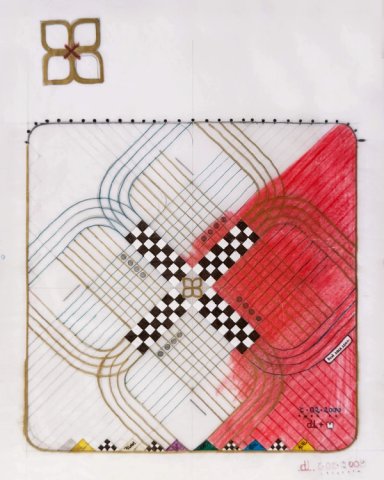
Poster for Apprentice
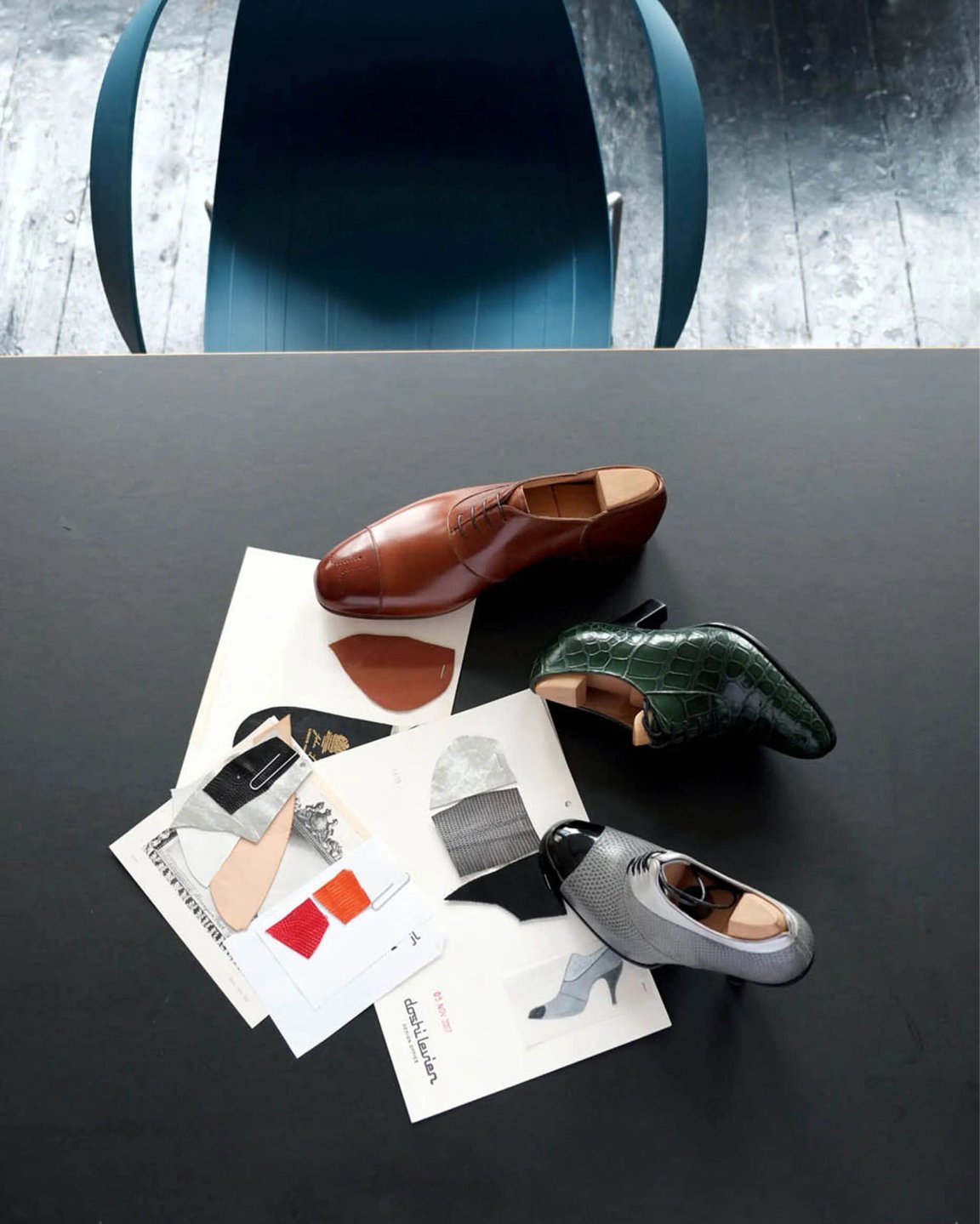
Sketches, material studies and finished shoes
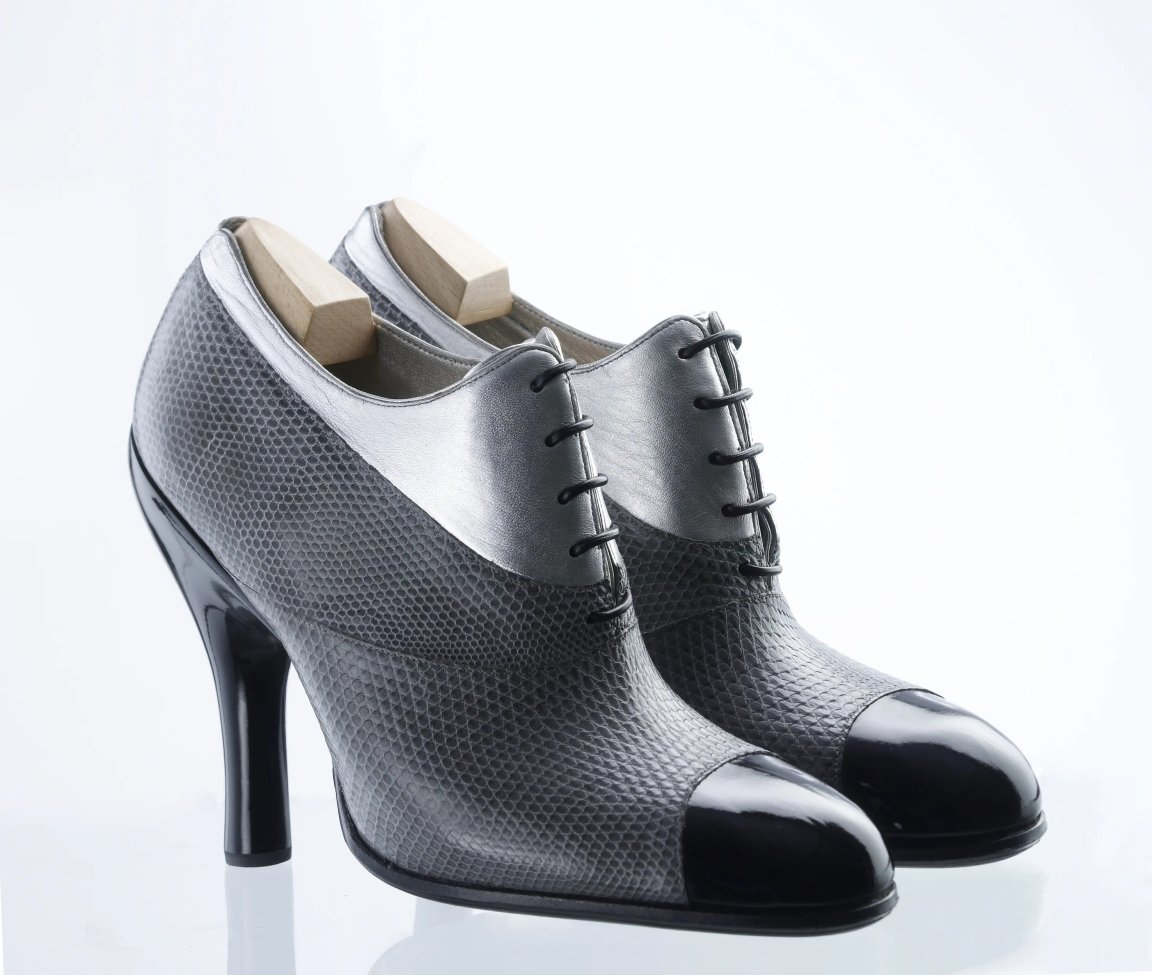
The name Apprentice suggests learning, but not in the traditional sense of master and pupil. The collaboration with John Lobb was an exchange of expertise and a dialogue between different forms of knowledge. We brought the curiosity of design; they brought the depth of craftsmanship. Together, we found new ground. The designs explored asymmetry and the fluidity of leather, wrapping the foot in unexpected ways and merging components that are usually kept separate. Our designs elevated the traditional components of the shoe to emphasise form and gesture. We wanted the sinuous form of the sculpted last to carry through into the final shoe, with each cut of leather describing the anatomy. In its construction, the shoe is architecture. We found the limit of stacking leather to make a heel, so sculpted two heels which John Lobb then attached to a pair that we named Silver Lining.
To enter the world of bespoke shoemaking was to be reminded that design is not separate from making, but enriched by it4. Apprentice was about trust, about finding resonance between disciplines, and about seeing the extraordinary potential of everyday objects when shaped by the knowledge of hands.
The shoes we designed for John Lobb remain bespoke, made to measure. They can be commissioned at John Lobb, St James’s Street, London.
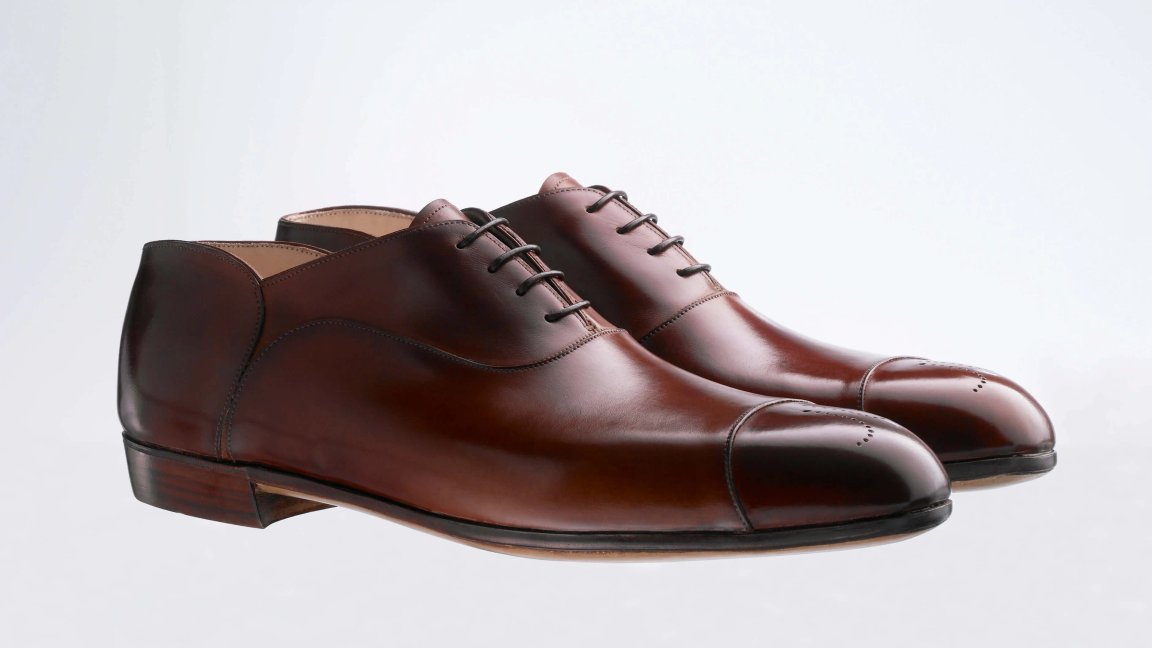
Saddle quarter shoe