In conversation
Logic of Pattern
In conversation
With Doshi Levien
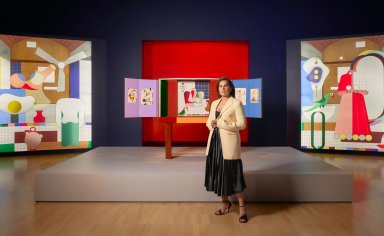
Portrait taken at Cooper Hewitt, New York, by Kate and Camilla.
An Imaginary Dialogue on Structure and Story
Portrait taken at Cooper Hewitt, New York, by Kate and Camilla.
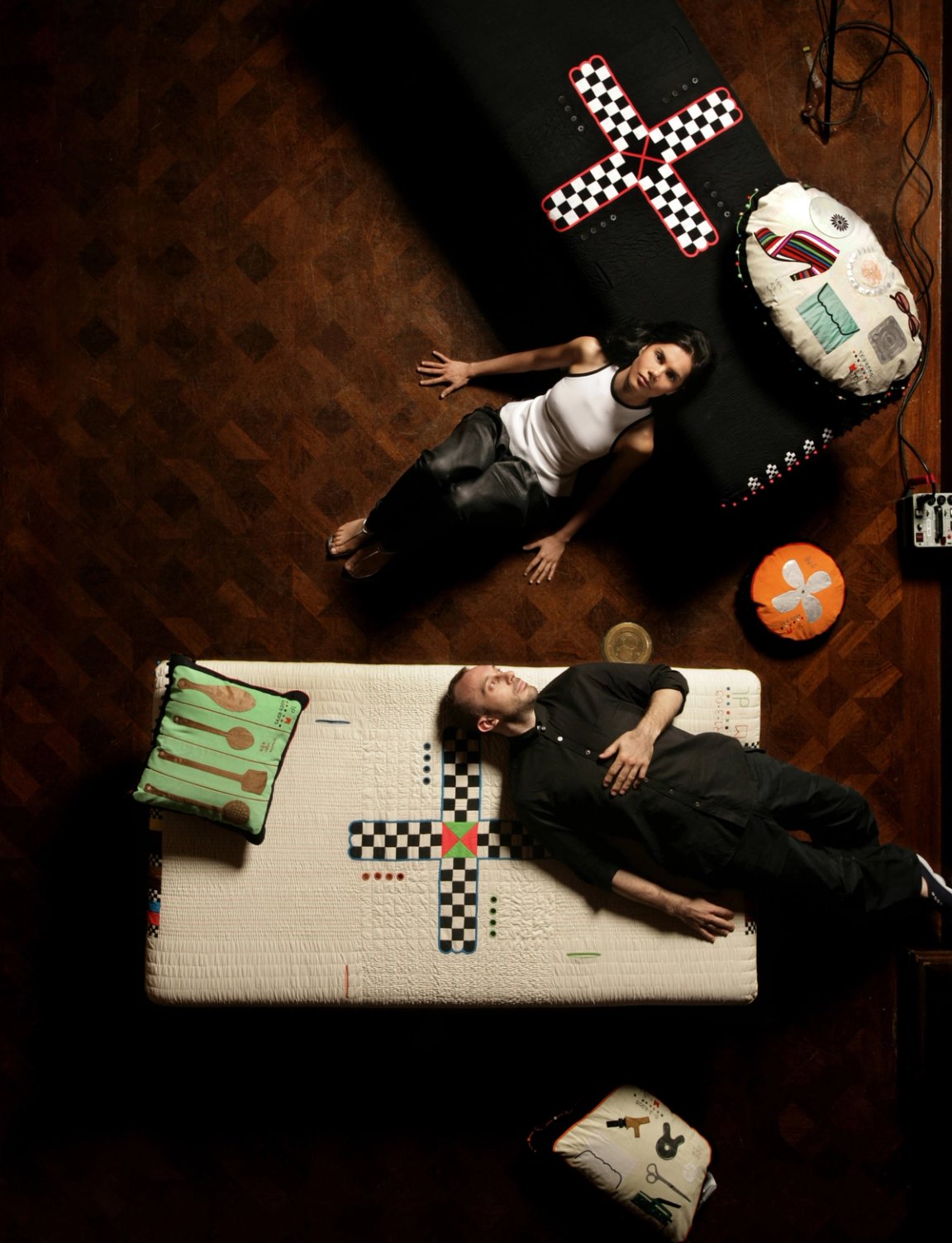
Nipa Doshi and Jonathan Levien pictured with Charpoy
In Doshi Levien’s work, pattern serves as structure, creating the foundation from which meaning and narrative arise. In exploring this theme, the studio has been inspired by textile designer Anni Albers (1899-1994), whose writings and practice showed how pattern could move beyond decoration to become a universal language of structure, rhythm and variation. Albers was a pioneer in bringing craft into dialogue with modernism – a concern that resonates deeply with Doshi Levien’s own work. To develop this strand of commonality, the studio used AI to imagine an exchange with Albers, based on her own writings. In this act of imagination, there is also sense of longing: a desire to reach across time to Albers herself and feel a human connection with a thinker whose ideas remain deeply relevant today. This piece explores what it might be like if Albers were to reflect on two of the studio’s projects:
Kundan is a cabinet whose mirrored and symbolic motifs draw on Indian jewellery and the mud-and-mirror interiors of nomadic homes in Kutch. The cabinet’s surface becomes a rhythmic composition, where light, numbers and cultural symbols are sequenced with deliberate order.
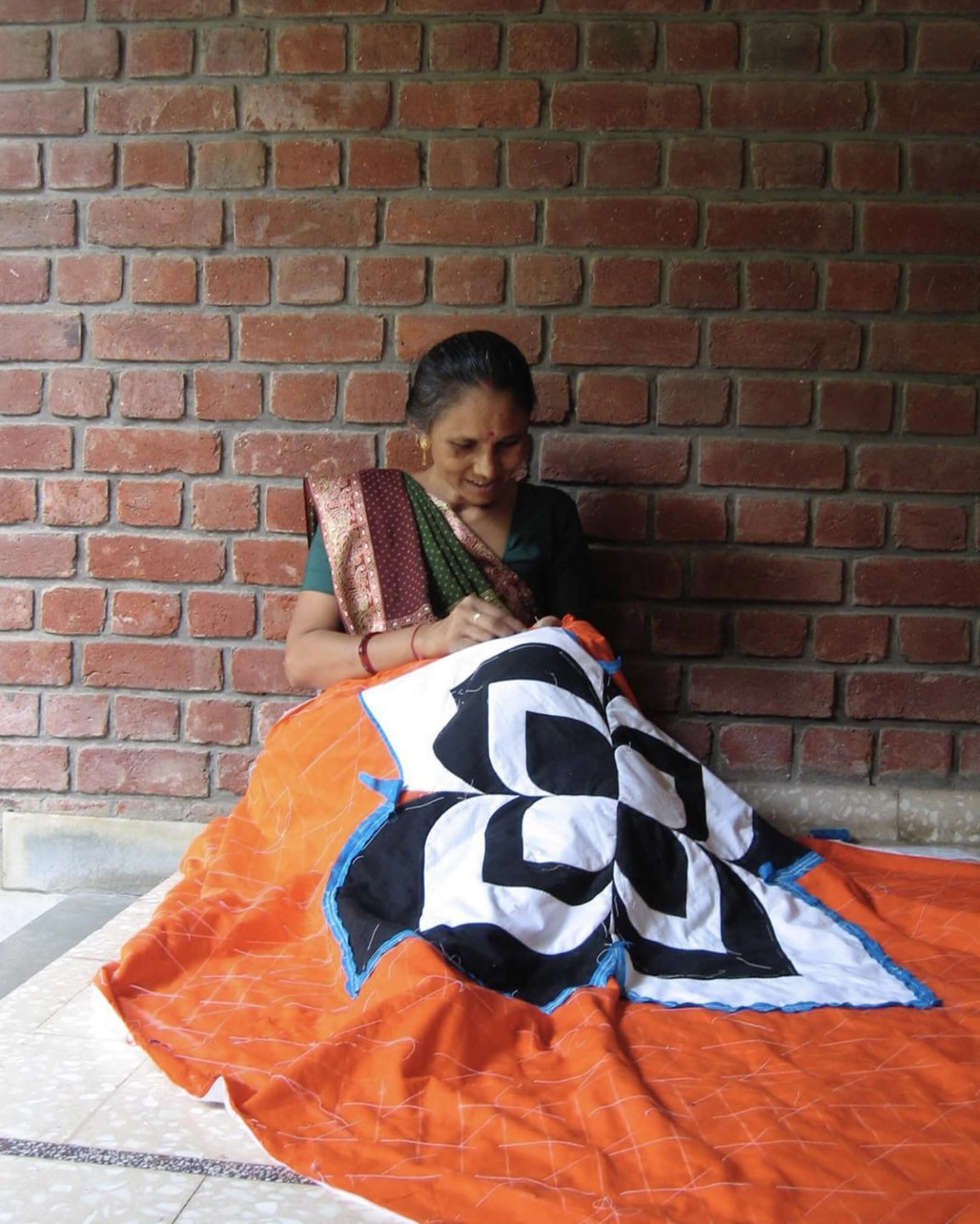
Charpoy is a contemporary take on the ubiquitous Indian daybed. Its embroidered surfaces map out the ancient dice game Chaupar, creating a pattern that is simultaneously geometric and narrative, referencing stories from the Mahabharata as well as Mughal courts. The textile is crafted by seamsters in Gujarat and combined with a lacquered wood frame made in Italy.
What follows is an imagined exchange between Anni Albers, Nipa Doshi and Jonathan Levien, reflecting on how the logic of pattern runs through both bodies of works – as rhythm, as composition, and as a framework where culture and narrative take shape.
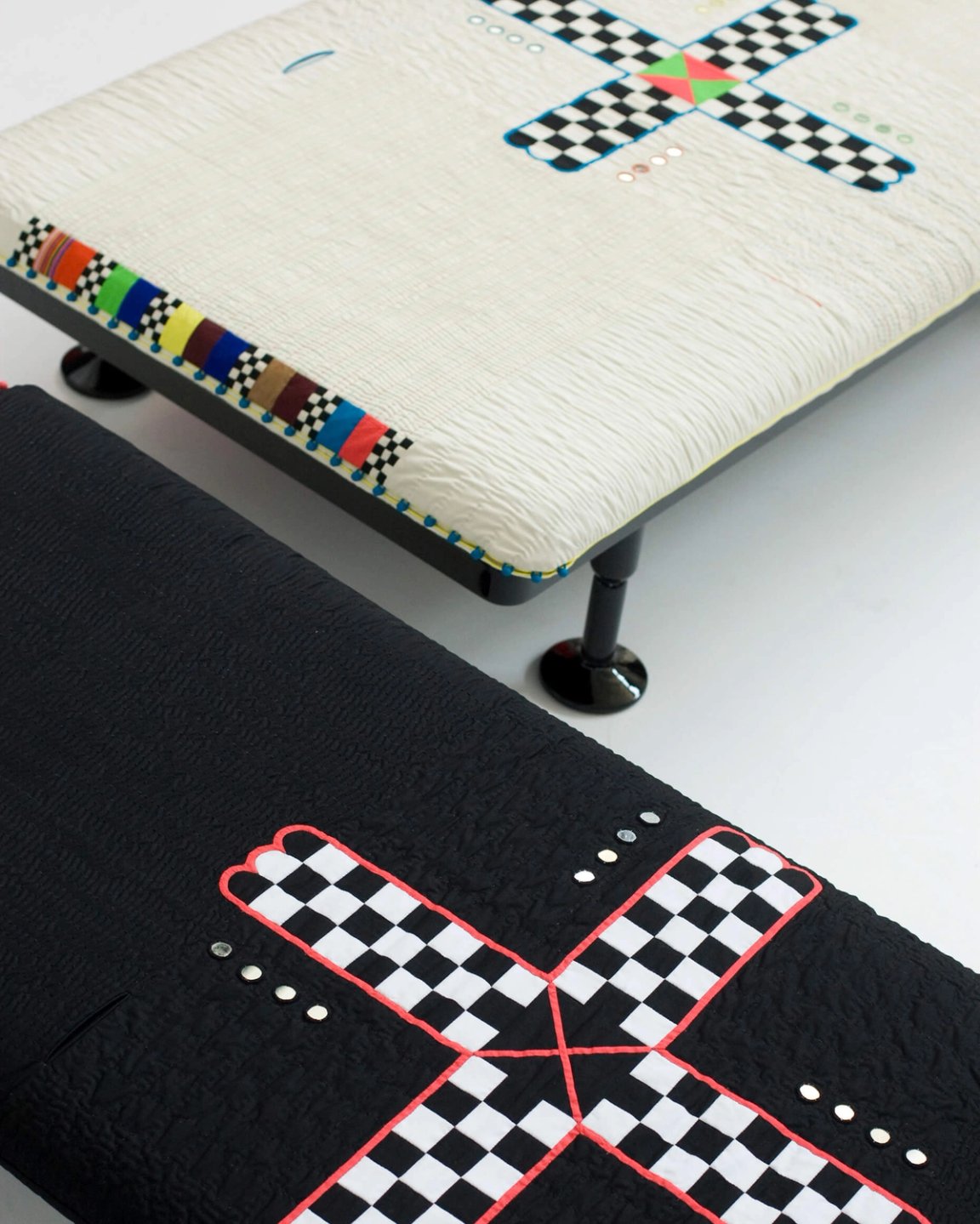
Charpoy: a daybed with four legs
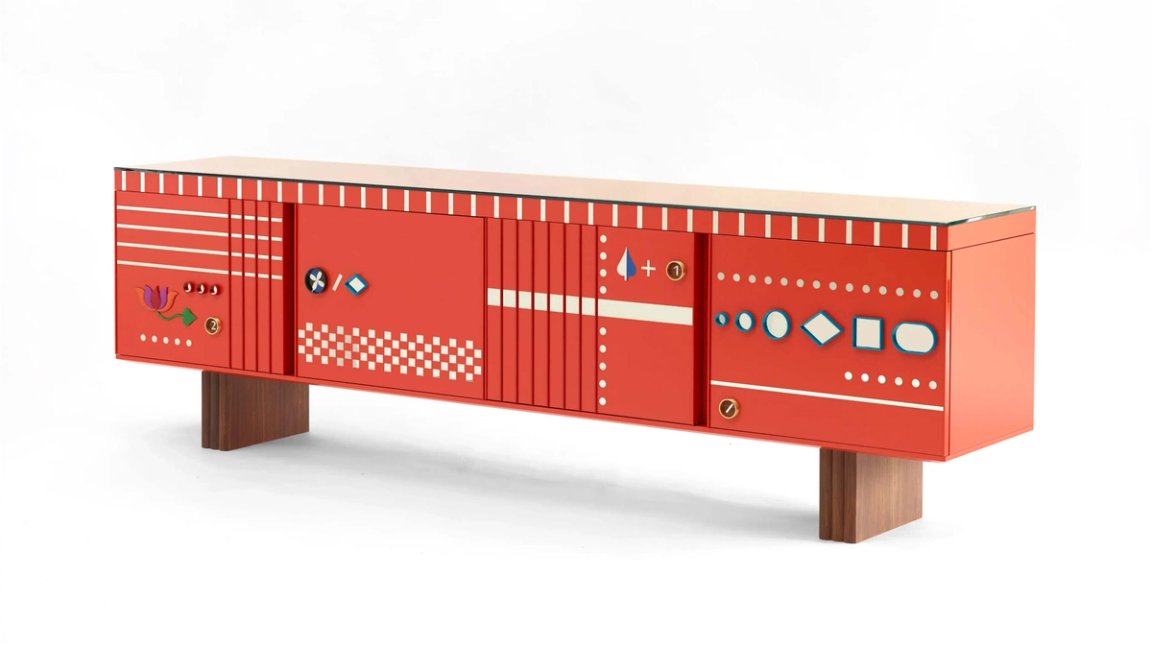
The Kundan Cabinet
When I look at the Kundan cabinet, what strikes me first is the way pattern is not just applied, but embedded in its being. The mirrors and symbols do not behave like ornament, but like elements in a larger order – each one deliberate, like stitches in a textile. In my own weaving, I was always searching for how repetition could move beyond surface effect and how a pattern could be the very structure of a work1.
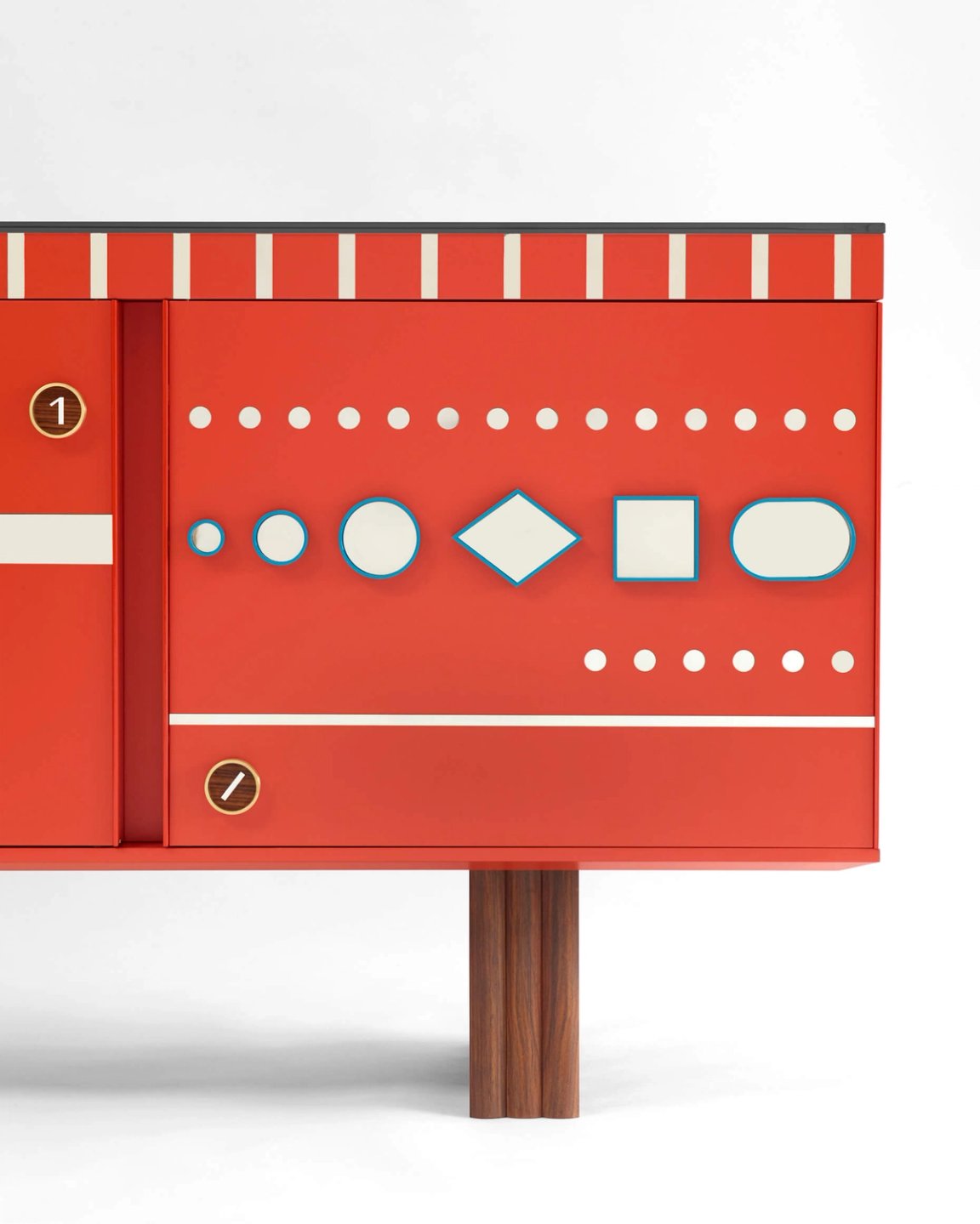
Pattern as structure
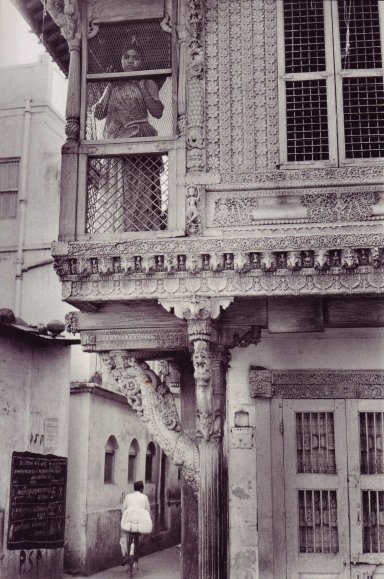
That’s very much how we thought of it. The inspiration came partly from Kundan jewellery2, those sequences of stones set into gold, but also from the interiors of nomadic homes in Kutch3, where mirrors are pressed into mud walls to catch and multiply light. We imagined the surface almost as a field of rhythm, like a musical composition – repetition and variation creating something ordered yet alive.
Yes, rhythm with variation – that is the essence of pattern, in weaving, in music, in life4. It is what makes a form breathe.
Exactly. That’s why the mirrors almost disappear until the light finds them again. The rhythm shifts with the viewer, giving the surface a sense of presence and absence.
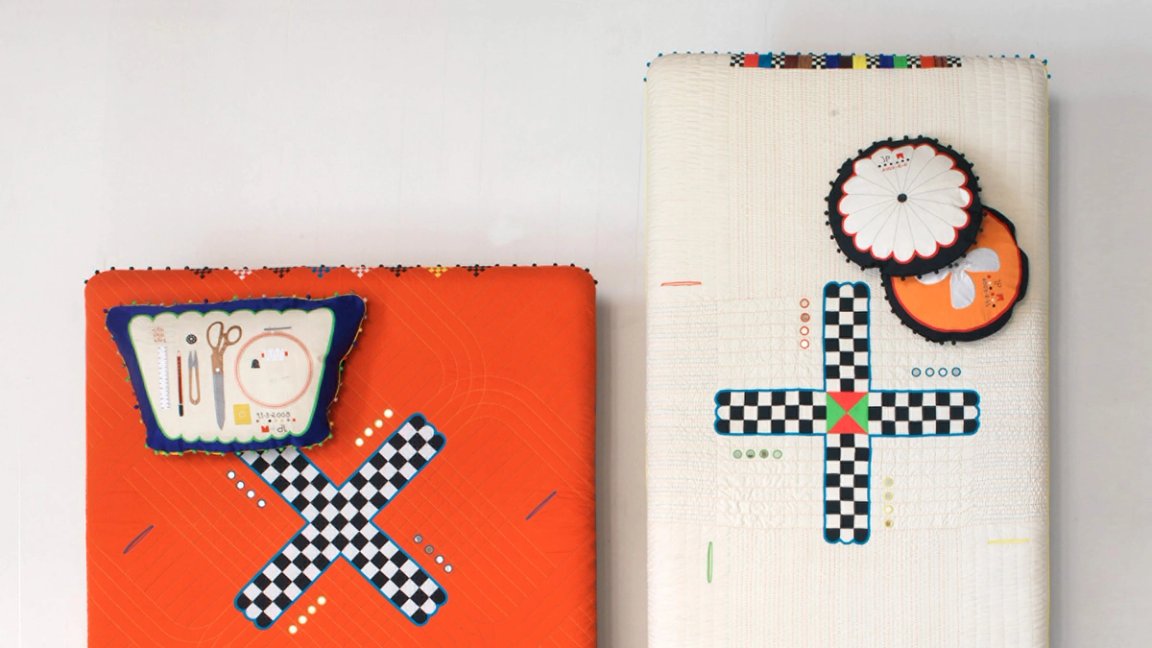
Charpoy day beds with game of Chaupar
And in Charpoy, I see another kind of structure. The daybed is an archetype – four legs, a woven plane – yet here its surface carries narrative. The embroidered grid of Chaupar is geometry, but it is also memory and myth. In my work I often asked: where does pattern end and story begin? They are inseparable here5.
That’s how we experienced it too. The game provides geometry, but also drama. In the Mahabharata the throw of dice leads to war and exile, and centuries later Akbar staged it on vast stone boards in his courtyards, using women in colourful saris as the living pieces. The pattern is mathematical, but it is never abstract.
And then the hand enters. The seamsters’ embroidery and appliqué bring irregularity, warmth, personality. In weaving, I often felt that order and freedom must exist together – order gives security, freedom brings invention6. I sense that same balance here.
The clarity of structure gives discipline, but the hand brings individuality. Together they create a pattern that feels both precise and alive.
For me, pattern has always been a way to balance freedom with control. The logic gives a foundation, but also allows invention. That’s what gives these works their universal quality – they are rooted in cultural narrative, but carried by a strong logic of pattern.
That is the power of pattern. It moves from the particular to the universal – repetition, sequence, variation. It allows freedom to rest on structure, and narrative to rest on logic.
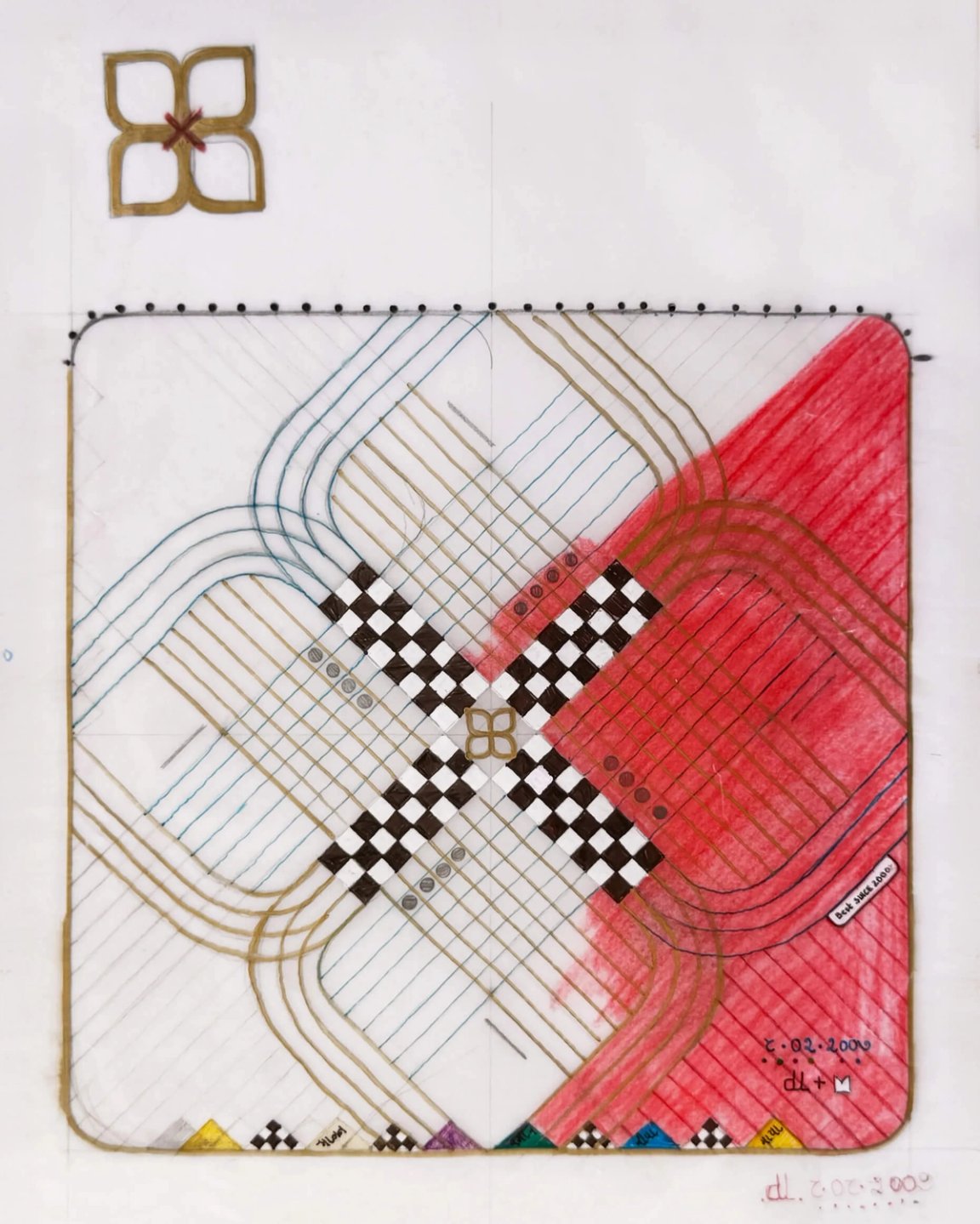
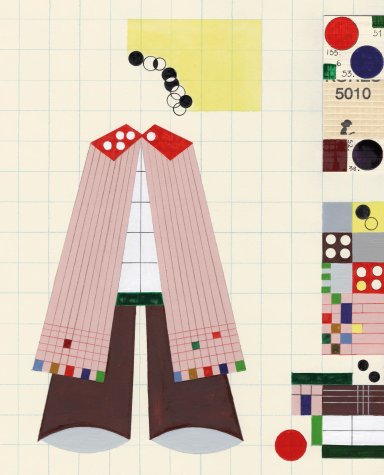
Nipa Doshi's drawing of the Charpoy cover