Kundan
Galerie Kreo
2014
Cabinet
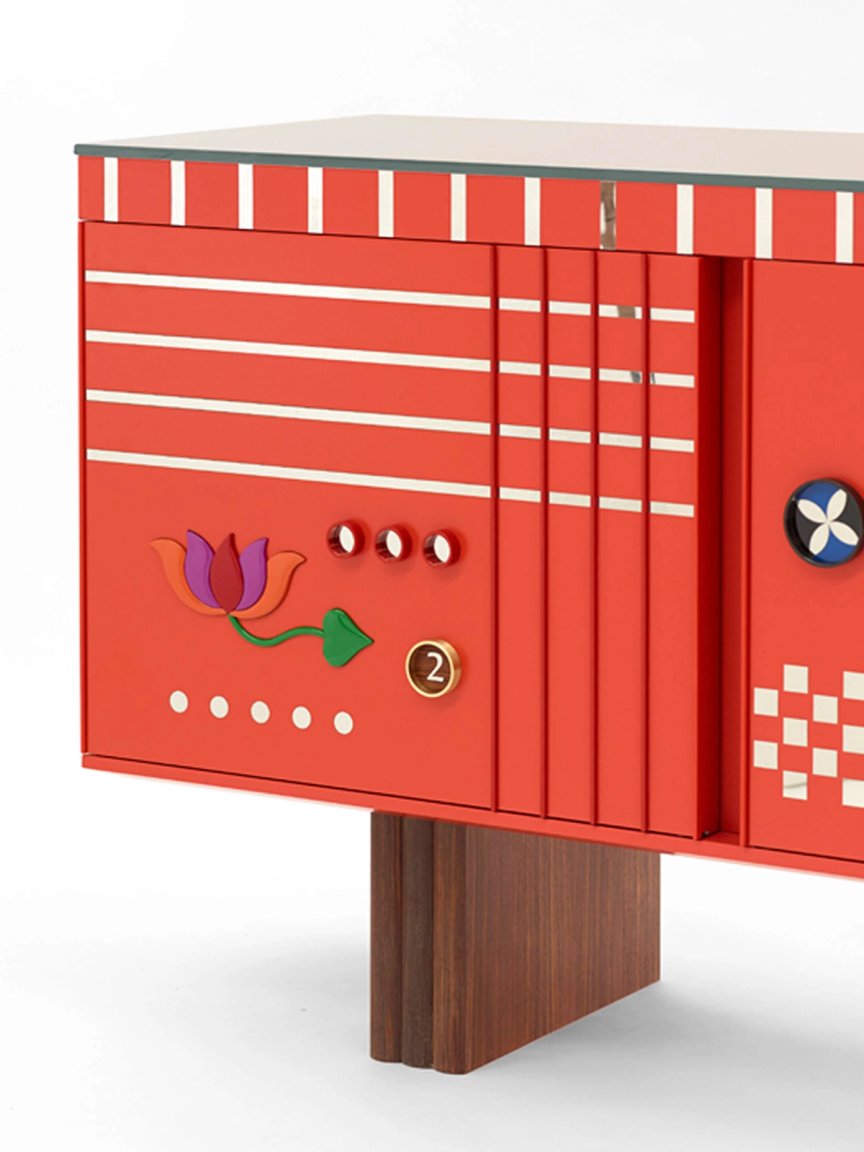
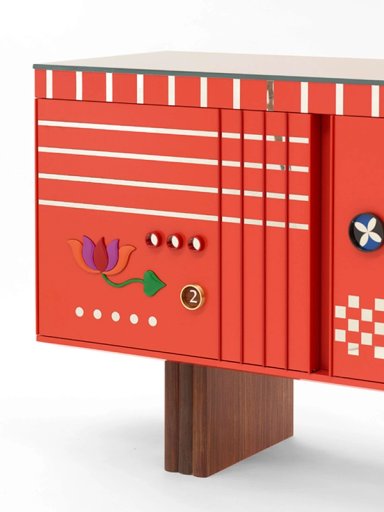
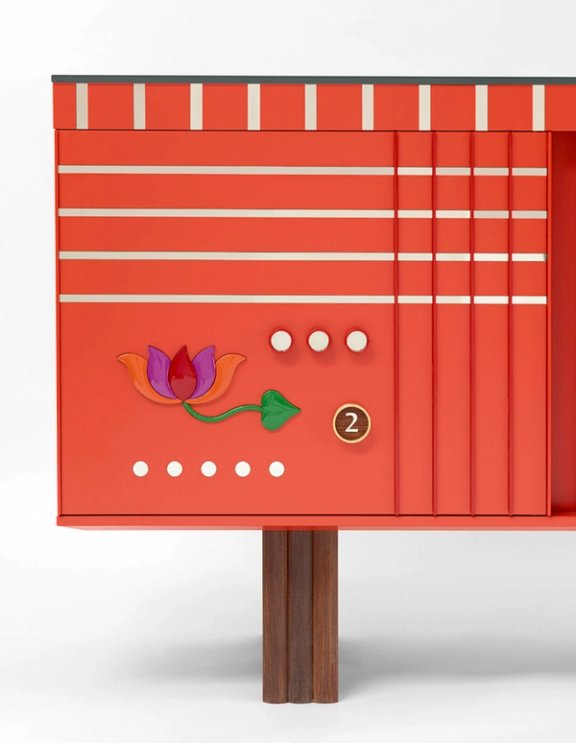
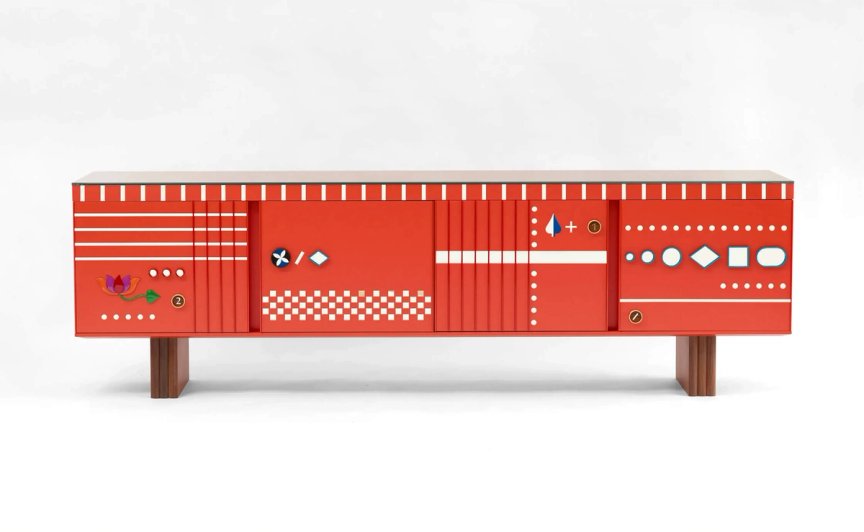
Kundan takes its name from a traditional form of Indian gemstone jewellery that is set with pure gold foil and arranged in geometric sequences. These same motifs also appear in the mud-built interiors of nomadic homes in Kutch, where mirrors are pressed into the walls to reflect and amplify natural light. Doshi Levien drew from these references to create a cabinet whose surface becomes a rhythmic field of mirrors, geometric forms and culturally significant symbols.
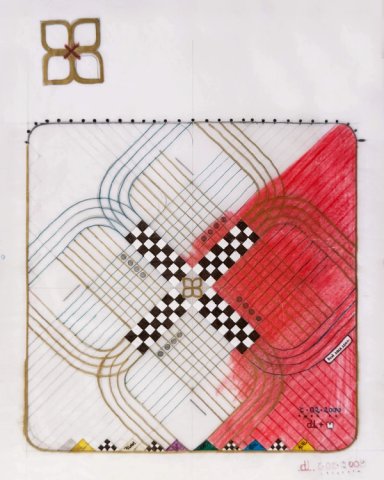
The composition includes occasional numeric signs that echo the mathematical logic found in many Indian pattern traditions, as well as pictorial motifs such as the lotus. Each element is arranged with the same deliberate order found in Kundan jewellery, where repetition, geometry and light work together.
Rather than treating these motifs as surface decoration, the cabinet integrates them as part of its structure and identity, continuing Doshi Levien’s exploration of pattern as a language shaped by rhythm, sequence and cultural meaning.
PATTERN AS STRUCTURE