Nipa Doshi on design, identity and feminism
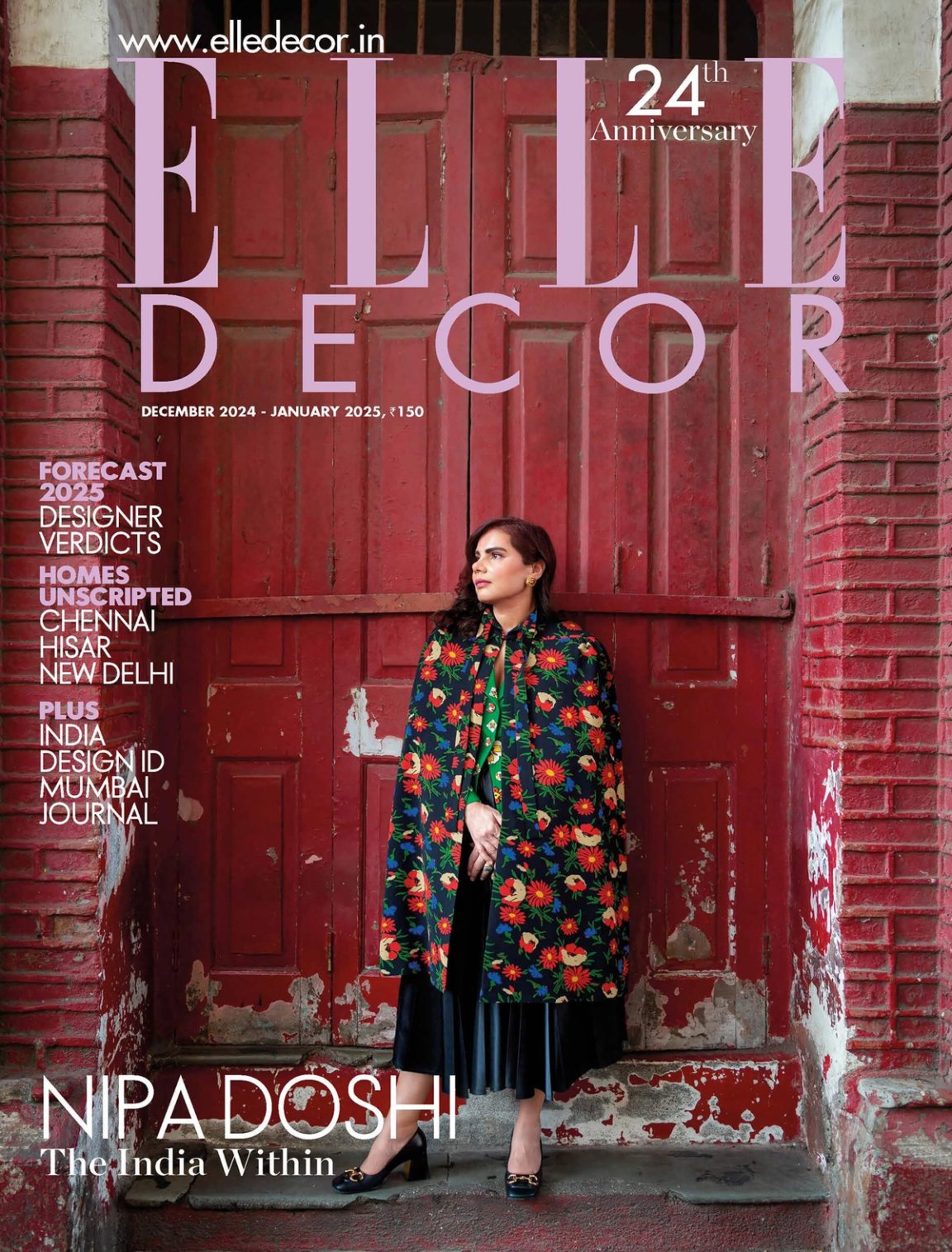
Nipa Doshi in Mumbai
“We are all influenced by where we grew up and what we were exposed to. Indian culture, Indian material objects, our way of doing things, they are all a part of me“
Women in design, women artists, women’s magazines. Growing up around a feminist mother and later being taught by feminist professors, I wasn’t prepared for the unease among peers when I mentioned the publication I’d be writing for. It was the divisive name – Elle Decor. At first, I assumed it was “elle”, translating to a “she” in French, an idea that often risks wounding fragile masculinity. But it was the latter half – Decoration – that sparked their reaction. We were feminist enough to accept femininity, but had we dismissed decoration too quickly?
Walking through old Mumbai with Nipa Doshi, I began to see decoration, femininity and feminism in a new light. Her perspective challenged not just the narratives around decoration but also its interplay with colour, gender and history – a lens through which the city’s layers of identity came alive. The arches of Mumbai Samachar stood out with charismatic flamboyance, a dilapidated bus stop became a work of art and the arcades of Horniman Circle turned into grounds for imagination. Surprisingly, ornament was omnipresent – in the bearded keystones, in the brilliant red bricks, in cursive typography. Nipa finds beauty and meaning in this environment, “It is a place where history, commerce and daily life come together.” Beauty to her, does not just materialise from what we see but also through its contextual narratives and how we appropriate urbanity over time. Then was decoration not gendered but a human desire? Perhaps, we only make beautiful what we cherish, what belongs to us.
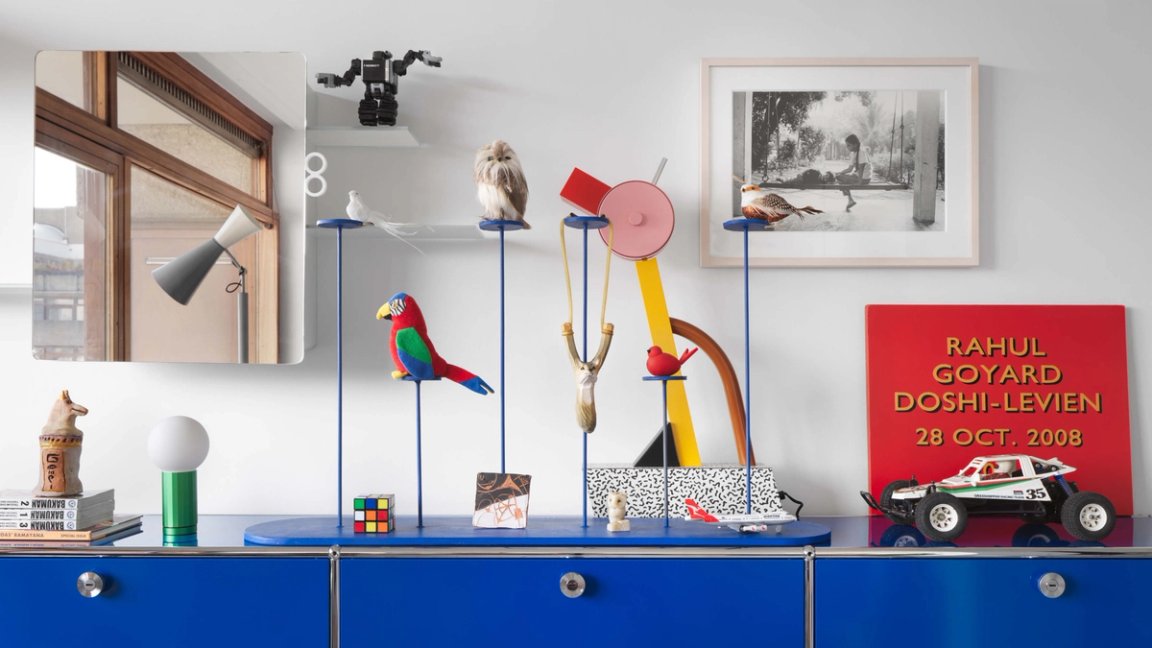
Barbican House
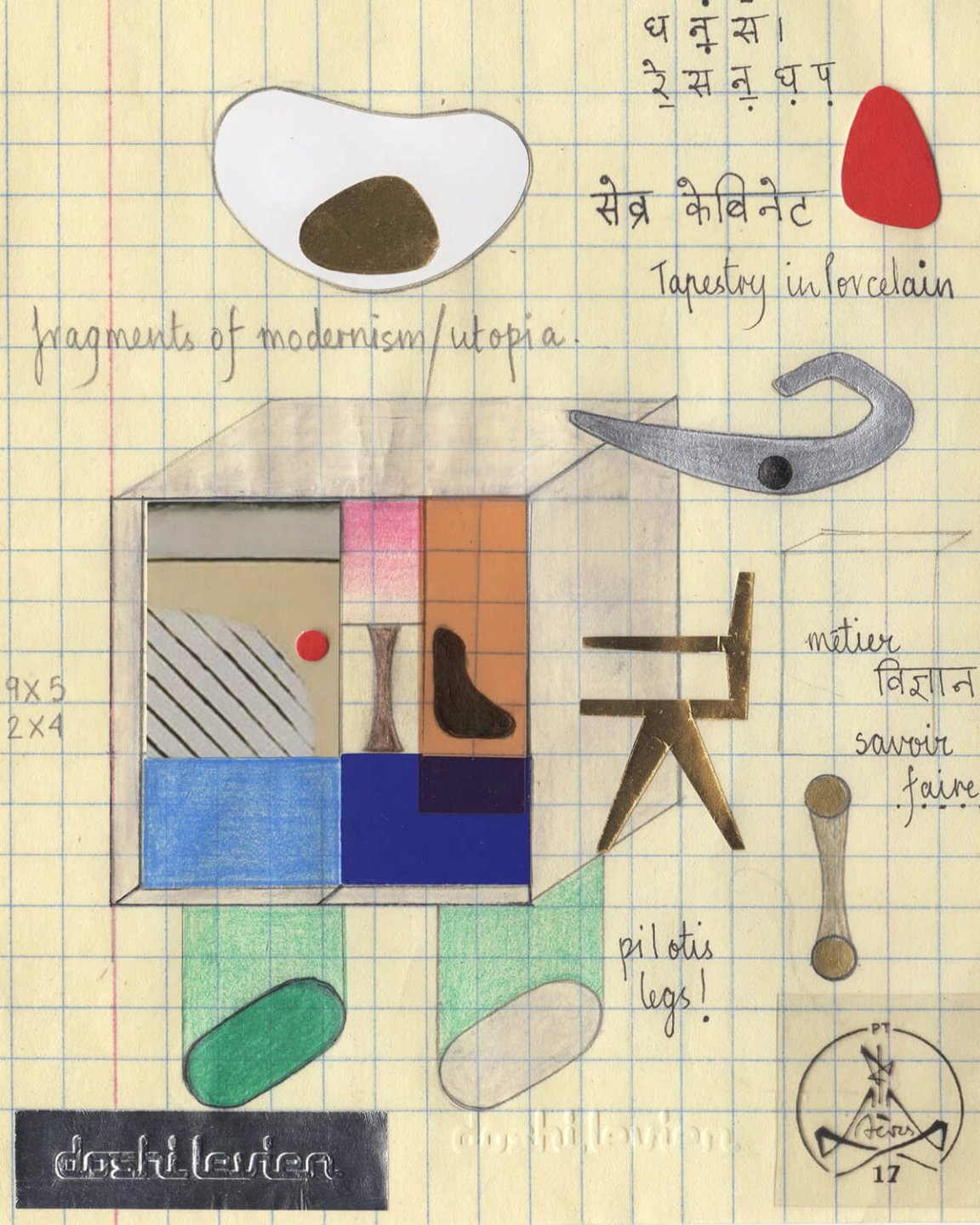
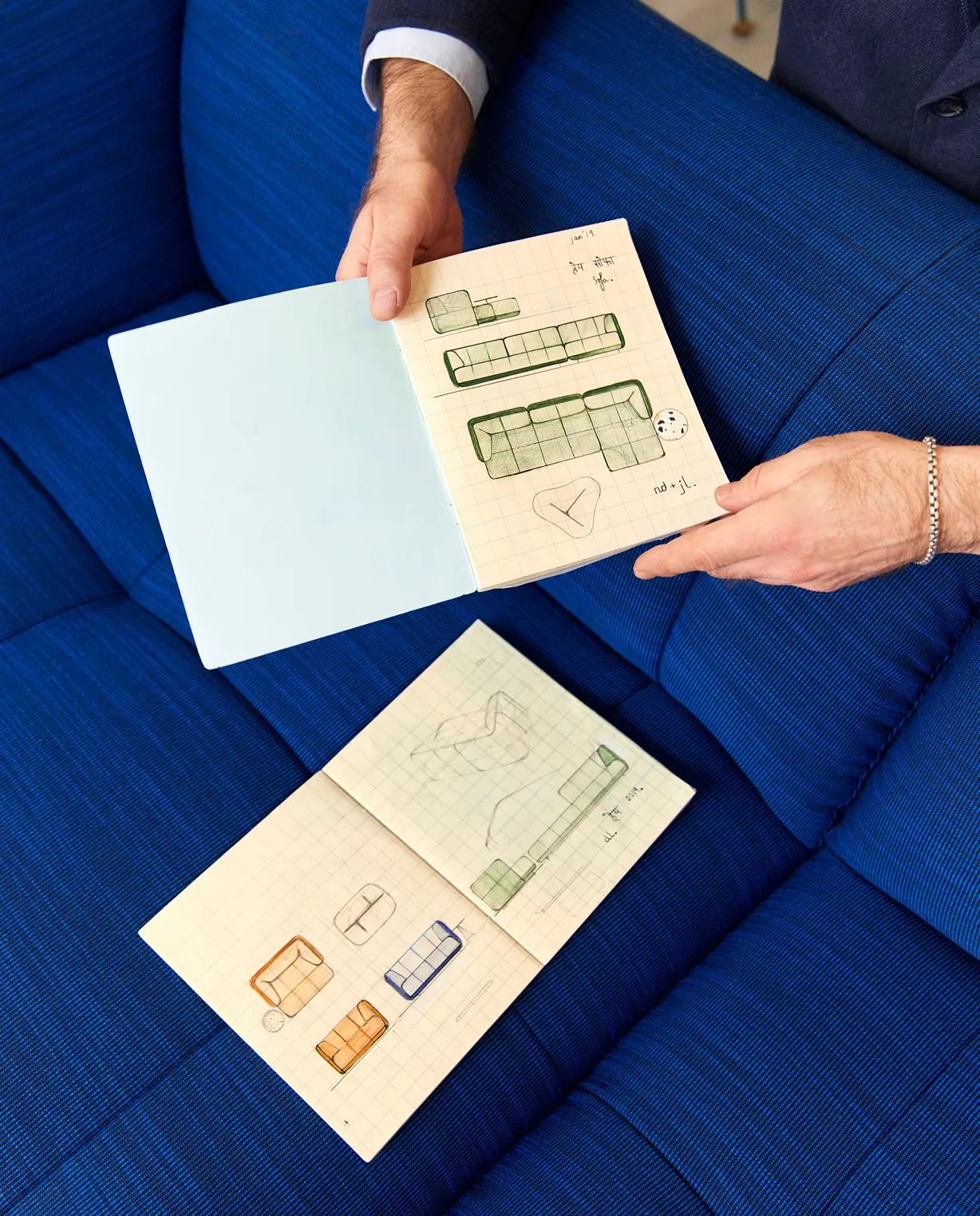
Nipa Doshi's sketches
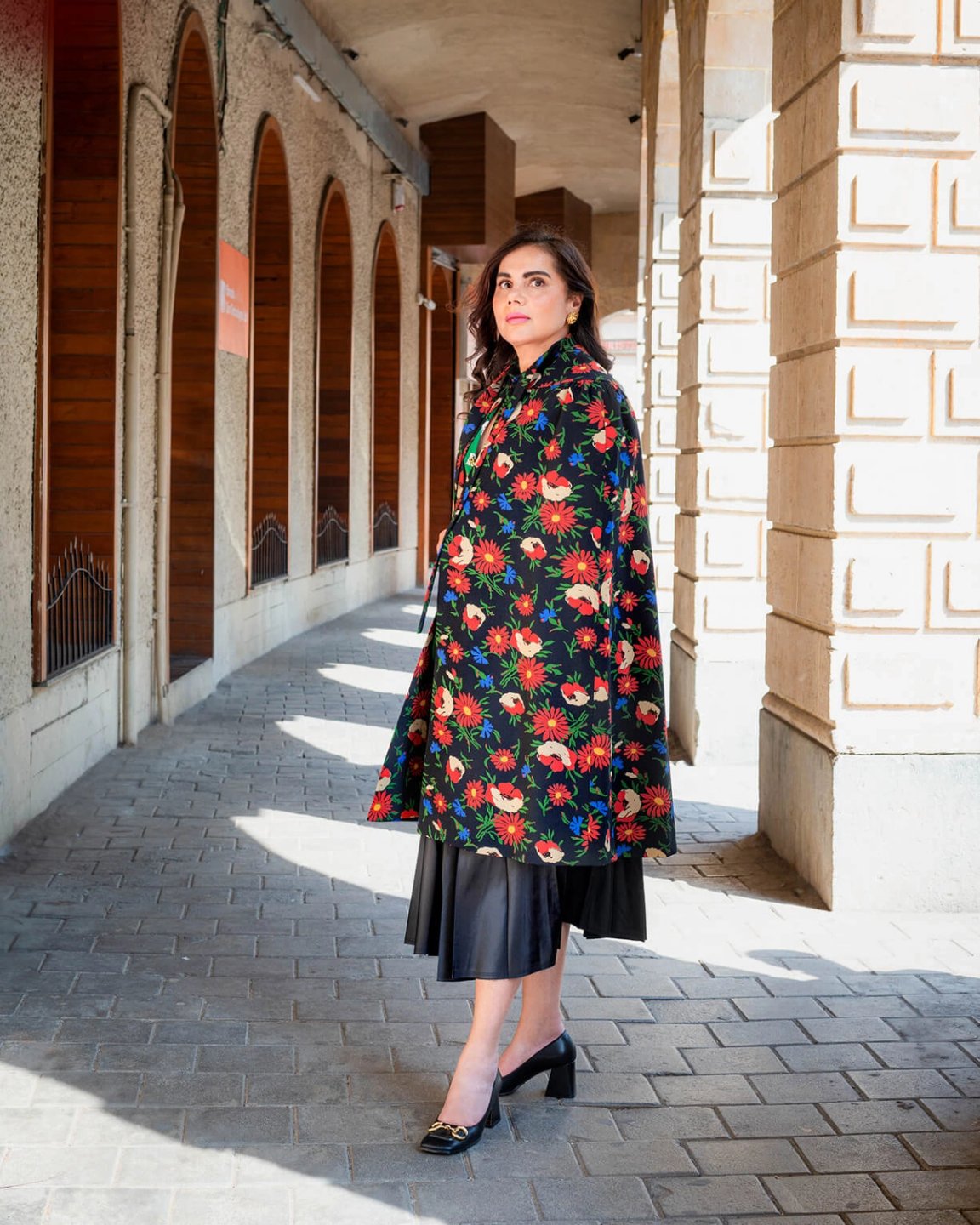
Horniman Circle
Nipa muses, “There is a sense of interiority to it,” and thereafter it was unmissable. What makes a space public and what crowns it as personal? Is it scale, is it story or is it something intangible? Nipa, who is an international EDIDA winner, had flown down for the 23rd edition of EDIDA India to address the country’s designers that evening. She grew up in Mumbai, was raised in Delhi, studied in Ahmedabad and now lives in London. Heading Doshi Levien, a design studio she started alongside her husband Jonathan Levien in 1995, her oeuvre is as multifaceted as her, inspired by varied contexts. In her sketches, the chequered boxes are privy to a conversation with culture, deliberations in drawings and language.
As a designer who hails from India, a perplexing question often follows: does she draw inspiration from the country’s history? “This history that we speak of is my history,” says Nipa, continuing, “We are all influenced by where we grew up and what we were exposed to. Indian culture, Indian material objects, our way of doing things, they are all a part of me.” It quickly became evident that Nipa’s work, or Nipa herself, evades any semblance of a box.
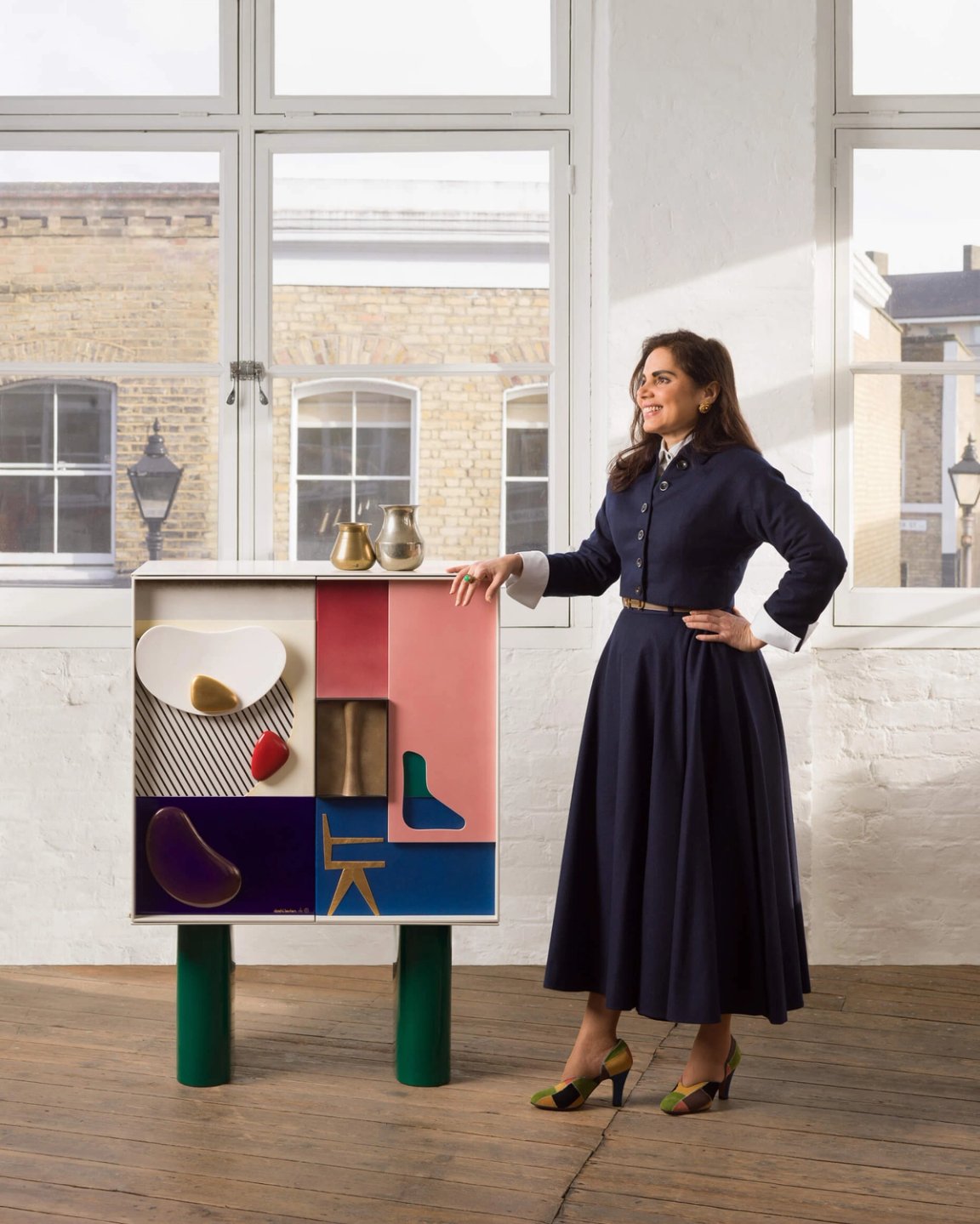
Nipa Doshi in her studio at Columbia Road
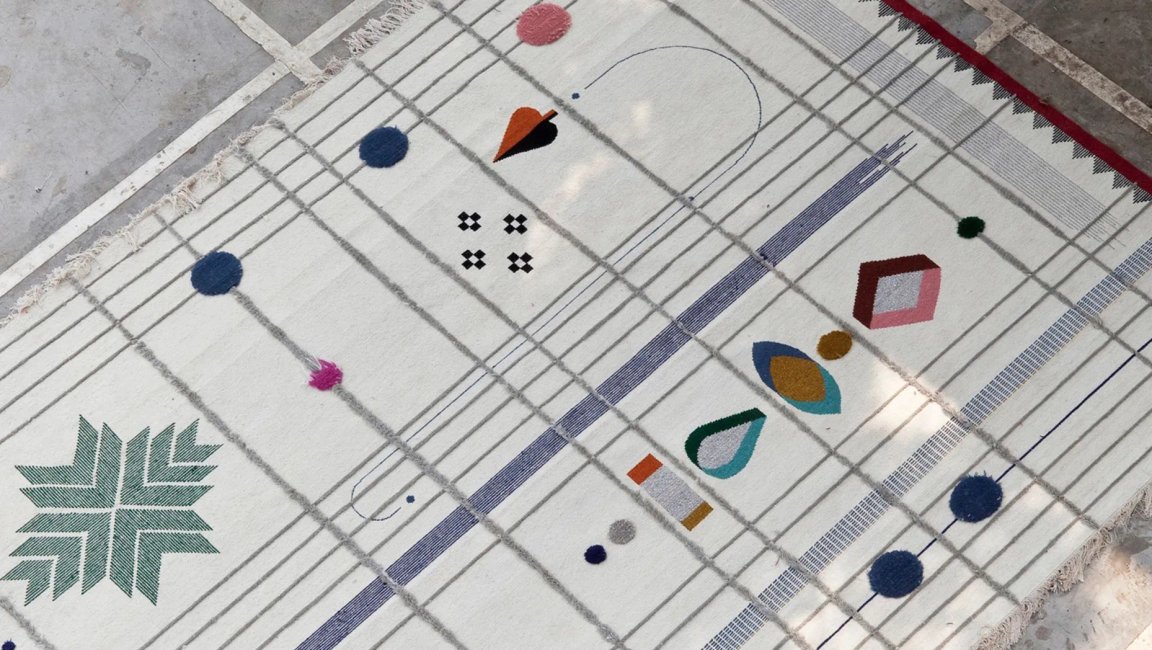
Rabari rug
Her love for finding beauty in the everyday traces back to her youth. She grew up in a pink Art Deco house in Delhi. Many kilometres away in Mumbai, her grandfather whom she describes as an “aesthete” influenced how she saw the world. “He used to commission portraits of himself,” says Nipa, “And I loved the domestic rituals, be it making the bed or cooking. For me, design is a way of doing things.”
She reminisces on her time as a young student at NID Ahmedabad, “What I was learning in design was so different from life outside.” Corbusier’s Modernist legacy, Kahn’s IIM Ahmedabad campus and Doshi’s architecture informed the city as much as its informal urbanity. “I enjoyed the old markets and going to Rani no Hajiro where you would find beautiful block-printed textiles. You step into a mosque and then next to it is a Jain temple. Rickshaws, cows, cars, everything comes together. That’s beauty,” she explains.
When she arrived in London, she asked herself what she could contribute in an environment where everything was already “designed”? “I realised I have so much to say about the culture that I come from,” she says. The Royal College of Art, where Nipa pursued her Master’s Degree, also opened her mind to understanding that all approaches to design are valid. “I don’t agree that design is about solving problems,” says Nipa, “I think it is about celebrating our material environment and this outlook is as valid as Dieter Rams’ less is more. I think less is less!”
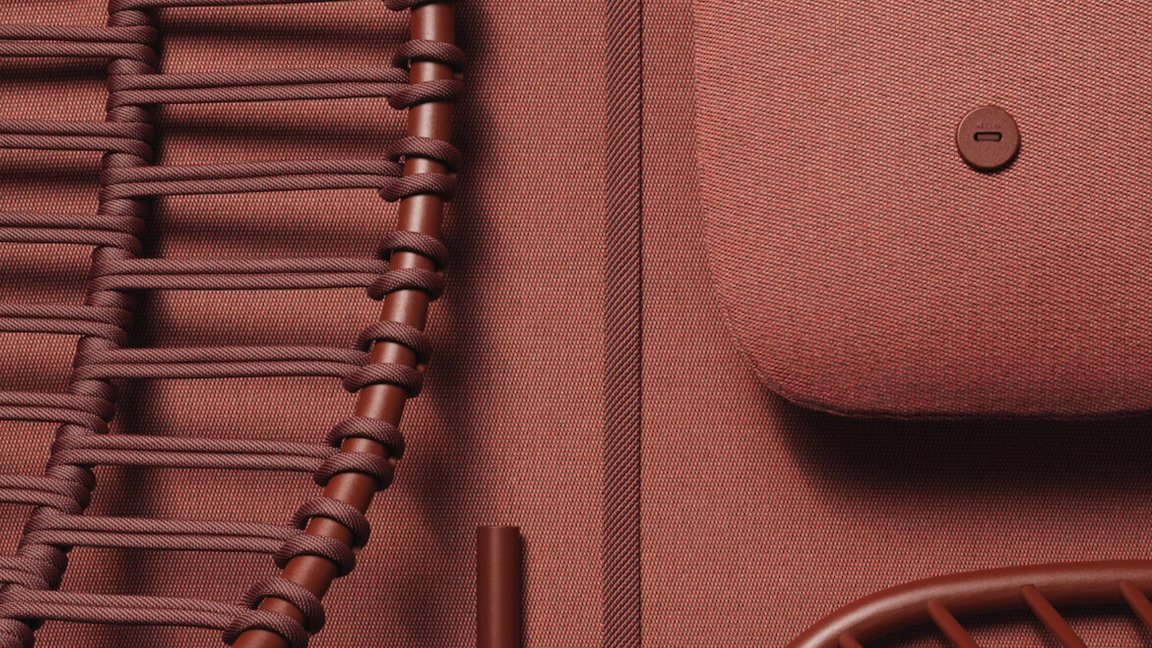
Terrain fabric
Many myths cloud people’s perception of designers who are also women. Most don’t wake up clutching copies of The Second Sex. (At least, not every day.) But there are tropes or rather traps, that are best circumvented. Nipa remembers her first meeting with Kettal, a Spanish design brand, which led her to challenge her own beliefs. “I went in thinking we are going to design furniture or a signature collection.But they put a bunch of yarns on the table and said, ‘We want you to design textiles’, and I jumped,” she expresses. As an industrial designer who is not trained in textiles or colour, she later confessed to herself, “Colour comes naturally to me. I love textiles. Why am I fighting it? I’m good at it.”
Nipa went on to design not just the colours and textiles for Kettal but also their entire colour and material library, “and it’s incredibly commercially successful,” she laughs. Feminism and design are both exercises in learning and unlearning. Elle, predating Elle Decor, started in 1945 as an unapologetic women’s magazine boldly launching into a dialogue on feminism and femininity. In 1956, Princess Grace Kelly of Monaco was featured on the cover, and a few issues later, Marilyn Monroe. Why must we fit into definitions? When asked what colour she identifies with, Nipa, a feminist herself, says, “It changes but right now it is red. A bold red.”
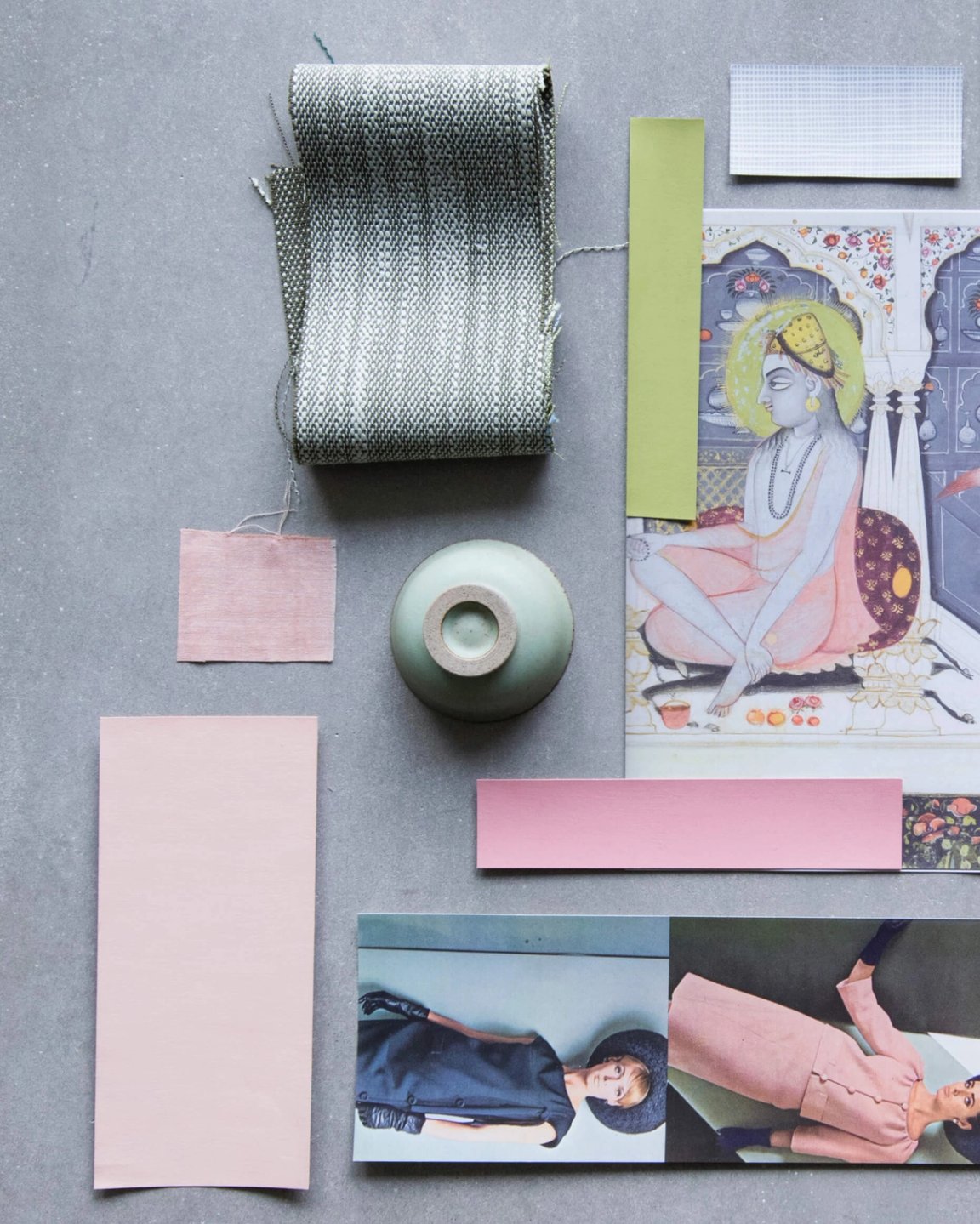
Raas and Lila
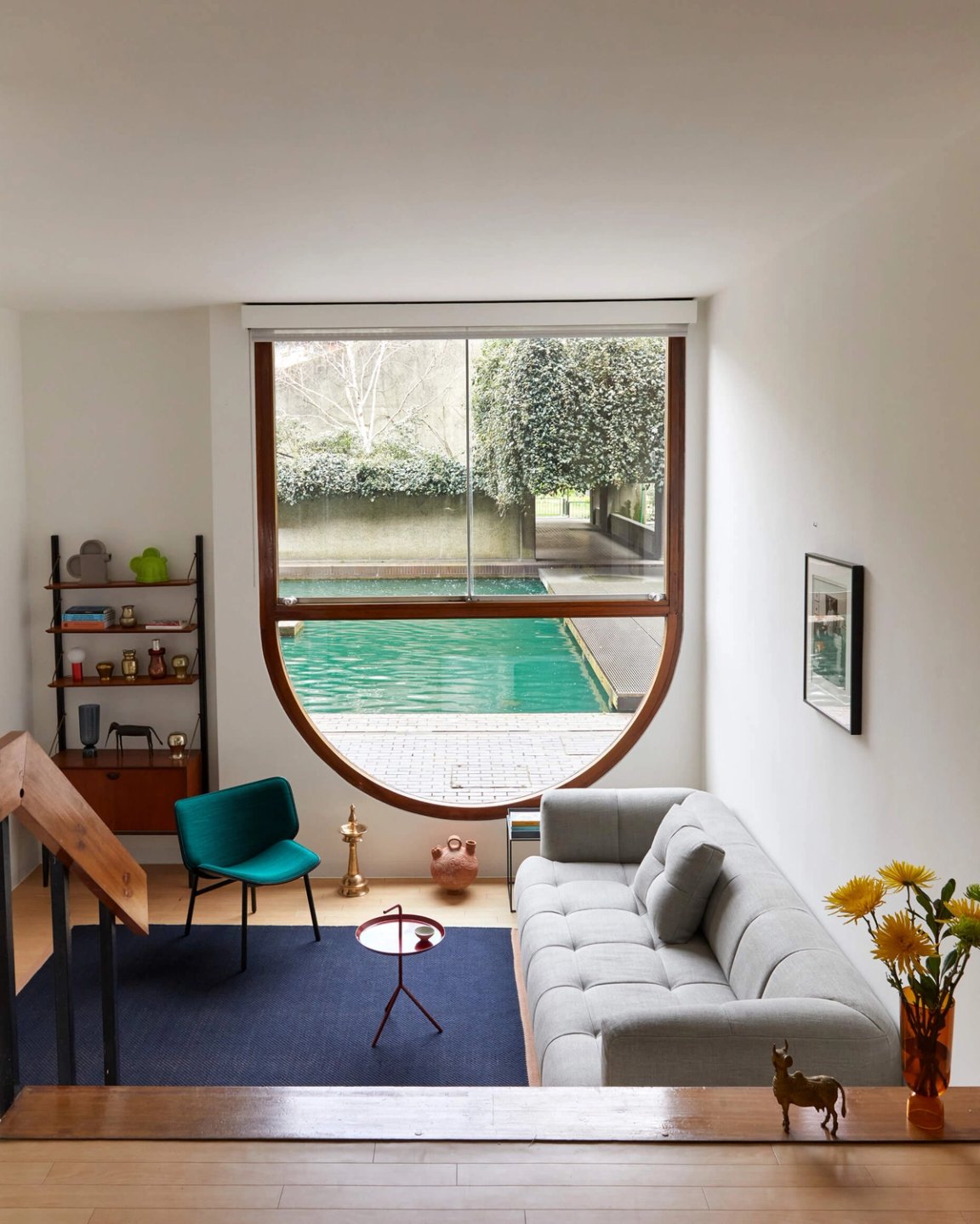
Barbican House
Sneak peek into the mind of Nipa Doshi as she walks us through her oeuvre at Doshi Levien
What is your approach while working with textiles and colour?
For the Raas and Lila fabrics we created for Kvadrat, I mixed close to 300 different colours in the studio1. When you work with textiles and colours, it’s only when you see the piece in person that you understand how it works. I’m always trying to work with colours that people think are unconventional, finding ways to experiment. The more you live with colour, the more you enjoy it.
How do you stay inspired?
Inspiration is everywhere if you know how to look. I remember when I was working in Delhi. I was in a rickshaw and the air was polluted. A bus pulled up next to me, and I just looked at the side of the bus and thought, “This is a beautiful red.”
What quality should young designers cultivate today?
Skill is crucial, whether it’s drawing or craftsmanship. But you also need a unique point of view and a perspective of looking at things. Success in design is rare – it requires exceptional talent and perseverance. Building a career takes time and you have to consistently hone your craft.
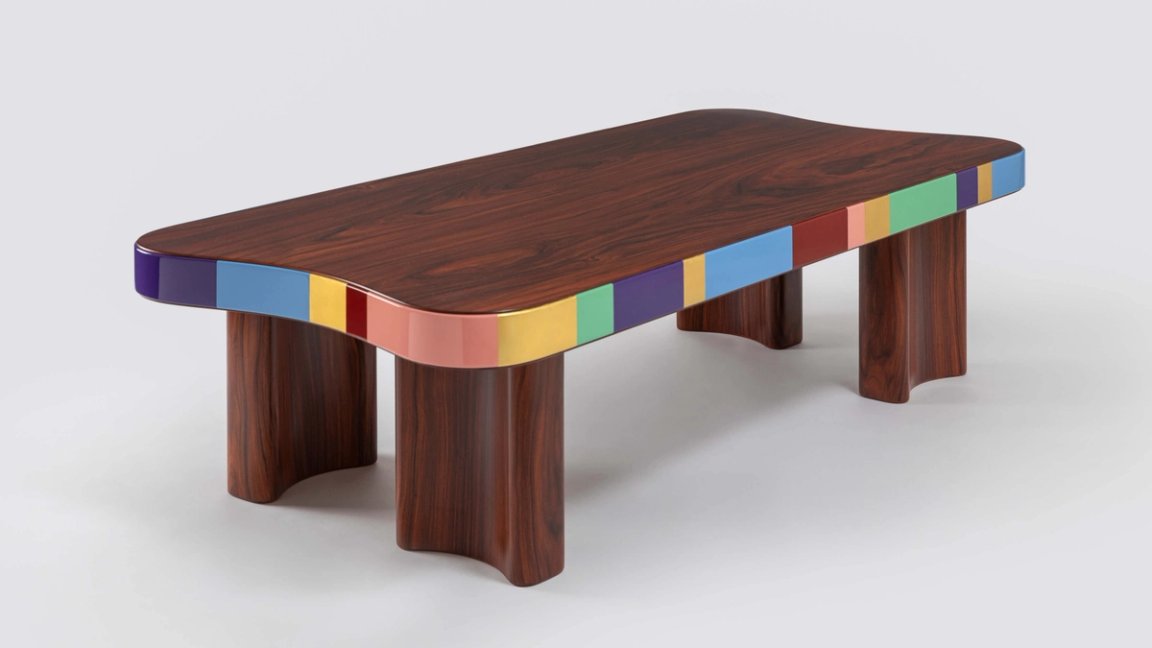
Kinari Collection
Meditative atmosphere or finding chaos in the calm. Which is your preferred work environment?
The neighbourhood is very East End, Cockney and quite diverse. But I derive energy from walking the city streets. The intensity of urban India, with its architecture, vendors and vibrancy, inspires me immensely.
Can you tell us about Kinari?
Kinari2, or me, is about the borders of textiles – like the ones in Indian saris, Jamdani or Kanjivaram, for instance. The border itself carries so many stories. A lot of research went into creating the sentences of colour and the proportion of it. It’s all about logic and how it contrasts with the richness of the wood.
How does culture play a role in your design process?
I see my work as an equal exchange between cultures. We bring together handcraft, industrial production, technology and storytelling from my Indian culture and Jonathan’s Scottish-European culture. I’m equally influenced by Casa Modernista in Brazil, as I am by the hand-woven embroideries that Rabaris do. What I’m trying to bring together is a way of living. I always feel like my work is for a new country that doesn’t exist yet.
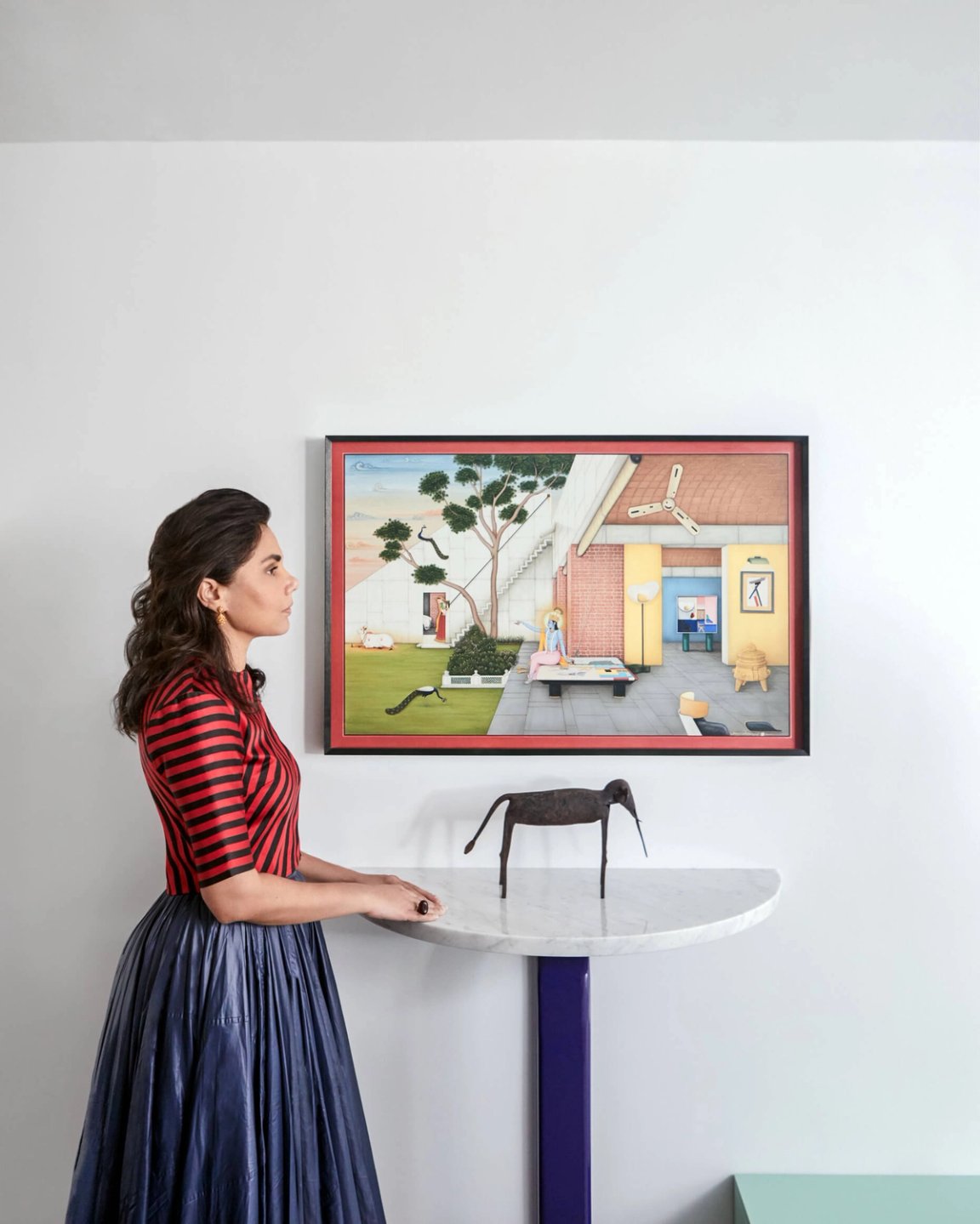
Nipa Doshi
What impression did your time at NID Ahmedabad and the RCA London leave on you?
I learnt a lot about design by just walking around the campus of NID Ahmedabad. The different studios and the multitude of ideas showed me there are no boundaries in design. Ahmedabad itself carries a layered complexity from the old market in the walled city to Corbusier’s and Kahn’s Modernist buildings. There is a juxtaposition of tradition and technology. When I came to the Royal College of Art I realised I’m really good at technical stuff but I’m not so interested in actually doing it. You don’t have to do everything you’re good at. Jonathan loves solving technical problems and understanding how something is made. I have a really good understanding of the technicalities, but I like drawing and thinking more.
What is your opinion on sustainability?
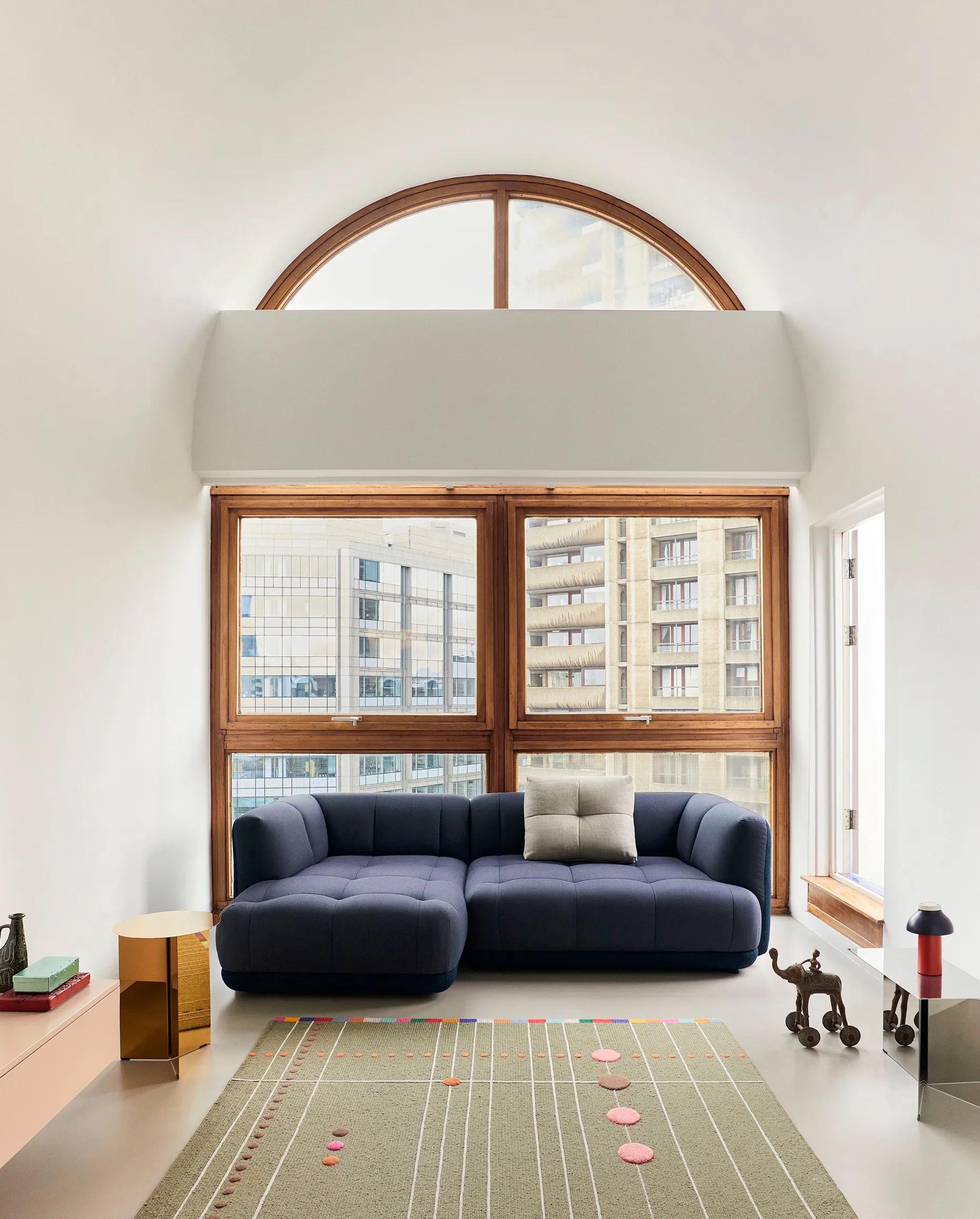
Apart from ecological consciousness, sustainability for me is also about sustaining communities and craft skills. This philosophy is embodied in the SHAAL sofa3 we designed for Arper which was constructed to be completely separable without the use of adhesives by local artisans near Arper’s factory in Treviso, supporting industrial and craft skills in the region.
Is there a designer who you look up to?
My father introduced me to B.V. Doshi’s work. He used to tell me Balakrishna bhai designed his own studio such that the garden would go inside the office. I formed this image in my mind about [Doshi’s studio] Sangath that stayed with me.
Chandlo translates to bindi in Gujarati, how did the idea inspire a dressing table?
My grandmother and mother imbued daily tasks, such as the act of dressing, with a sense of ritual. The application of the Chandlo4 marks the final, symbolic gesture in this practice of adornment in Indian culture. Transforming mundane everyday activities into deliberate, meaningful acts, inspired me to reimagine design – not as a static object but as an intentional action.
How did you feel when you and Jonathan were awarded the Member of the Order of the British Empire (MBE) for your services to design?
It comes full circle. Leaving India, leaving home, it was difficult for me to find my voice in London – in a culture that was not my own, where design was very minimal. This award made me feel that maybe London is also home.
- Nipa Doshi
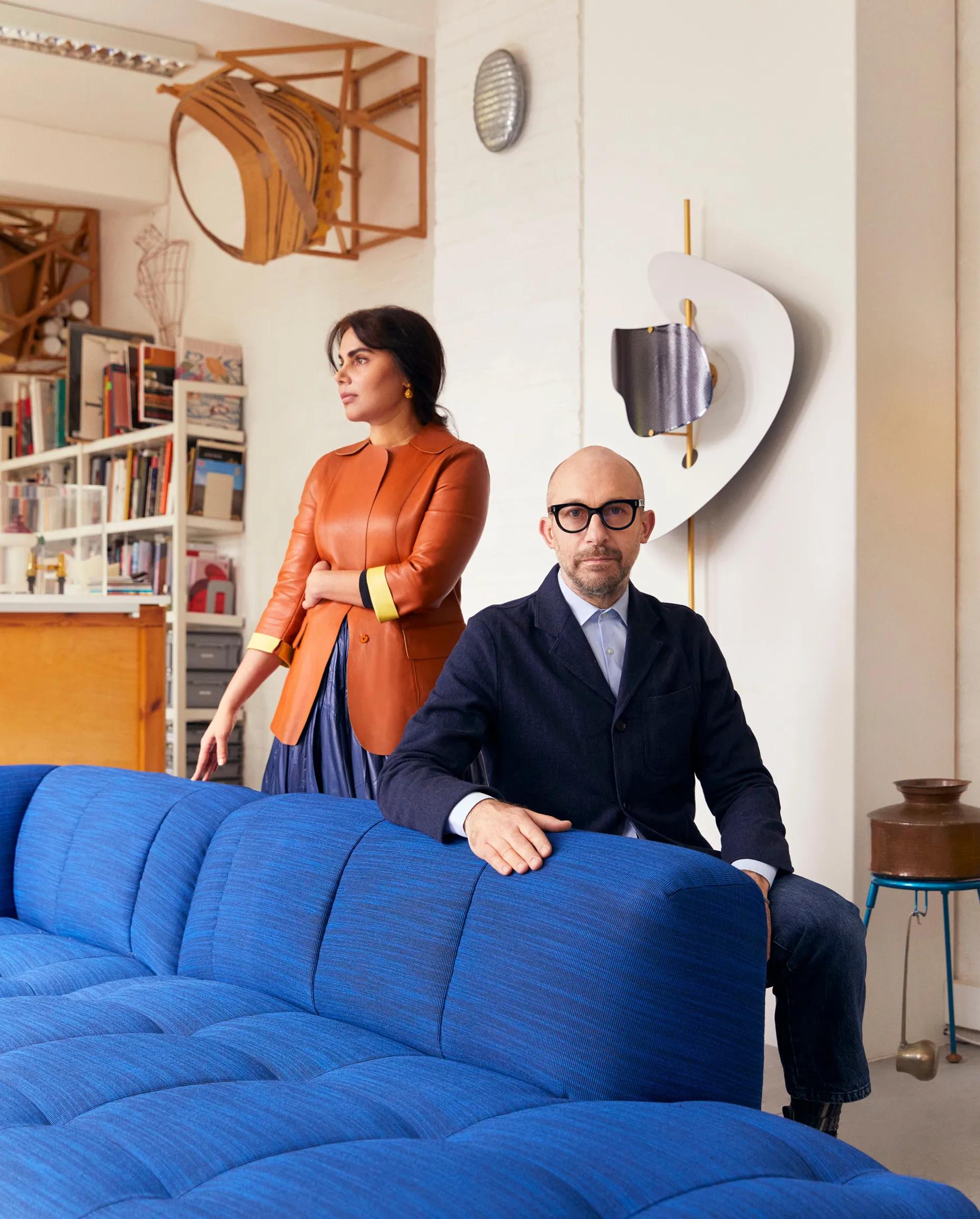.webp?w=384&q=85&fit=max&auto=format)
.webp?w=384&q=85&fit=max&auto=format)
.webp?w=384&q=85&fit=max&auto=format)