Chandlo
BD Barcelona
2012
Dressing Table
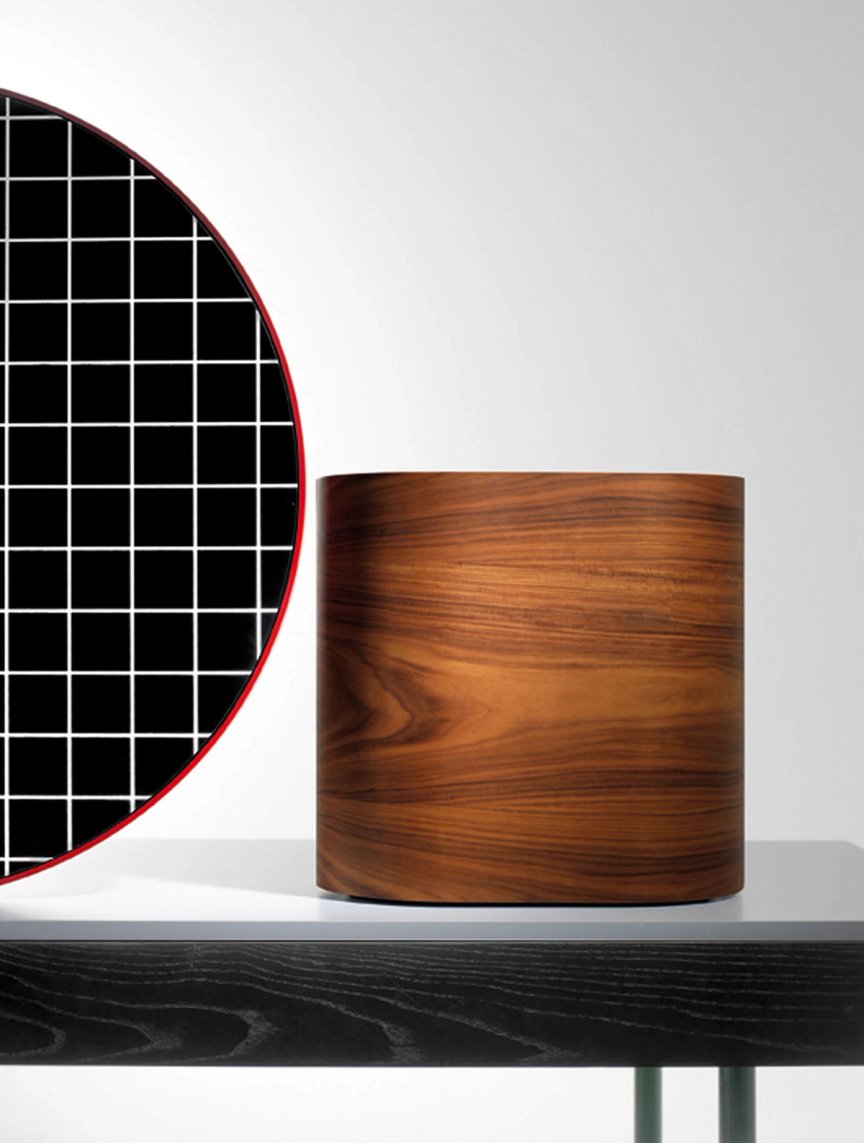
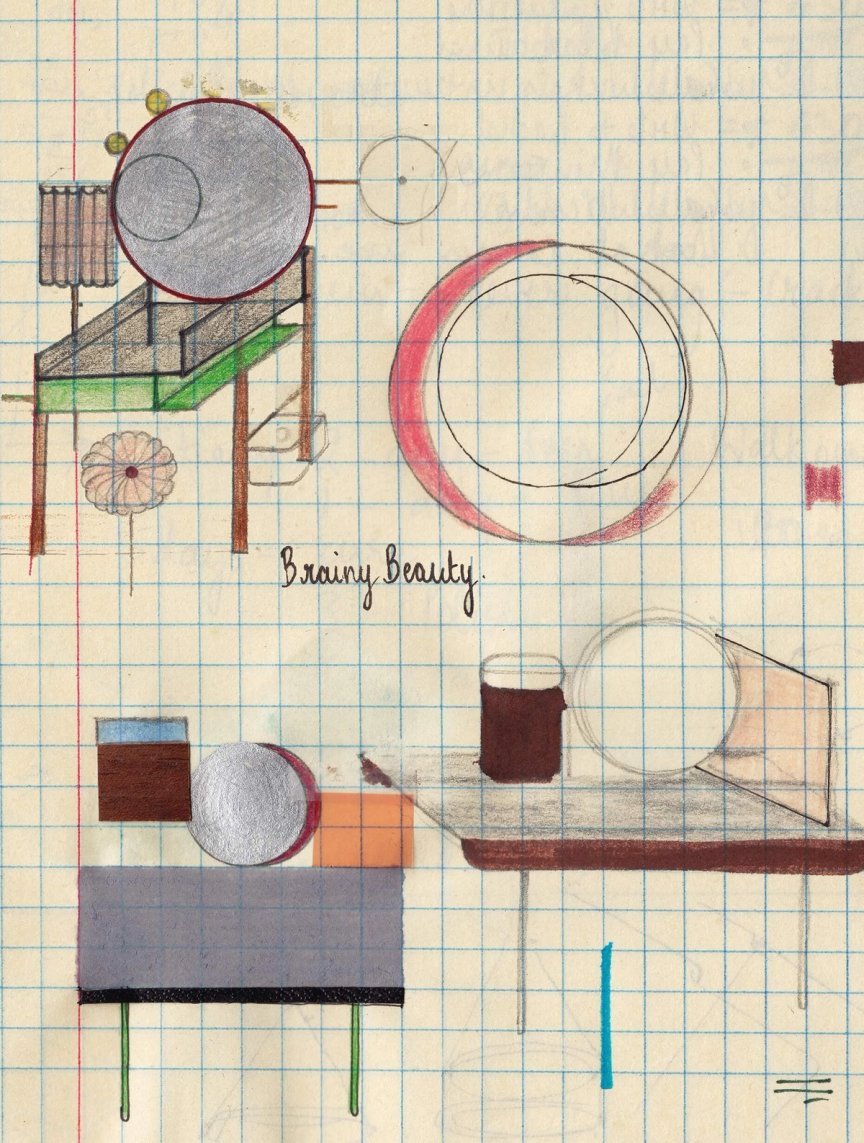
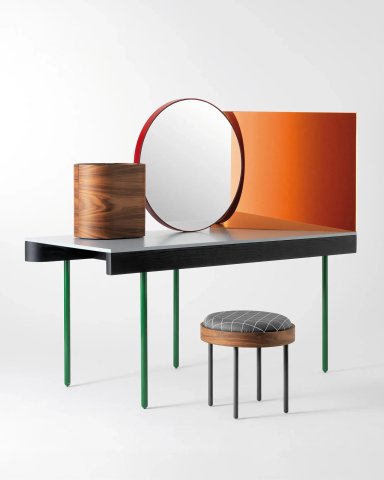
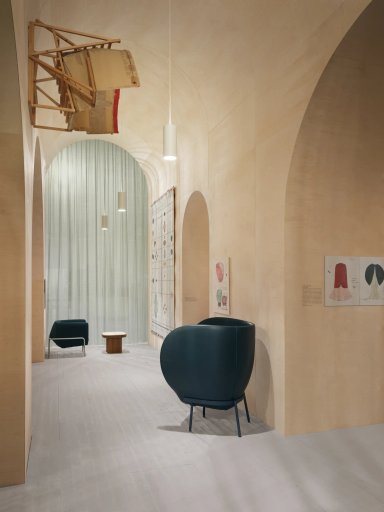
Chandlo was originally designed as a special prototype made by BD Barcelona for the 2012 Das Haus installation: Doshi Levien’s vision of a perfect home. Das Haus was conceived as a sequence of interconnected spaces opening onto a central courtyard, where the character of each area was defined primarily through objects and furniture rather than walls. Within this context, Chandlo occupied the dressing space – an arrangement of mirrors, planes and surfaces conceived as an architectural composition to be viewed from all sides. In Gujarati, Chandlo refers to the bindi worn by Indian women on the forehead, echoed in Doshi Levien’s circular mirror. The abstract assembly of the mirrors, cabinet and surface is rooted in the gestures and daily rituals of dressing and grooming, celebrating the enjoyment of getting ready as part of daily wellbeing. To maintain the clarity of this deconstructed composition, the design’s production methods had to be concealed – a challenge resolved with great skill by BD Barcelona. The dressing table was accompanied by a rotating stool with silver-embroidered leather cushions.
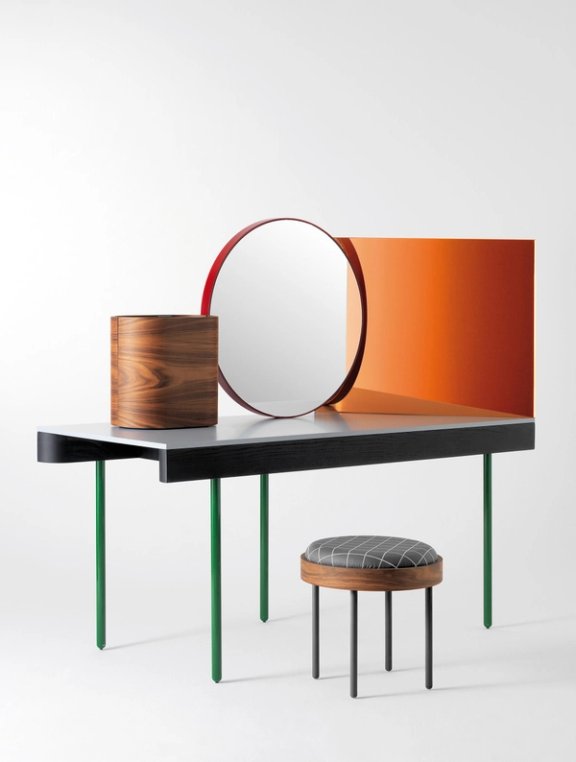
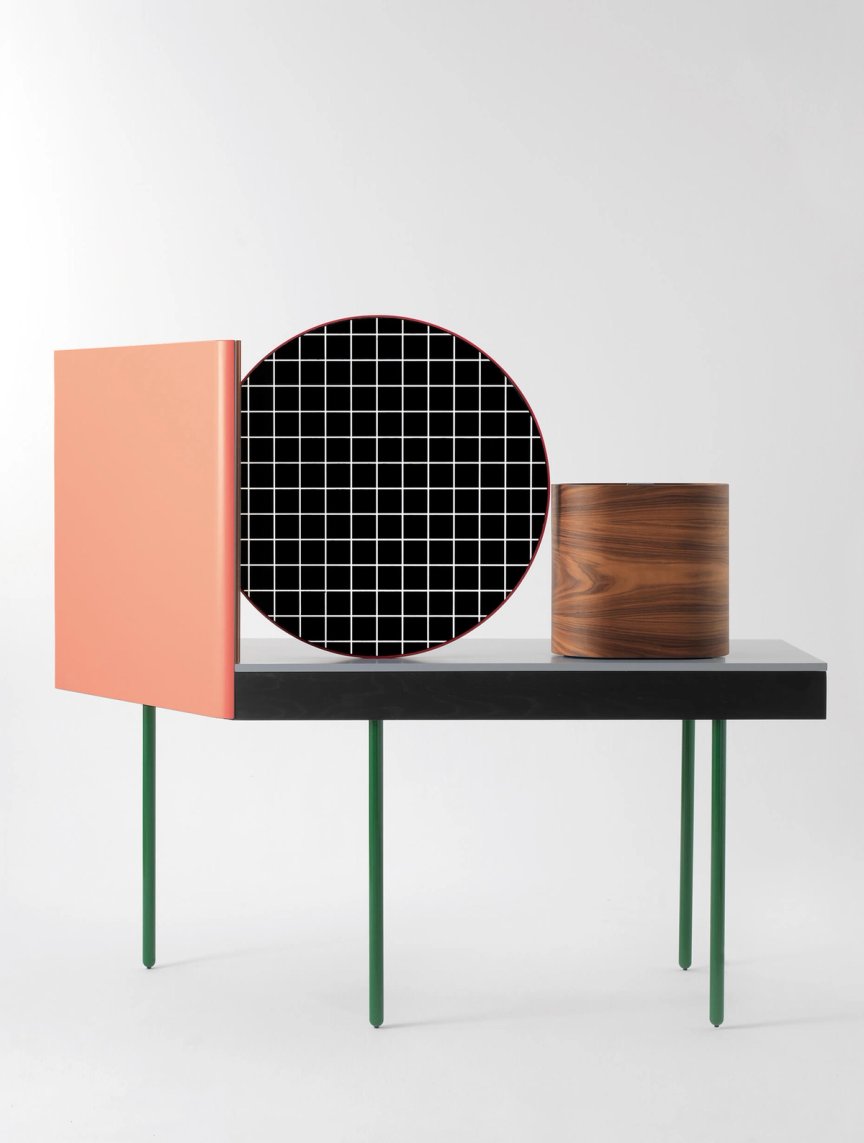
Dressing table for Das Haus 2012