A Room of My Own

NGV Melbourne

2025

Cabinet, Dressing Table

Description

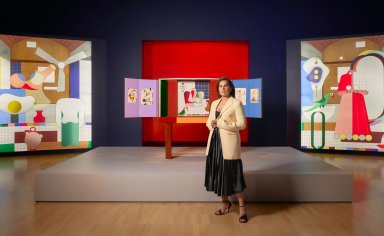
For the MECCA x NGV Women in Design Commission, Nipa Doshi shared a deeply personal reflection on how memories, rituals and relationships can enrich human experience through A Room of My Own. The project embodies Doshi’s design philosophy, which merges craft traditions with modernist design principles to celebrate the coexistence of cultural influences.

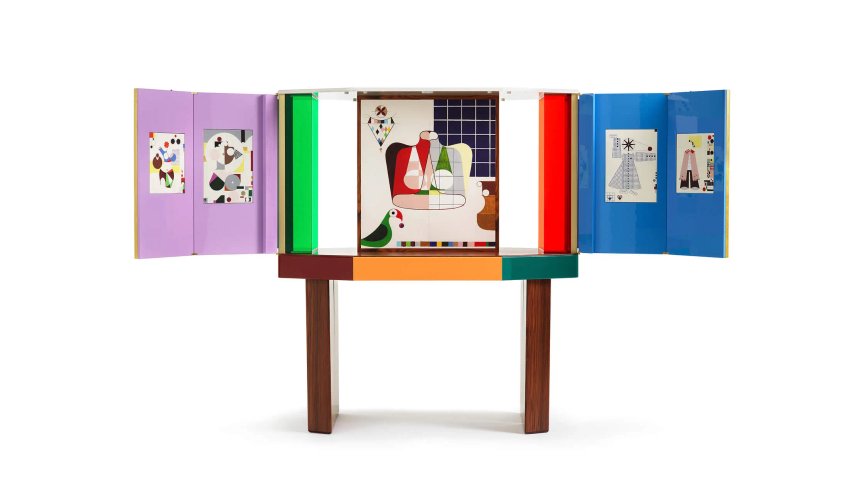
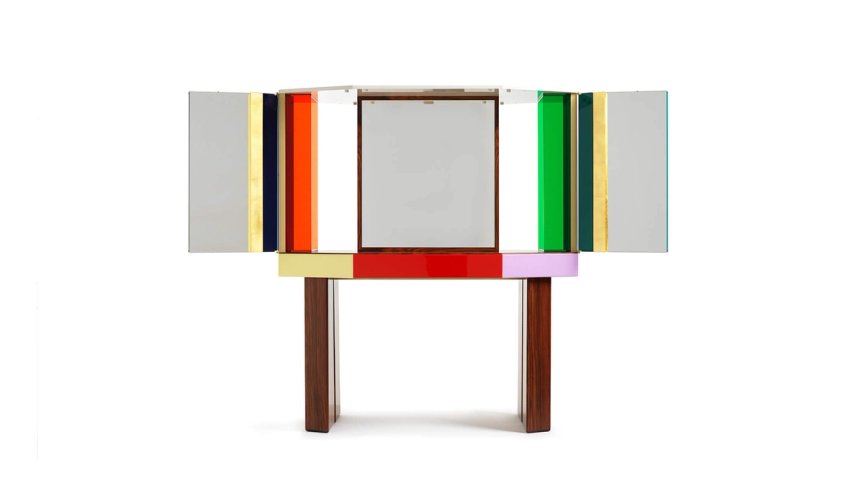
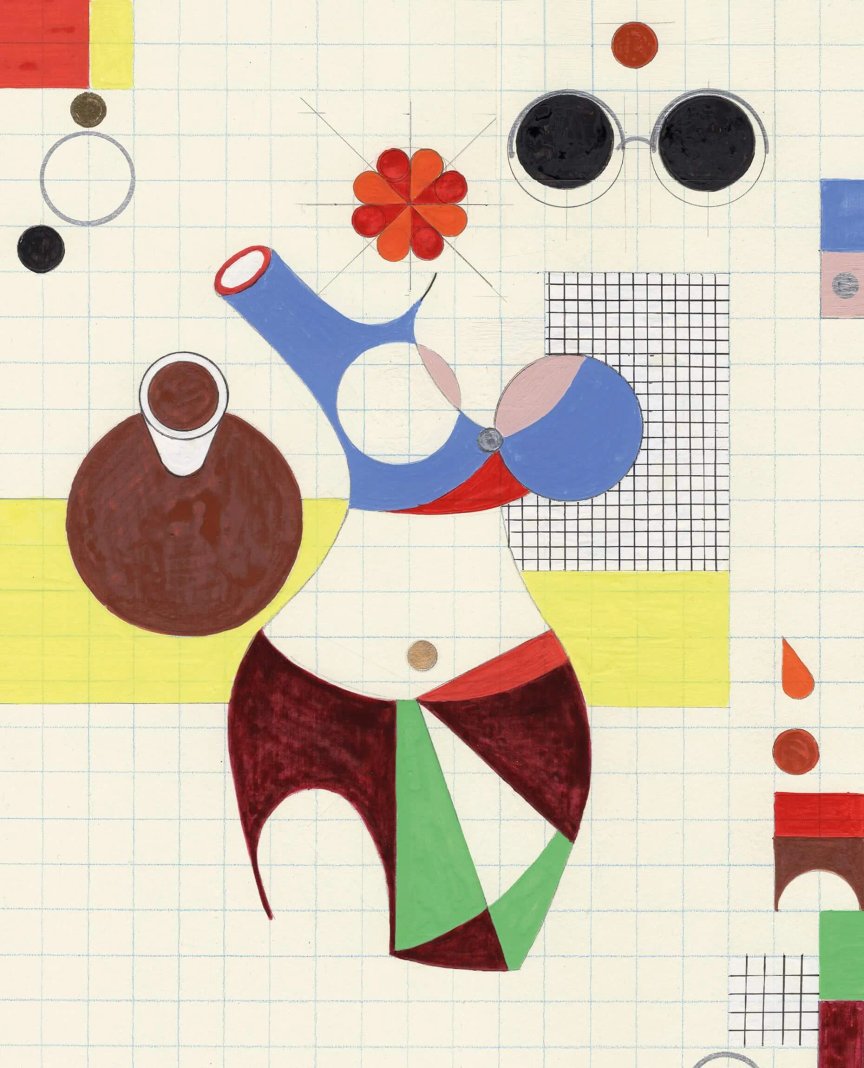
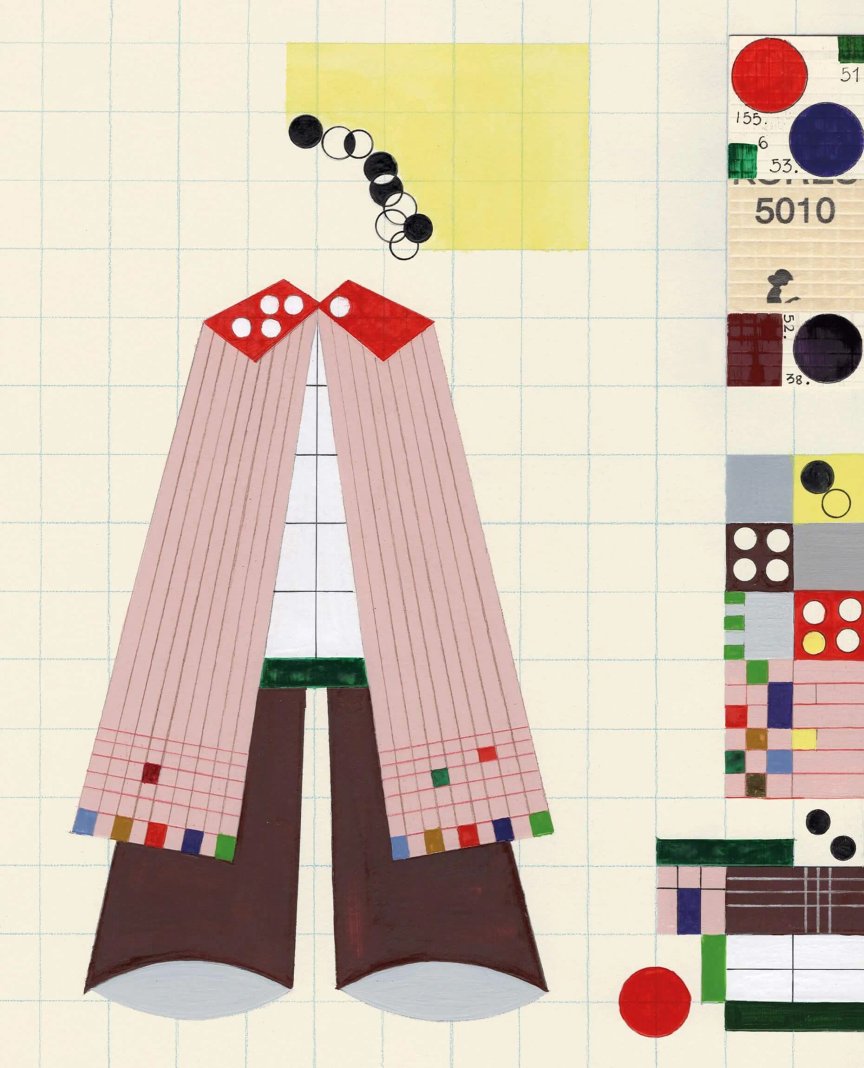
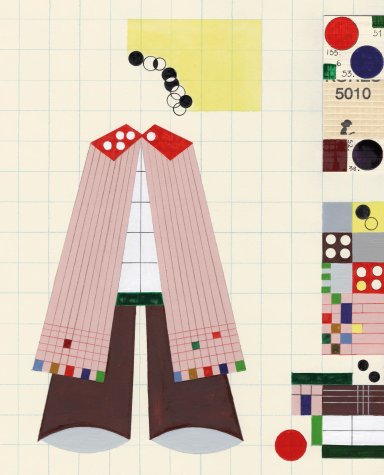
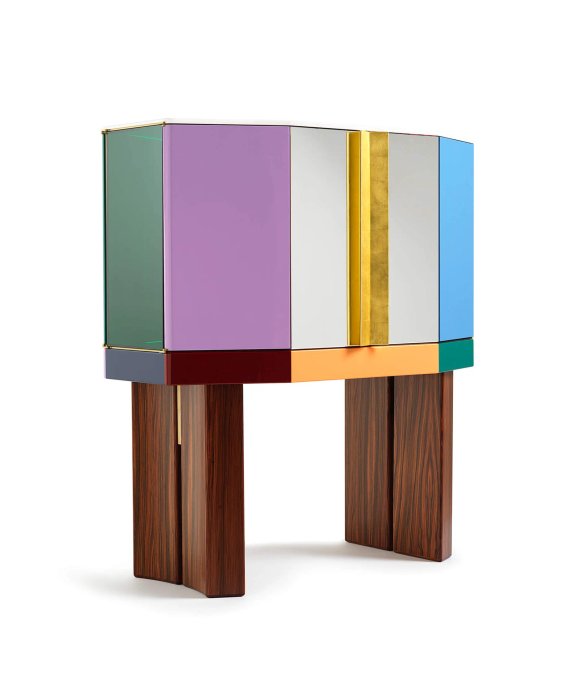
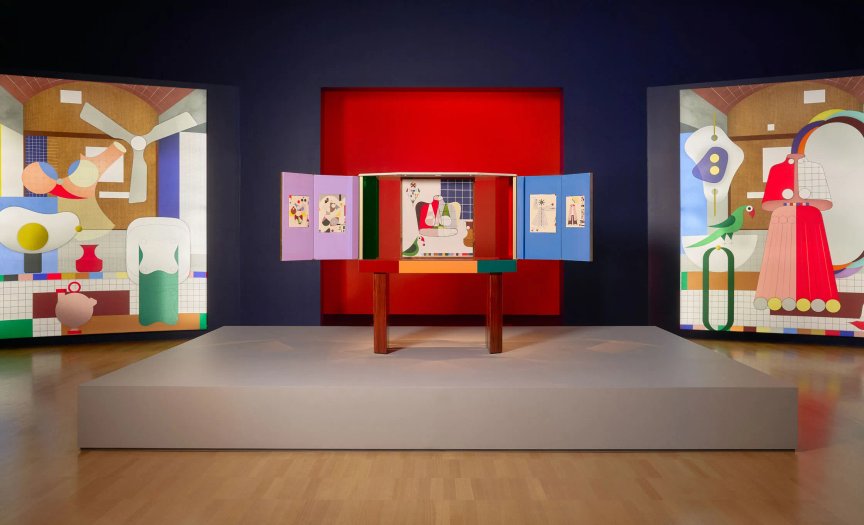
The multipurpose cabinet at the heart of A Room of My Own pays homage to the women who have shaped Doshi’s life. Inspired by the Indian kavad, a portable shrine that unfolds to create a temporary site of worship, the cabinet functions as an intimate “room” for gathering one’s thoughts. Accessible from two sides, the cabinet also includes a vanity and a writing desk – components that support contemplation and self-expression. Inside the cabinet, portraits by Doshi that were hand-drawn from memory capture the clothing, jewellery and gestures of women she has known and admired. Combining solid and void, colour and geometry, the materials and structure of the cabinet create an architectural composition that recalls the buildings that inspire the designer.

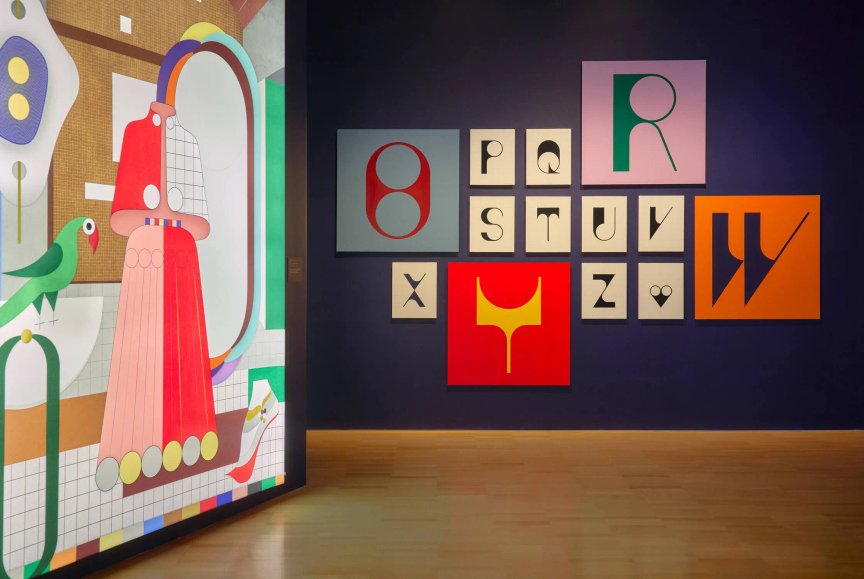
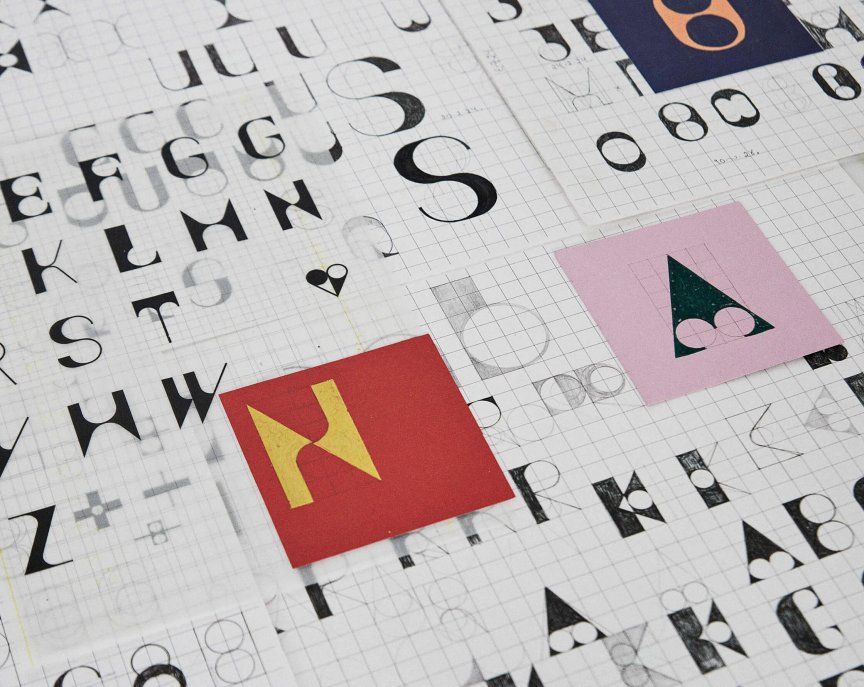
Accompanying the cabinet is Doshi’s first custom typeface, a bold and ornamental design originally drafted by hand. Together, these elements represent a kind of manifesto for Doshi’s practice: complex, layered and deeply rooted in cultural narratives, celebrating design as a living practice of care and creativity.
Credits
Installation photos: Derek Swalwell
A Room of My Own
NIPA DOSHI’S HANDCRAFTED CABINET
(Fig 1)

NIPA DOSHI’S HANDCRAFTED CABINET

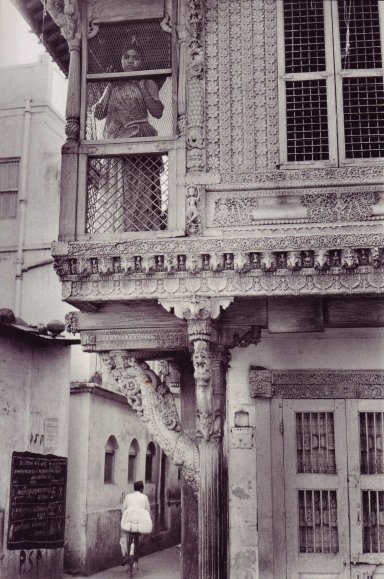
Nipa Doshi’s handcrafted cabinet is experienced in the round. Conceived as a double sided “room” for nurturing oneself through small daily rituals, the cabinet provides a platform for reflection, writing and dressing. The work evokes a distinctly architectural quality, referencing the buildings that formed the backdrop to Doshi’s upbringing in post-independence India, when European modernist ideals were reimagined through the local culture. This coexistence of worlds – modern forms, vibrant colour, familiar domestic rituals – is captured here, along with vivid snippets from Doshi’s memory.
(Fig 2)

A ROOM OF MY OWN CABINET

A Room of My Own reimagines the Indian kavad shrine as a vibrant cabinet of memory. With hand-drawn portraits of inspiring women, it merges writing desk and dressing table to celebrate daily rituals of care, reflection and the feminine influences that shape Nipa Doshi’s creative world.
(Fig 4)

CABINET DRAWINGS: ZEENAT, LOUD LADIES, MAYA, NINA
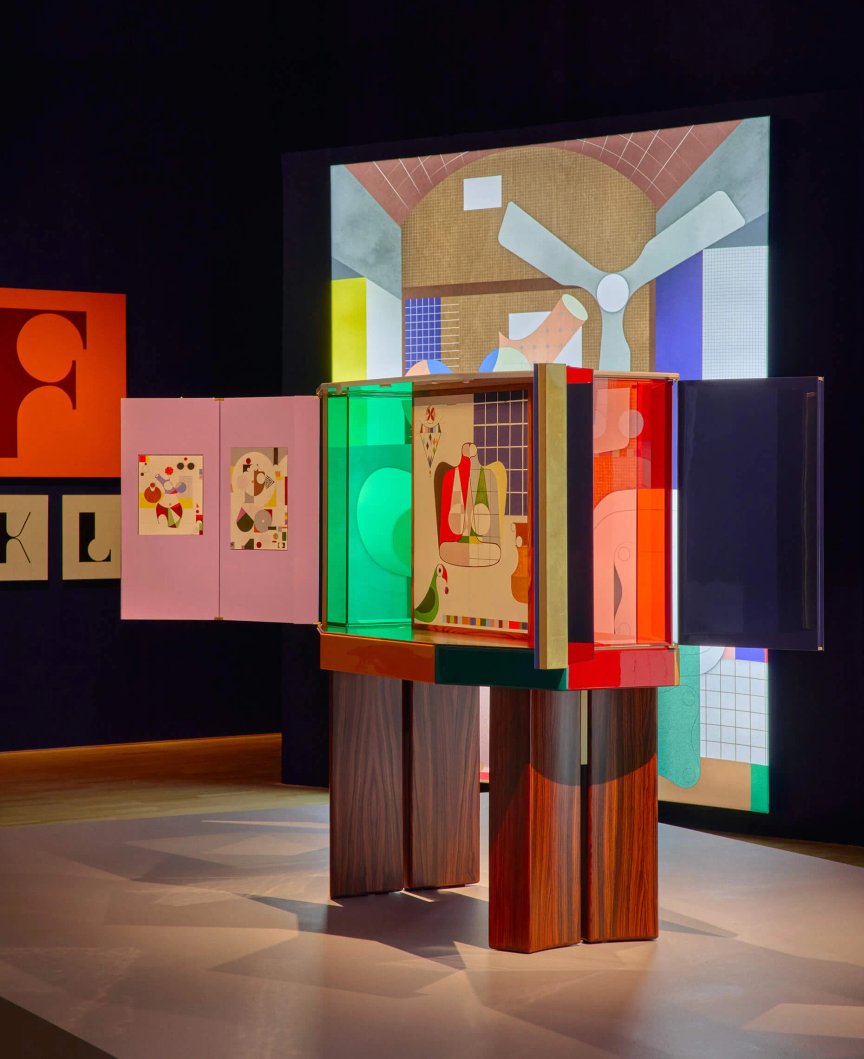
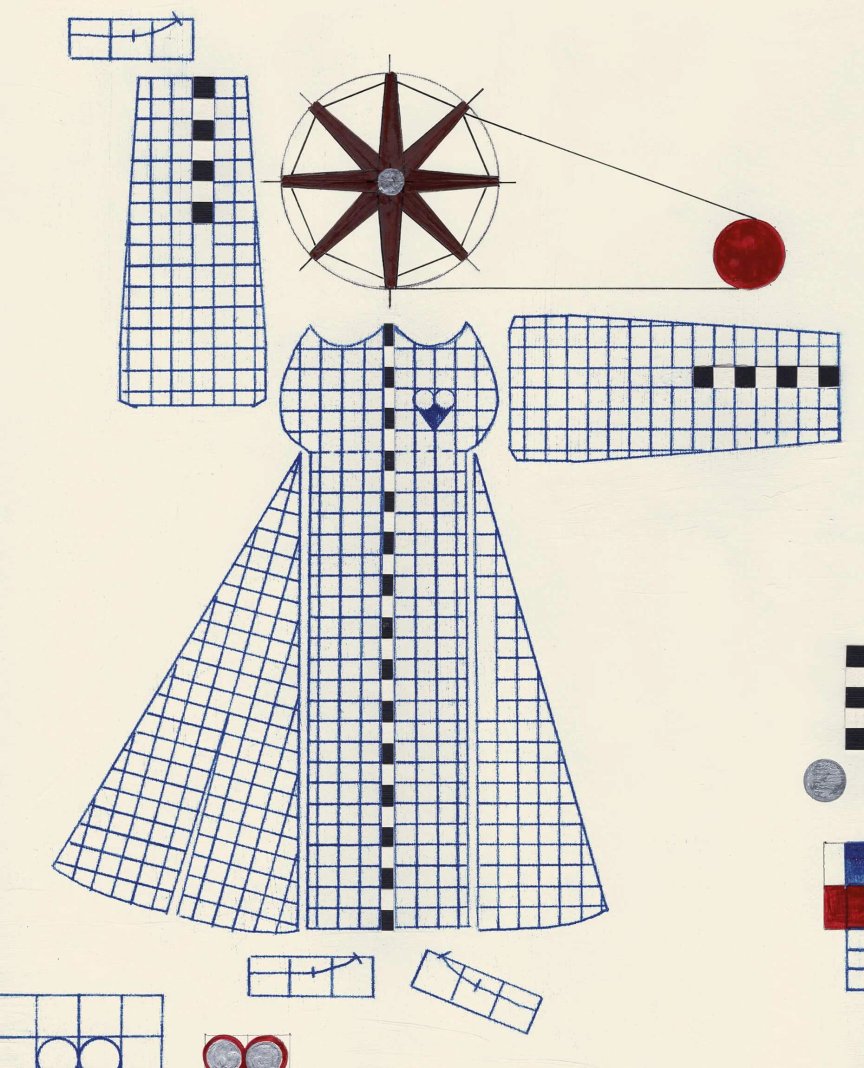
Inside her cabinet, Nipa Doshi’s hand-drawn portraits honour women who have influenced and inspired her, transforming the work into a vessel for her values, culture and personal passions.
A ROOM OF MY OWN
(Fig 5)

A ROOM OF MY OWN

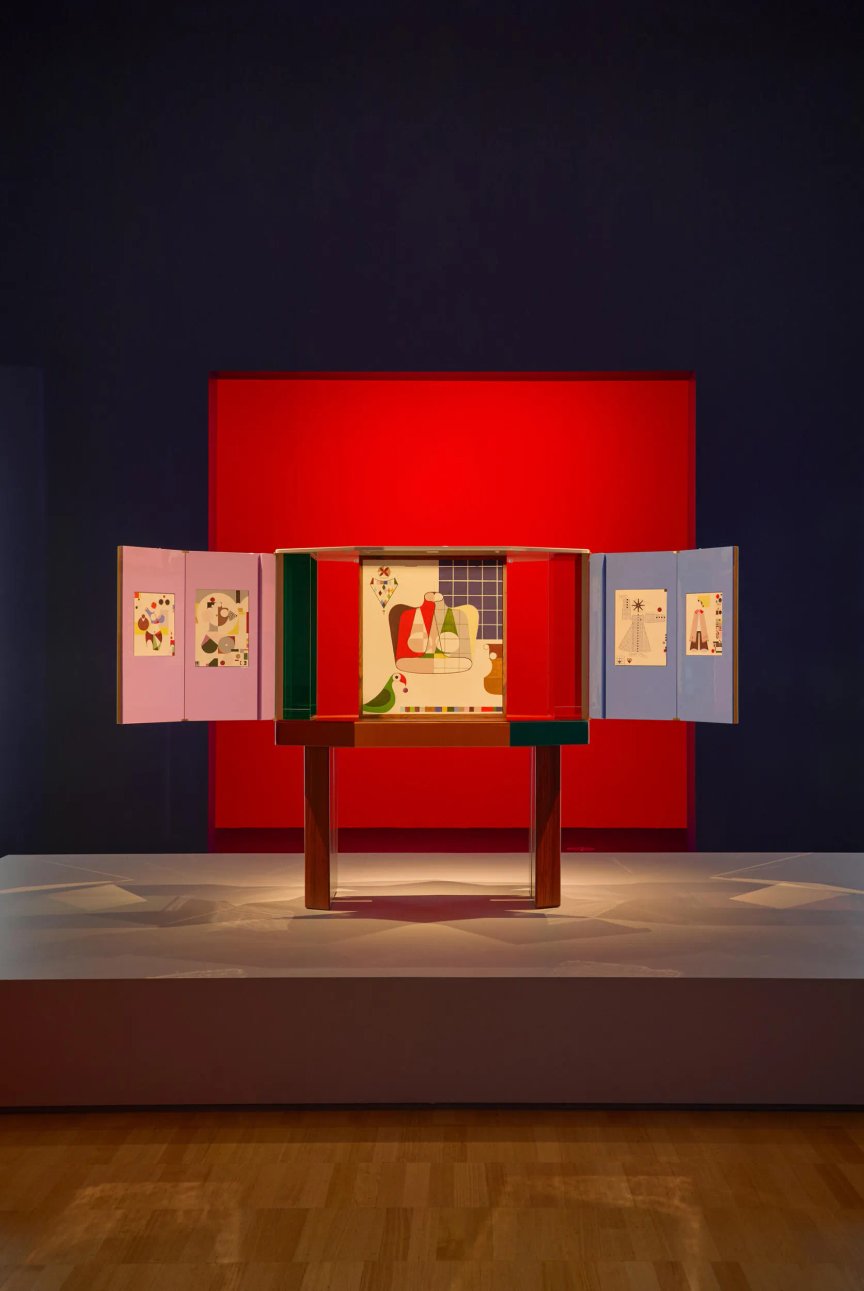
The Cabinet opens to reveal a shrine on one side, inhabited by Nipa Doshi’s drawings of influential women. Green and red coloured glass cases feature at either end of the cabinet, allowing light into the volume and providing a place to display objects.
CONCEPT DRAWING OF MULTIFACETED CABINET
(Fig 6)

CONCEPT DRAWING OF MULTIFACETED CABINET

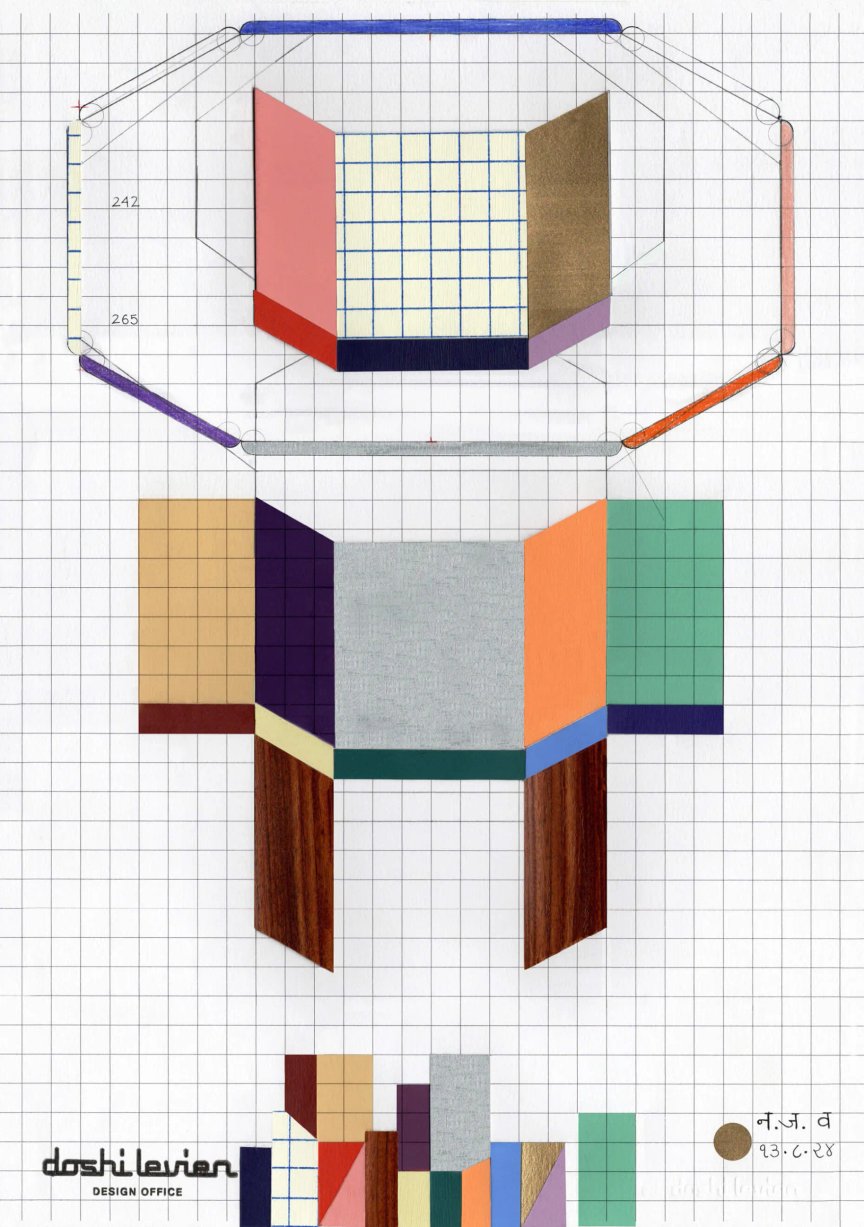
The cabinet started with Nipa Doshi’s drawing of a multifaceted architectural shape. An object as space. A dressing table on one side, a shrine and writing desk on another. Coloured glass boxes on each side to let light in, but also a place to display favoured things. It represents a careful juxtaposition of colour, material and space.
ARRIVING AT THE SHRINE
(Fig 8)

ARRIVING AT THE SHRINE

The multipurpose cabinet at the heart of A Room of My Own pays homage to the women who have shaped Nipa Doshi’s life. It was inspired by the Indian kavad – a portable shrine that unfolds to create a temporary site of worship.
SELF PORTRAIT
(Fig 9)

SELF PORTRAIT

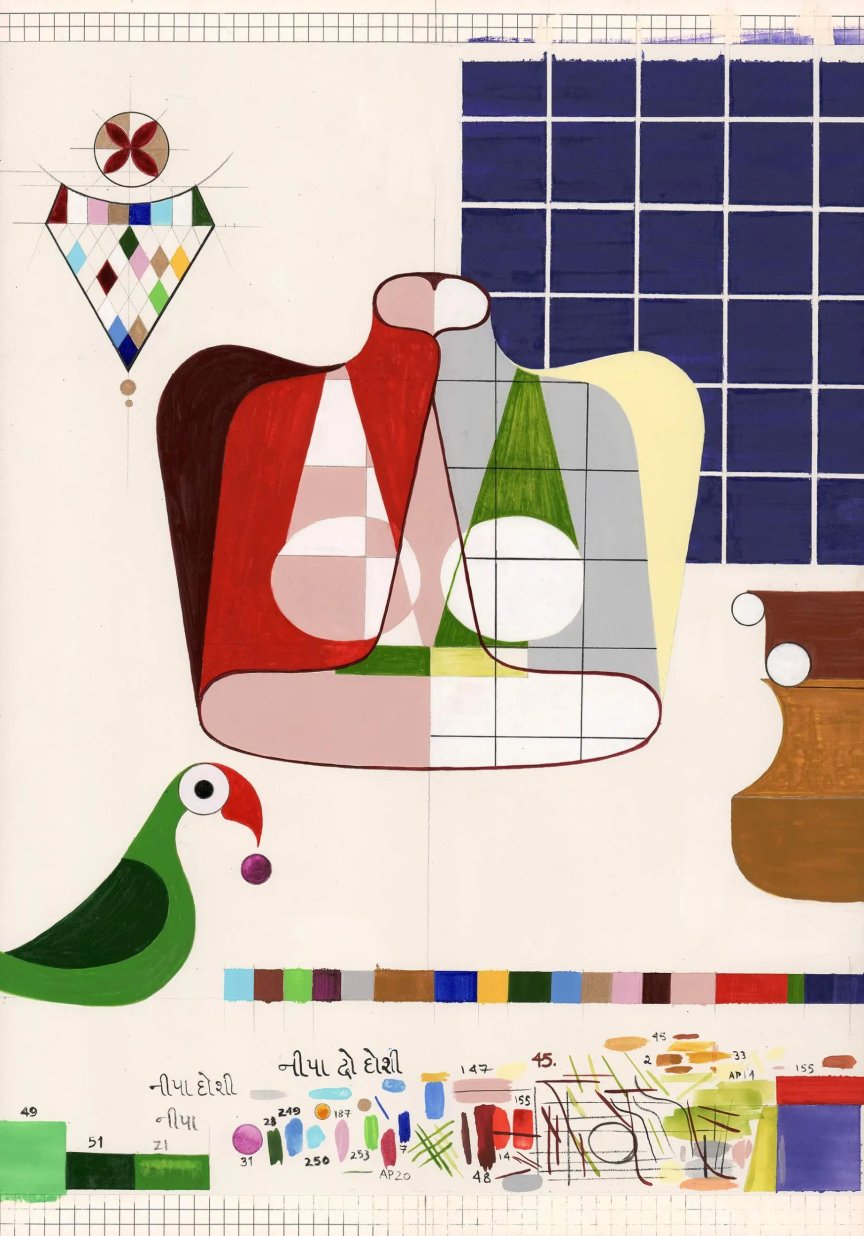
In the centre of A Room of My Own cabinet is a painting by Nipa Doshi reflecting her sense of self as a layered, fragmented, vulnerable and confident woman, and someone who pursues beauty in everything she creates. The painting is a coming together of vivid memories of her grandmother's earrings, love of tailoring and pattern cutting, in addition to the Indian parakeets in her aunt’s garden and everyday objects.
NIPA DOSHI’S DEBUT TYPEFACE
(Fig 10)

NIPA DOSHI’S DEBUT TYPEFACE

Nipa Doshi translates her design sensibility into letters, numbers and symbols that function as both communication and composition. Each character is conceived as an object, recalling the precision of engineered machine components or fine jewellery, reflecting Doshi’s admiration for functional and decorative objects crafted with purpose and precision. The typeface evokes two-dimensional architectural plans and diagrams, extending Doshi’s spatial thinking into graphic form. For Doshi, typography is an egalitarian medium – a tool that others can use to create and communicate.