Living Objects

Grand Hornu

2013

Exhibition

Description

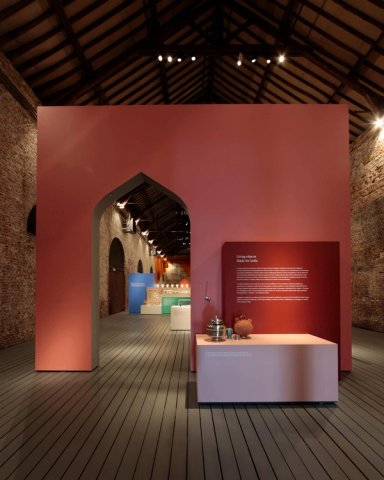
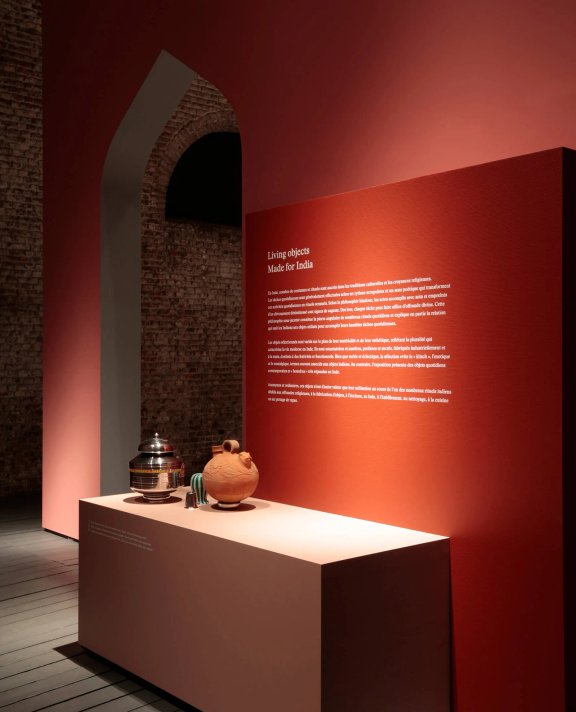
Celebrating the plurality of Indian culture and its material environment, Nipa Doshi and Jonathan Levien assembled a series of everyday Indian objects obtained from markets, shops and family homes, sourced from New Delhi to Trivandrum. Many pieces come from Doshi Levien’s personal collection, while others were gathered specifically for Grand Hornu.

Together, these objects form Living Objects – not a factual inventory, but an invitation to encounter India through the objects that shape its domestic and social life.

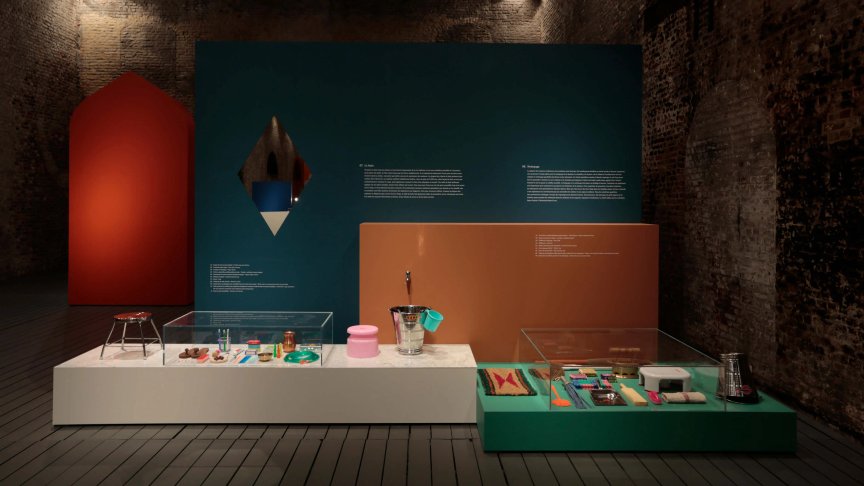
Each item reflects a world of customs, values and sophisticated daily rituals. Rather than presenting objects as artefacts, Doshi and Levien focused on their lived context: how they are used, handled, stored, gifted, worn or passed between generations. The project reveals an India that is tactile, layered and plural; an India understood through practice rather than representation.
Living Objects proposes that ordinary things carry the identity of a place: its rhythms, its gestures and its ways of living.
Credits
Curation: Doshi Levien
 Exhibition design: Doshi Levien
Living Objects
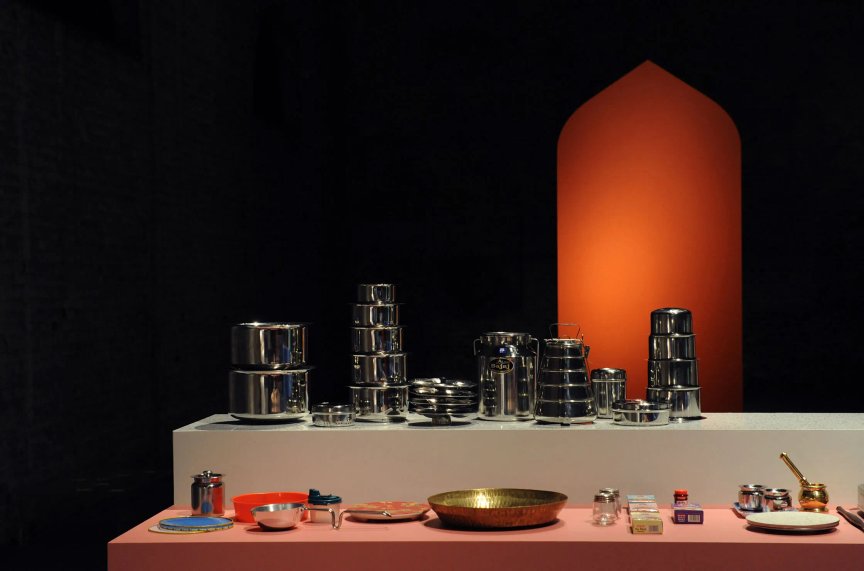
THE KITCHEN
THE KITCHEN
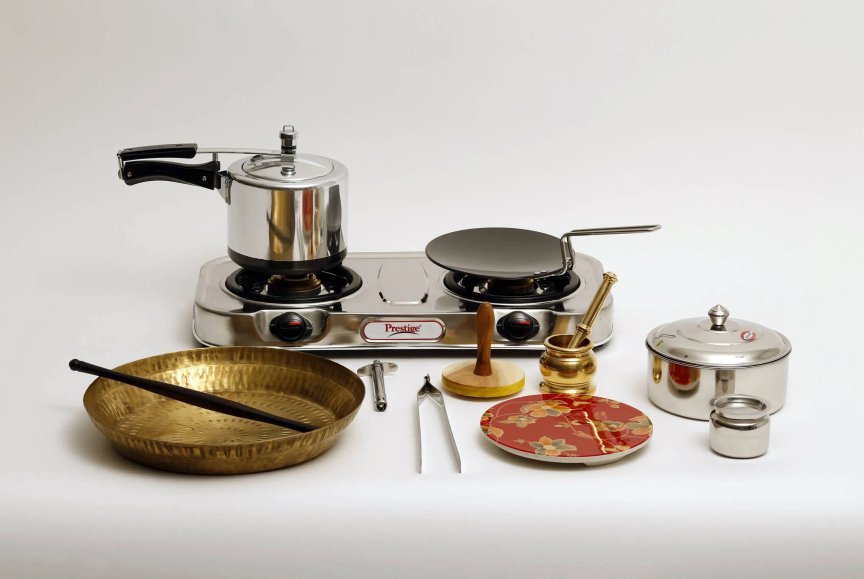
(Fig 1)

THE KITCHEN

The most intensely used space in an Indian home. Since the tradition of eating freshly prepared hot meals is an important part of the daily Indian diet, the kitchen is in constant use and almost like a busy workshop. If living in a joint family, a single kitchen may be used by many family members at once. Often the kitchen floor is also used as work surface. Grains, cereals and spices are bought and stored in large quantities.
BATHING
BATHING
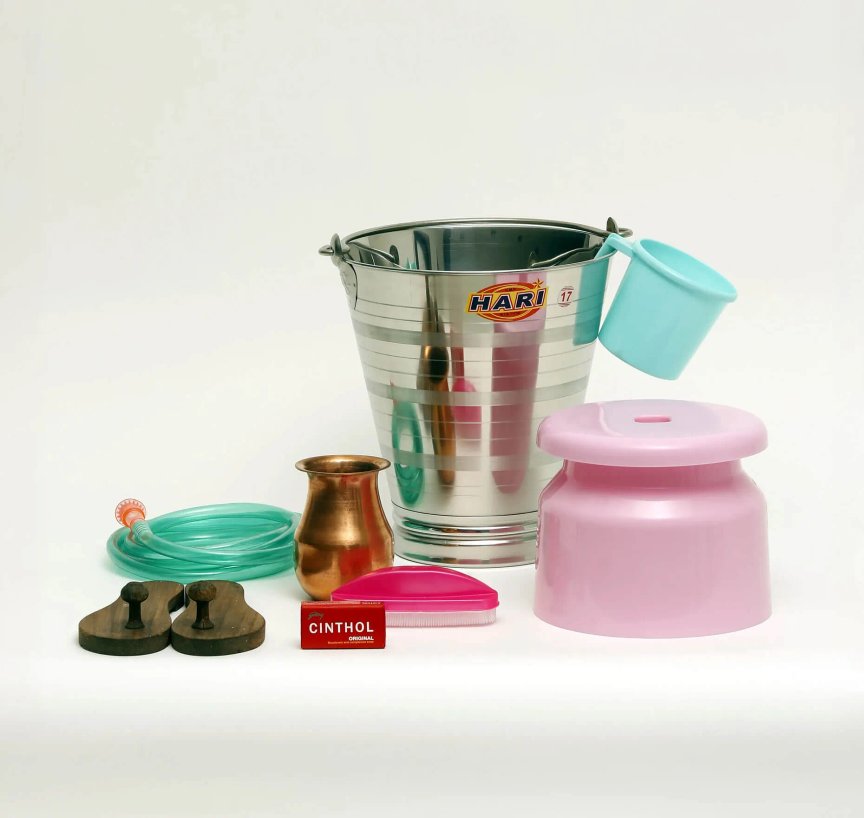
(Fig 3)

BATHING

Every day in the morning, bathing is an important aspect of Indian life and a pre-requisite to performing the morning Puja or prayer. In many traditional households, it is also important to have bathed before entering the kitchen, where the shrine may be found in many homes.
TOOLS FOR MAKING
TOOLS FOR MAKING
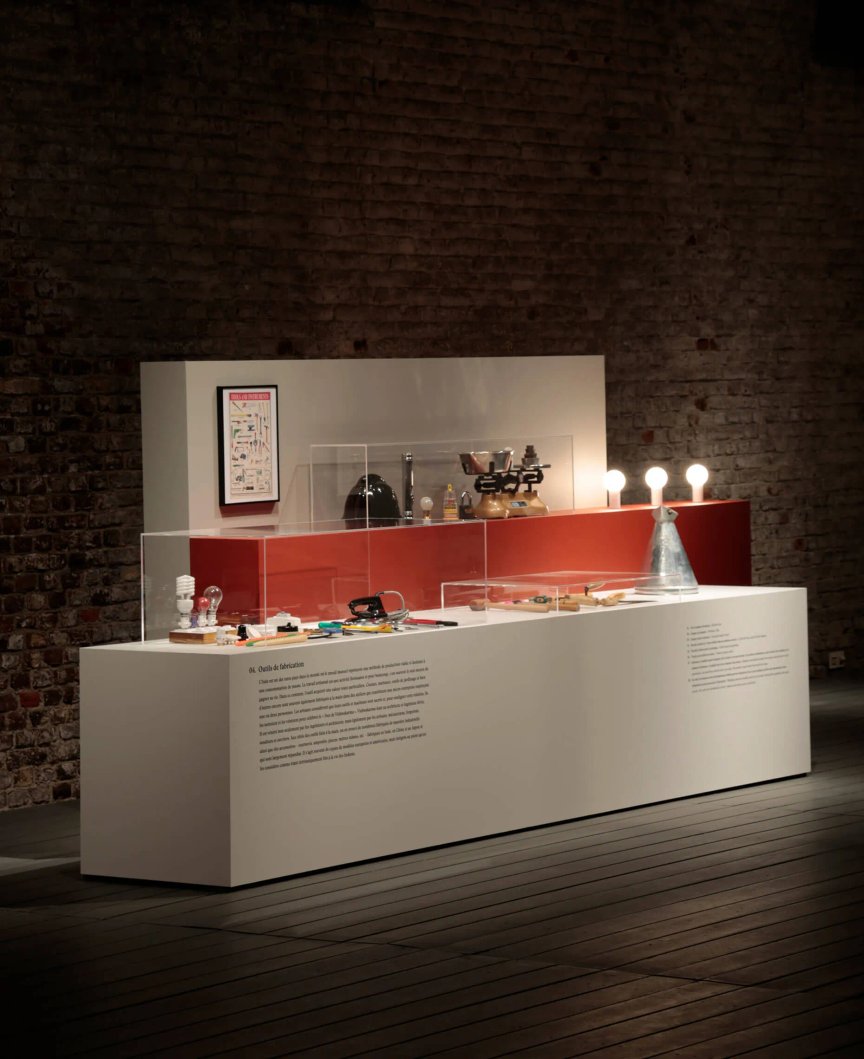
(Fig 5)

TOOLS FOR MAKING

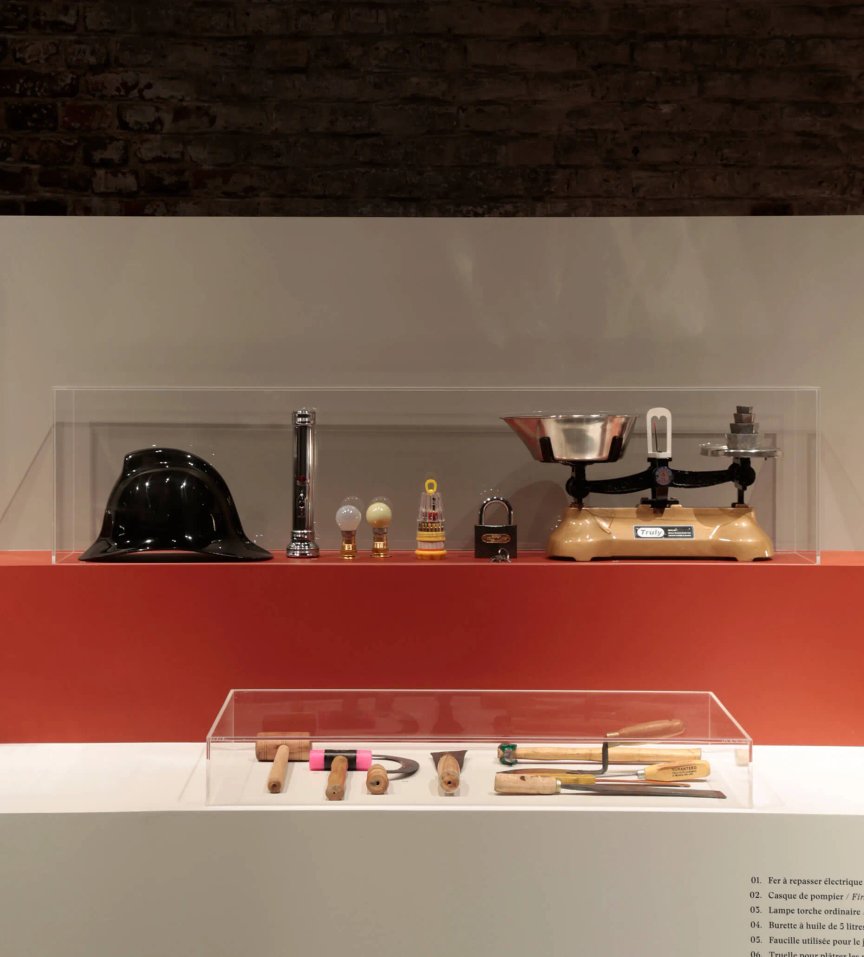
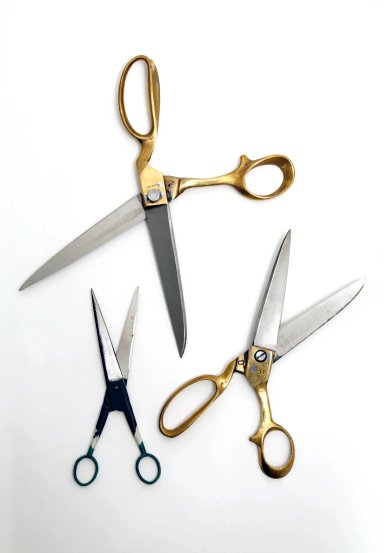
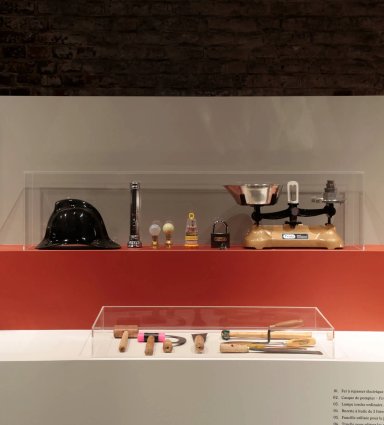
India is one of very few countries in the world where handcraft is a viable method of volume production for mass consumption. Making by hand is thriving and often represent the only means for many people to earn a livelihood. In busy markets in cities and towns, it is typical to see rows of small open-fronted workshops making tools used by other tradesmen: scissors, hammers, gardeners tools and hand-bound notebooks among others.
SHRINE FOR SACRED OFFERINGS
(Fig 7)

SHRINE FOR SACRED OFFERINGS

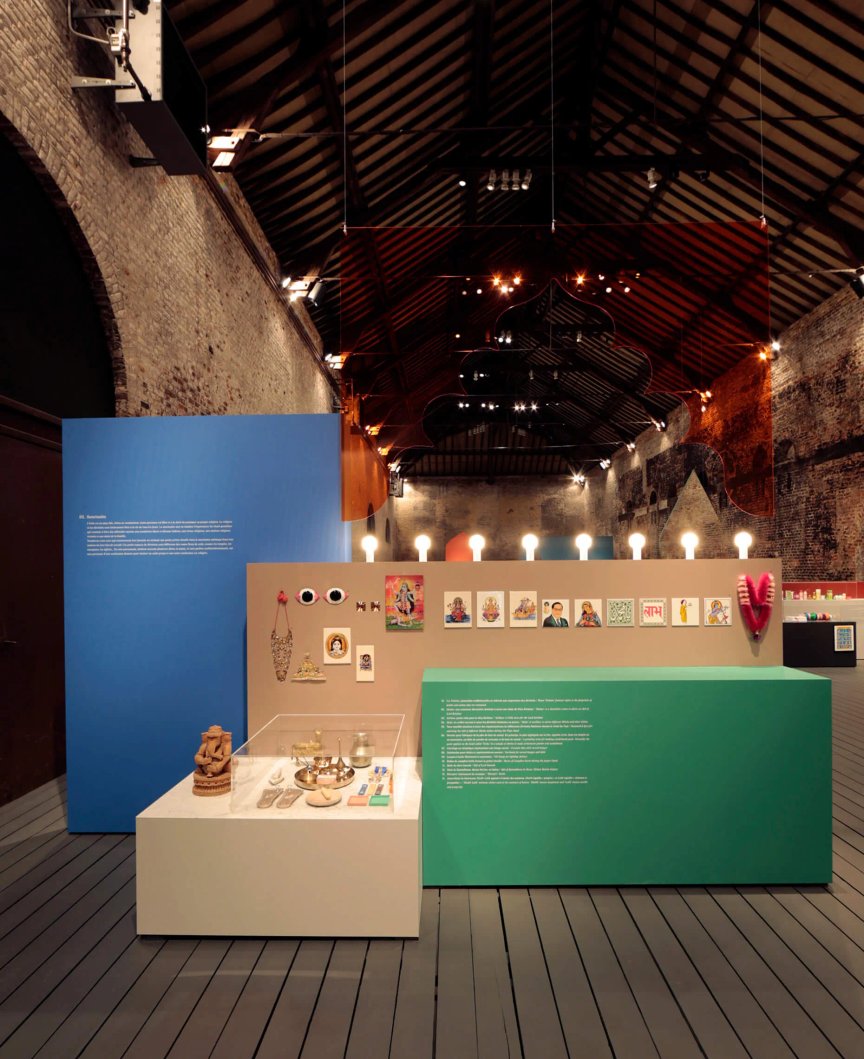
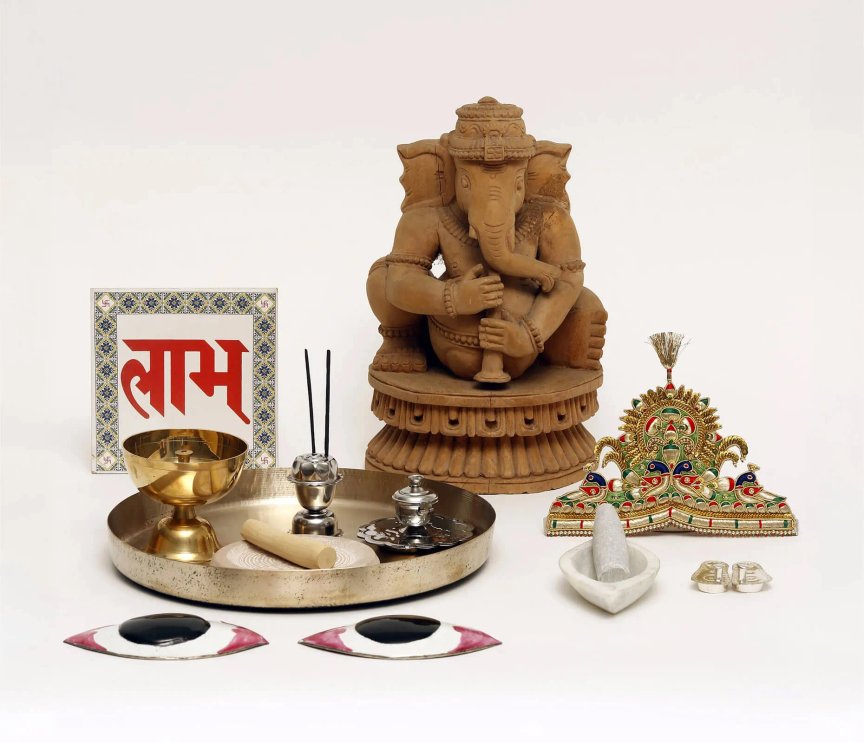
India is a constitutionally secular country and, according to this constitution, every individual has the freedom and right to practice their religion. Religion and God are intricately linked to everyday life in India. The shrine highlights the important everyday ritual of making sacred offerings to many Indian gods, goddesses, religious texts, revered religious teachers and even family elders.
EPHEMERA: POSTAL AND OTHER STATIONERY
(Fig 9)

EPHEMERA: POSTAL AND OTHER STATIONERY

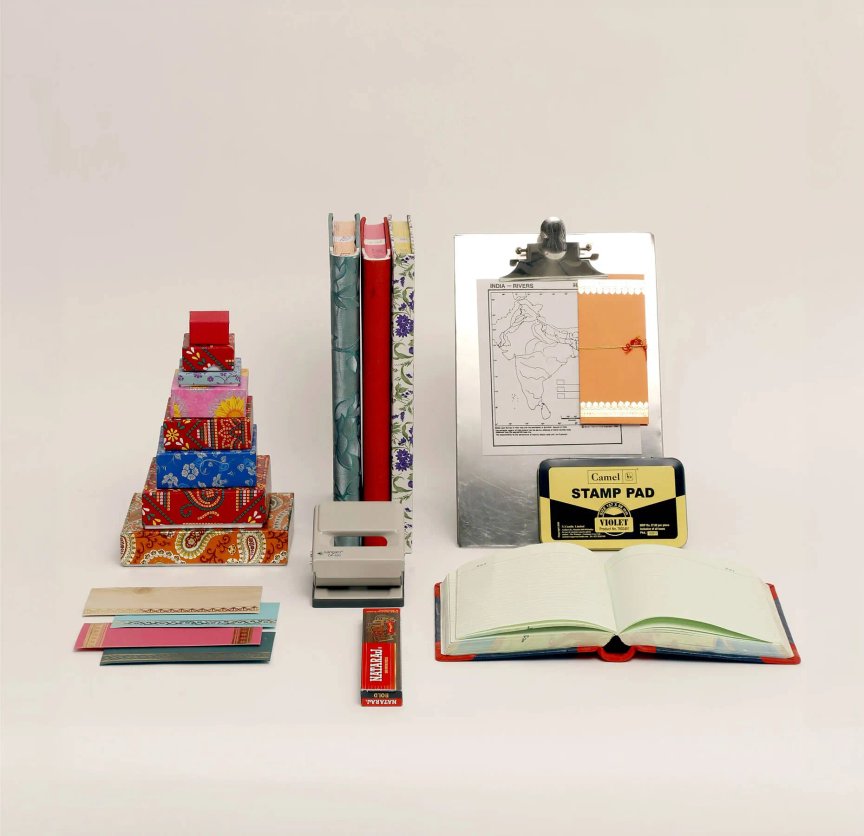
Making and keeping handwritten records of quotidian activities – writing letters, studying, seeking permission, giving money gifts and accounting for business transactions, for example – has resulted in many objects typical to India. Cash is still the most popular method of conducting commercial transactions and small businesses continue to use account ledgers for bookkeeping. There are many standardised stationery objects and ephemera for schools, and a map of India is a recognisable icon when it comes to school stationery.