In conversation
The Made Bed
In conversation
With Nipa Doshi
Photography by Jonas Lindström
Rituals of daily life
Photography by Jonas Lindström
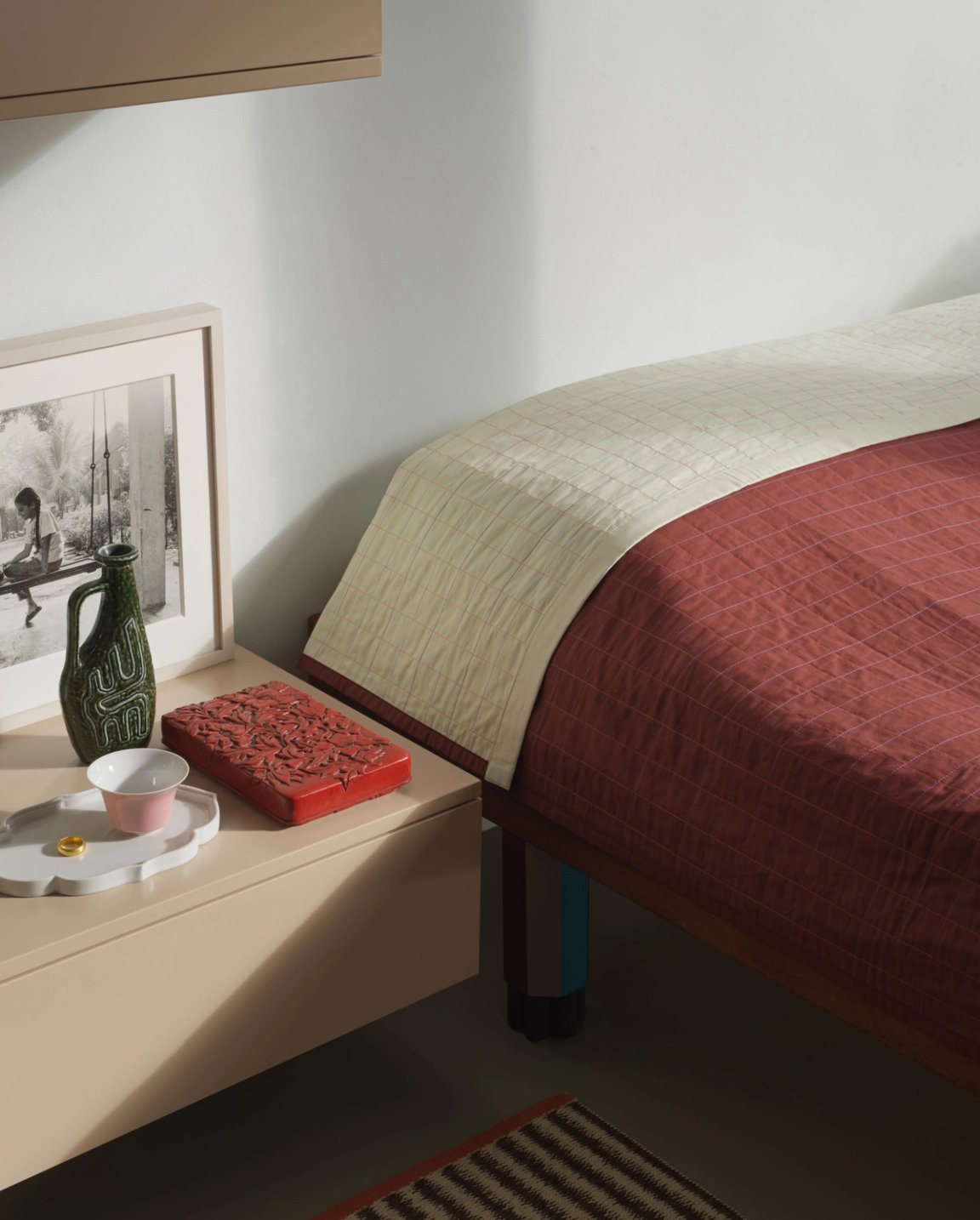
Dori for HAY
In this conversation, Nipa Doshi reflects on the idea that design is as much a way of doing things as it is about objects. Through Dori, the studio’s first textile collection for HAY, she reflects on the value of dressing a bed and the role it plays as a social space.
The discussion traces back to earlier Doshi Levien projects, Principessa and Object of Devotion. Although very different in character, each explores the bed as more than a functional object. In these works, the bed surface becomes a place where pattern, architecture and everyday rituals give form to narrative.
With Dori, your bedspread and cushion collection for HAY, the conversation seems to move beyond textile design into something broader: the rituals of daily life, and the way we shape our environments through simple actions. The act of making the bed becomes surprisingly important.
For me, making the bed is a very important ritual. It is the first act of the day, a form of renewal. Through the very simple gesture of folding and arranging a textile, the purpose of the bed changes from being a place of rest into a space for living.
The reversible nature of Dori came from this idea. By turning the bedspread over, or folding it differently, the bed takes on another identity. I think of it almost as dressing a bed. The embroidered grid guides the fold and the coloured borders define the edges. These features hint at different ways to use the textile.
You speak about the bed almost as a social and architectural space, rather than simply a functional object.
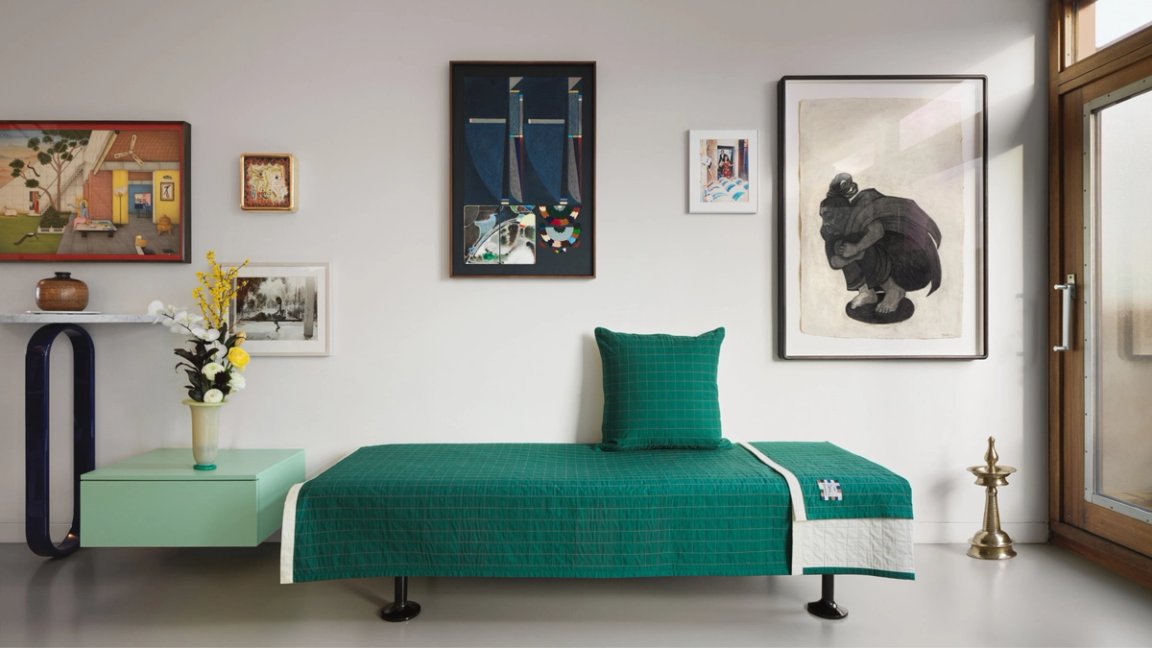
I grew up in India where the bedroom is never understood purely as a private space. During the day, the bed becomes a place to sit, read, spend time with family and friends.1 The bedspread transforms the bed into another kind of platform.
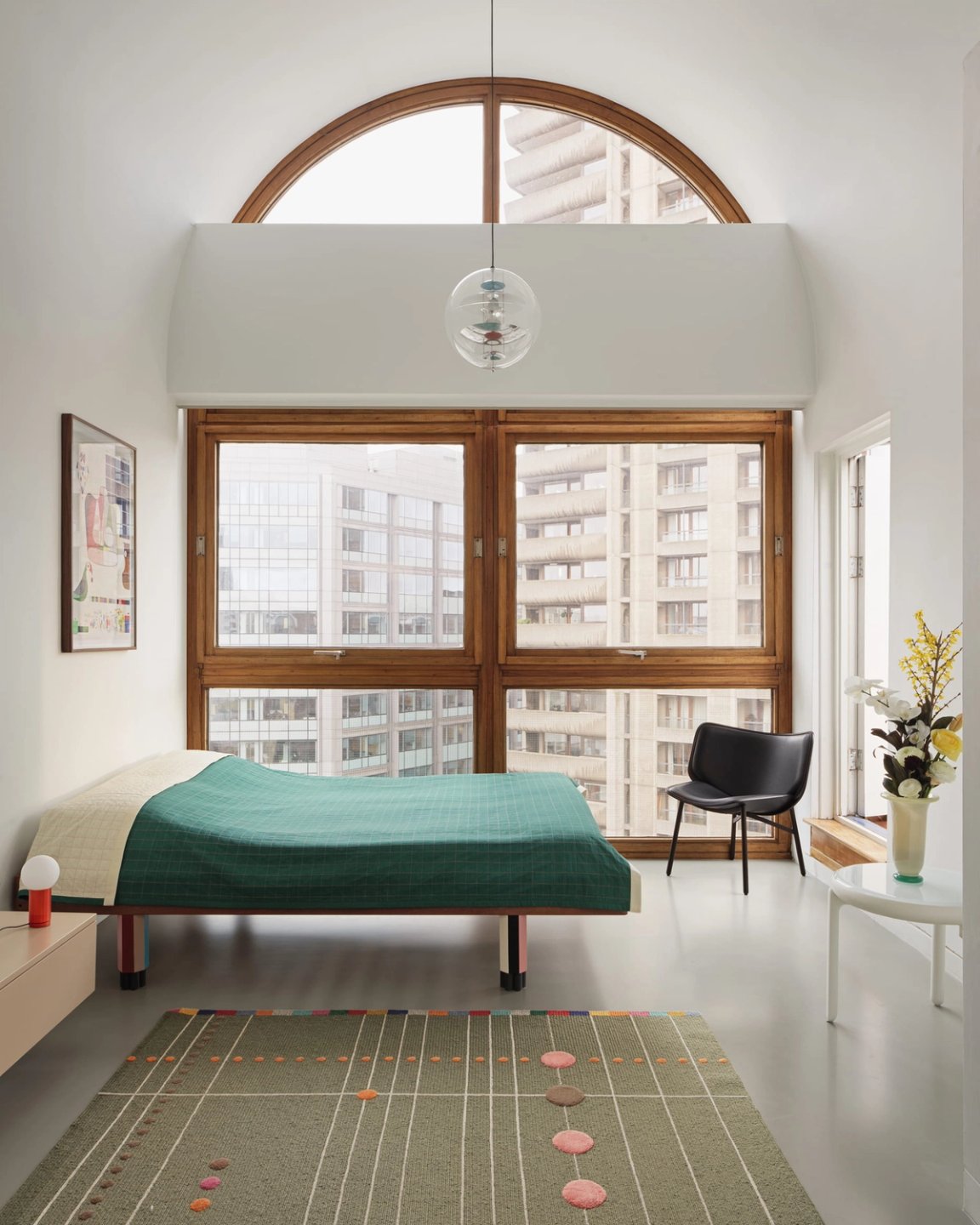
Bedroom in the Barbican
This way of thinking seems to connect Dori to earlier projects by the studio. Although very different formally, Principessa and Object of Devotion also treat the bed as something more than a place to sleep.
In many of our projects, we perceive the surface of the bed as a place where ideas can unfold. Principessa was one of the first projects we designed for Moroso, where we explored this very directly. Inspired by The Princess and the Pea by Hans Christian Andersen, eleven mattresses covered in different fabrics are stacked one upon another. The bed becomes a place of fantasy.
The top layer is covered with a custom jacquard depicting objects belonging to an irreverent modern princess preparing to go out. Sunglasses, jewellery, a hairdryer and a cocktail glass are scattered across the surface. I like the idea that everyday objects carry meaning and that the bed becomes a reflection on the rituals of dressing and adornment.2
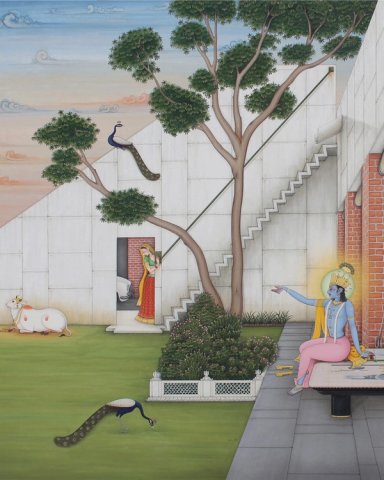
Object of Devotion, designed for Galerie Kreo, approached the bed differently. It emerged from our dialogue with Le Corbusier’s architecture in Chandigarh and Ahmedabad, and from a desire to respond to those buildings through textile, pattern and form. Recognisable architectural elements were woven into the jacquard cover, allowing the daybed to carry traces of the buildings that inspired it.
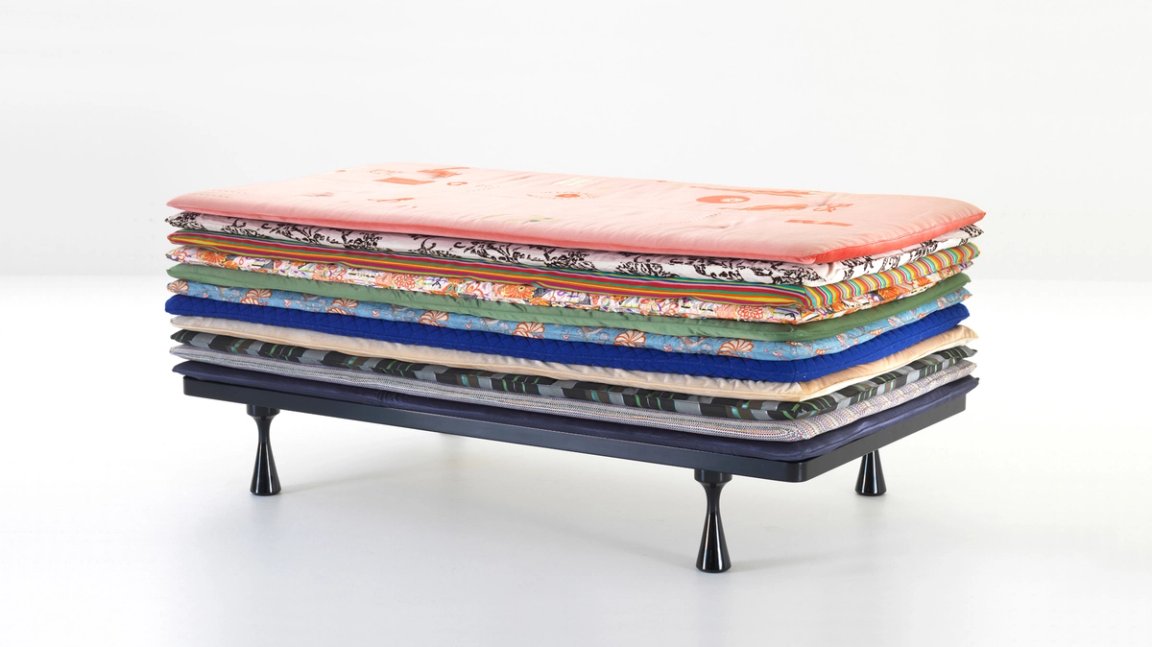
Principessa Daybed
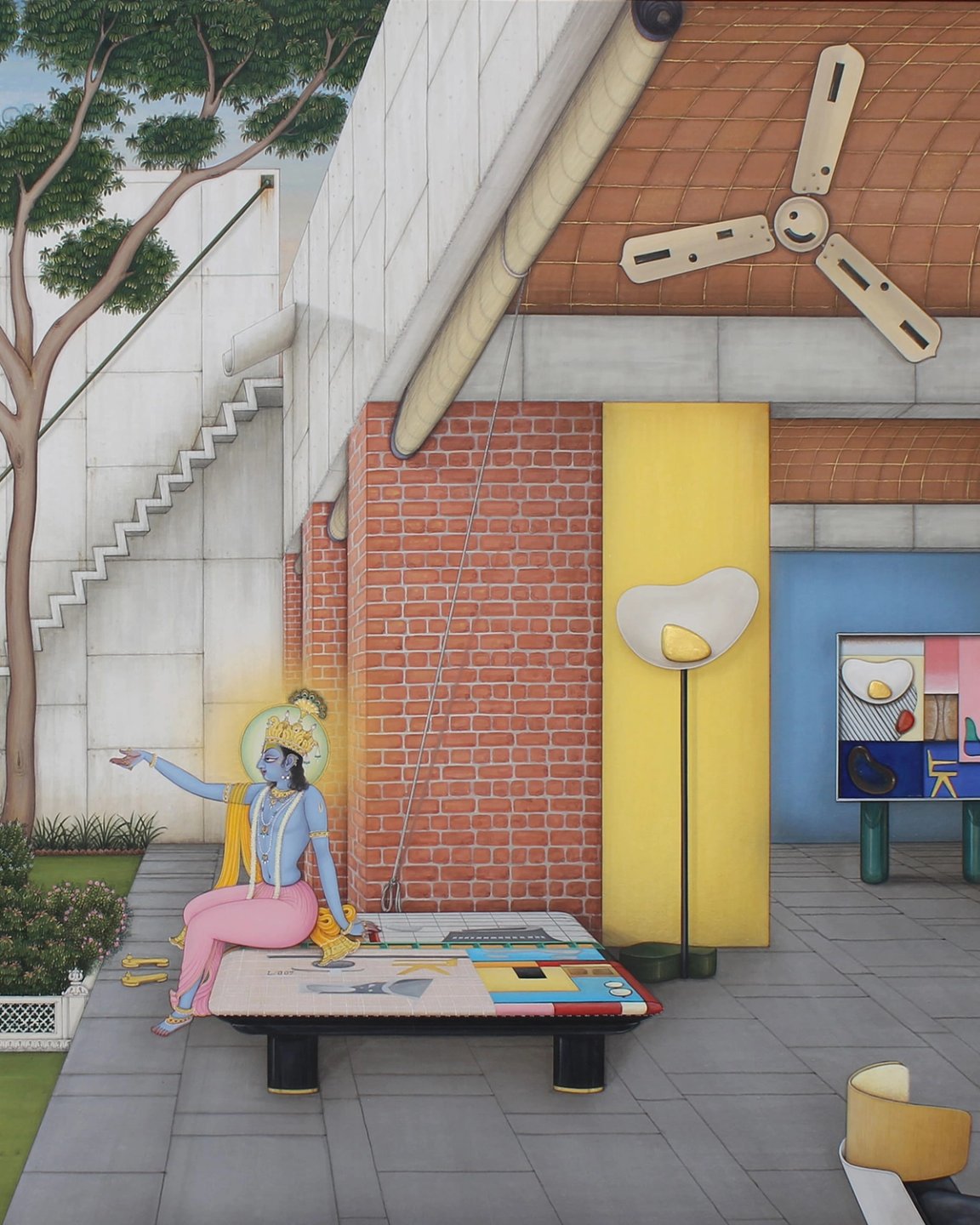
Villa Sarabhai
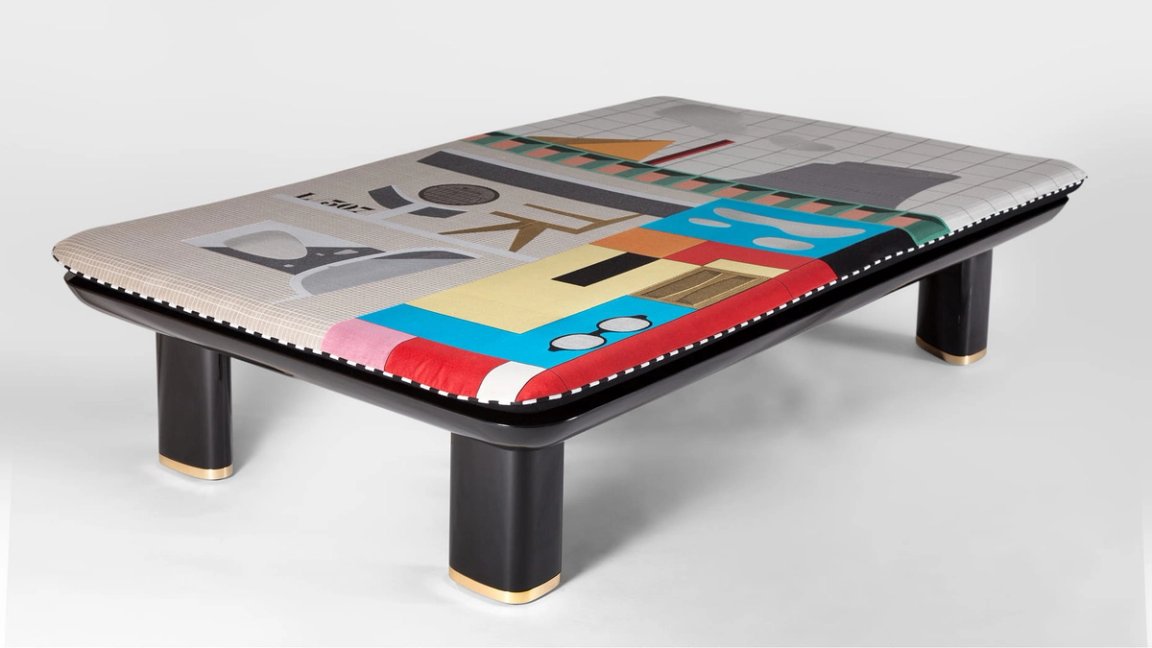
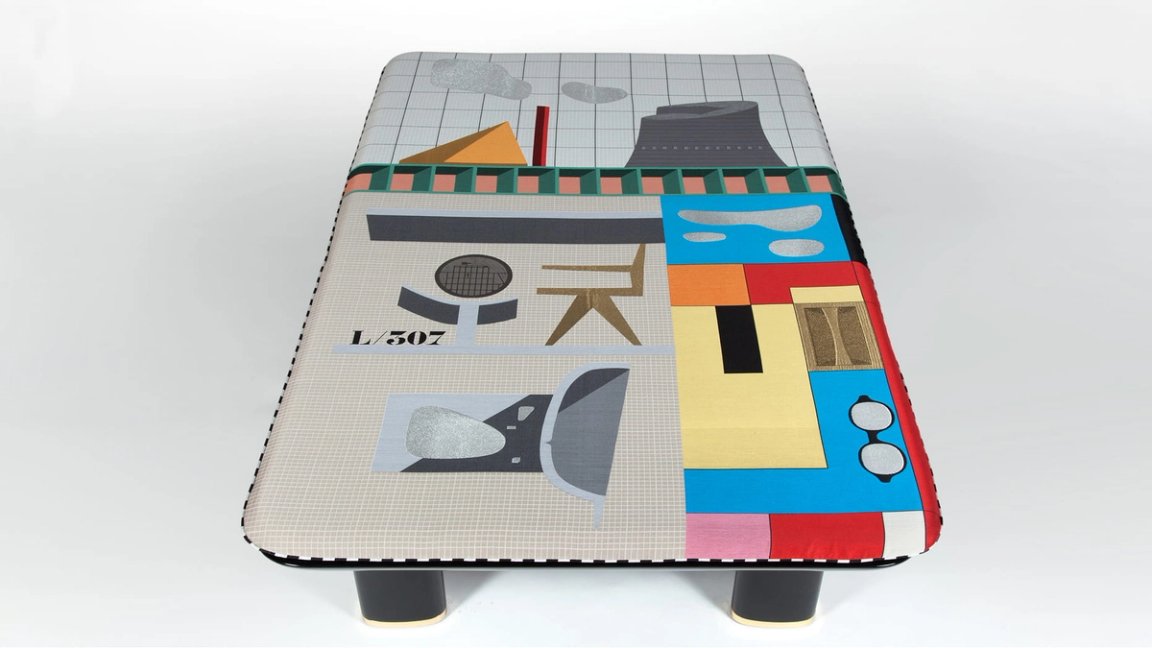
Object of Devotion Daybed
Coming back to Dori, this textile collection feels rooted in a tradition of making and in a deep understanding of the material itself, where pattern is integral to the surface.
The project began when Mette Hay visited our studio in London. I was showing her my textile explorations when she noticed the embroidered pattern on the reverse side of one design. She immediately said, “Here we have a bedspread.” It was such an instinctive observation, but it opened up the entire project.
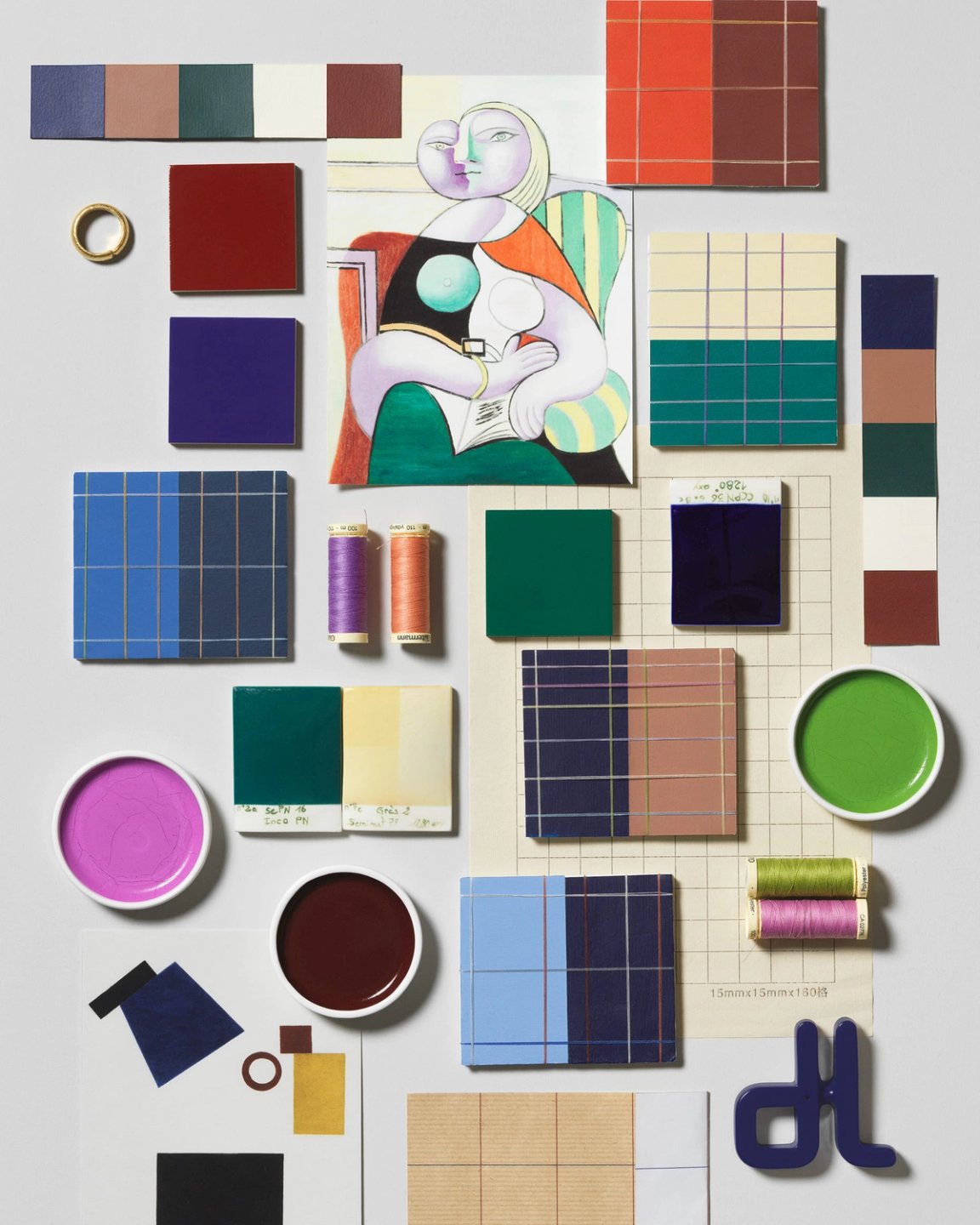
Colour Palette
Tell me more about the name Dori and how you developed the textile.
Dori literally means “thread” in Hindi, but in poetry and songs it is often used to describe an emotional attachment between people. Dori is an embroidered cotton using contrasting thread colours in a check pattern, giving it a subtle quilted texture.
To arrive at the colours, I made numerous samples with thread wound on two tones. Each design has four colours that need to work together, and the challenge was balancing the intensity of the fine thread colours. I love the complexity of this process, which can only be achieved through making.
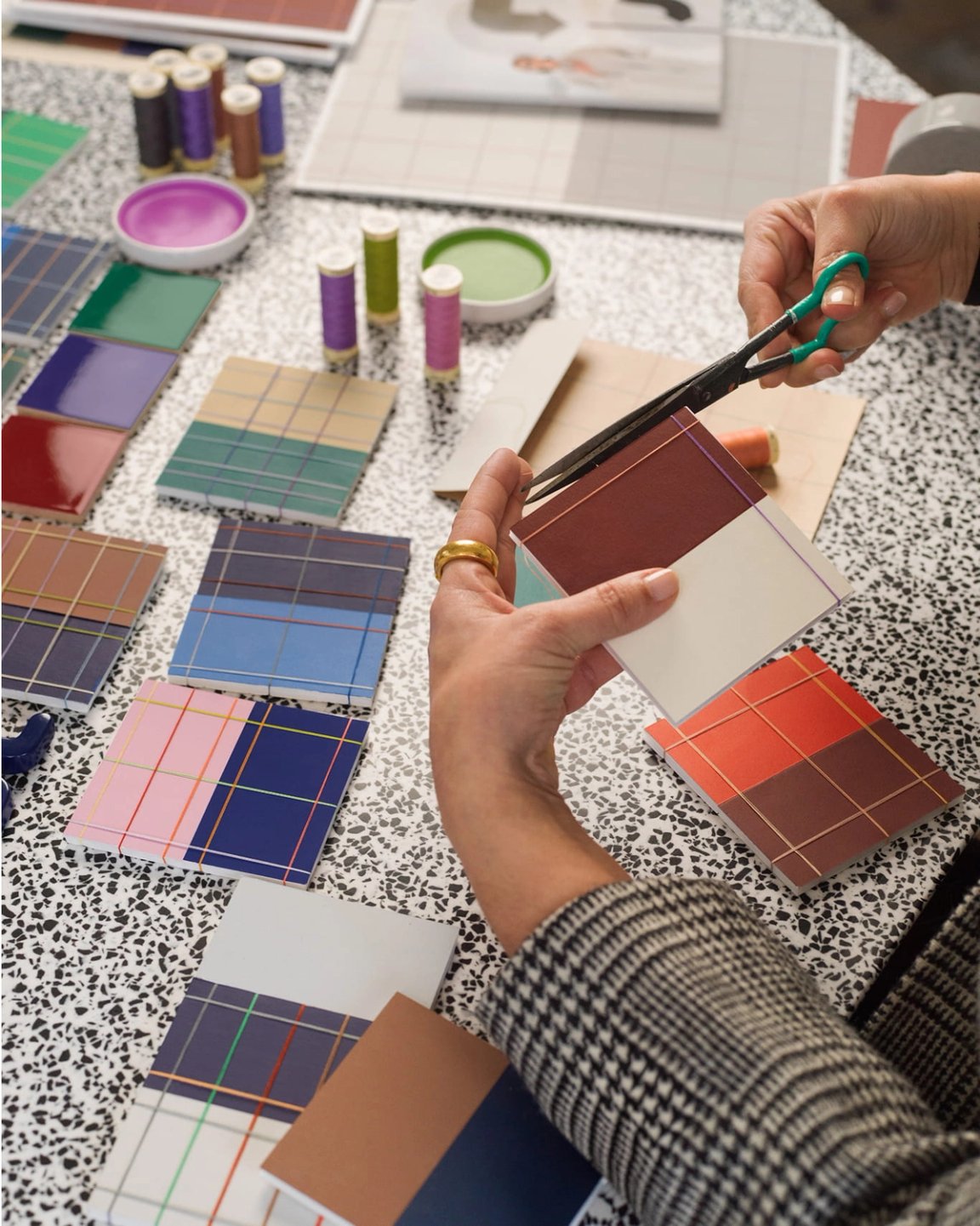
Colour studies
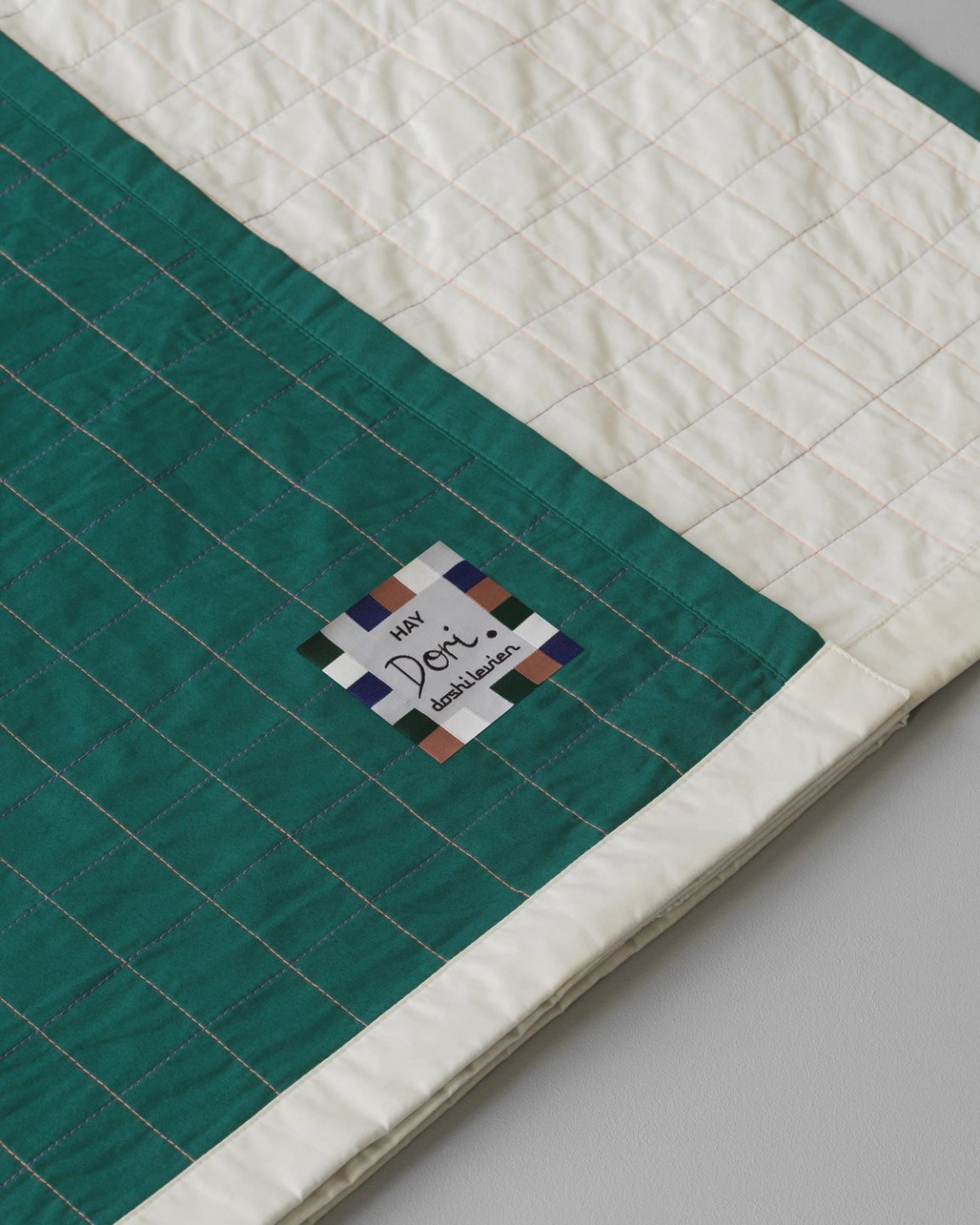
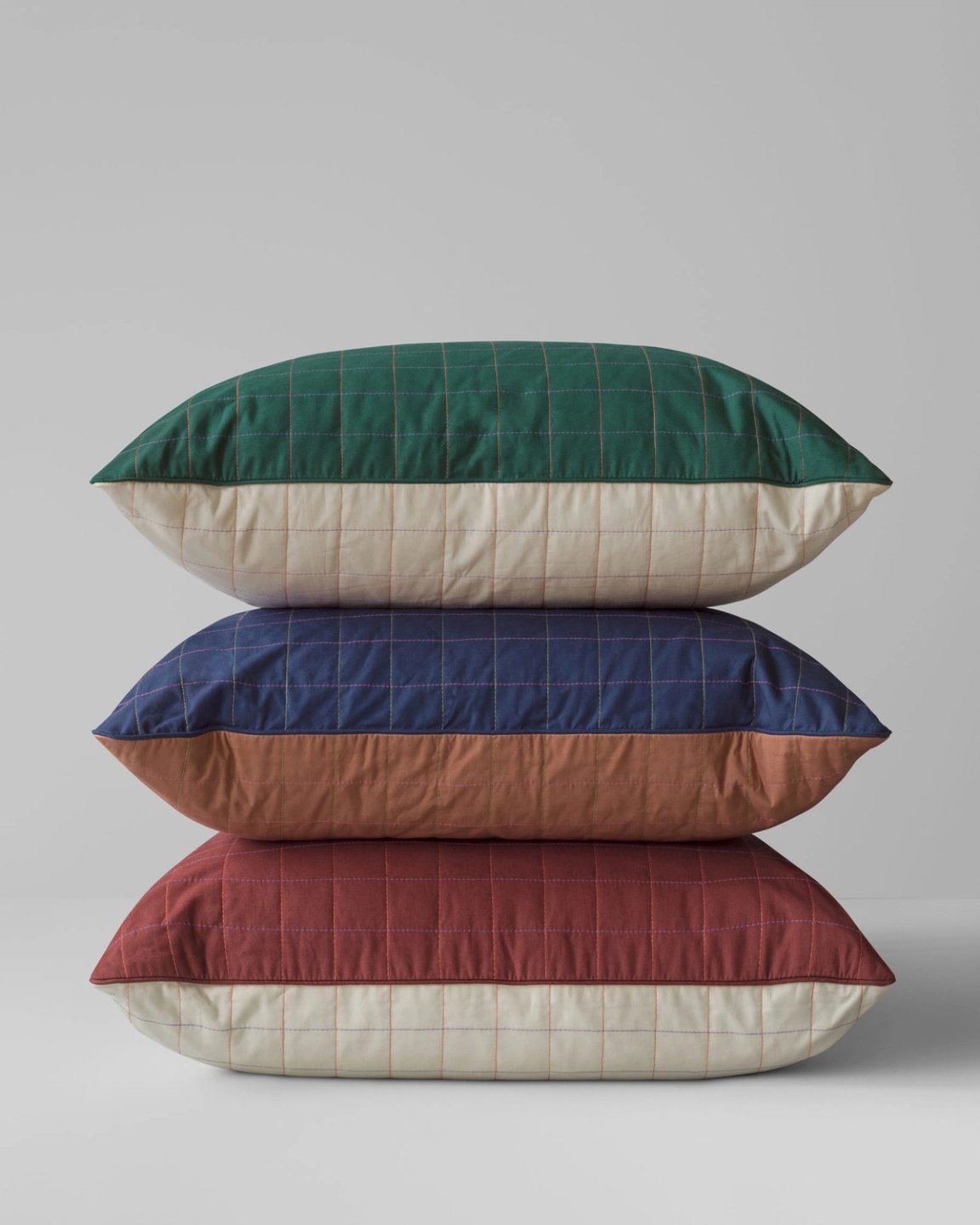
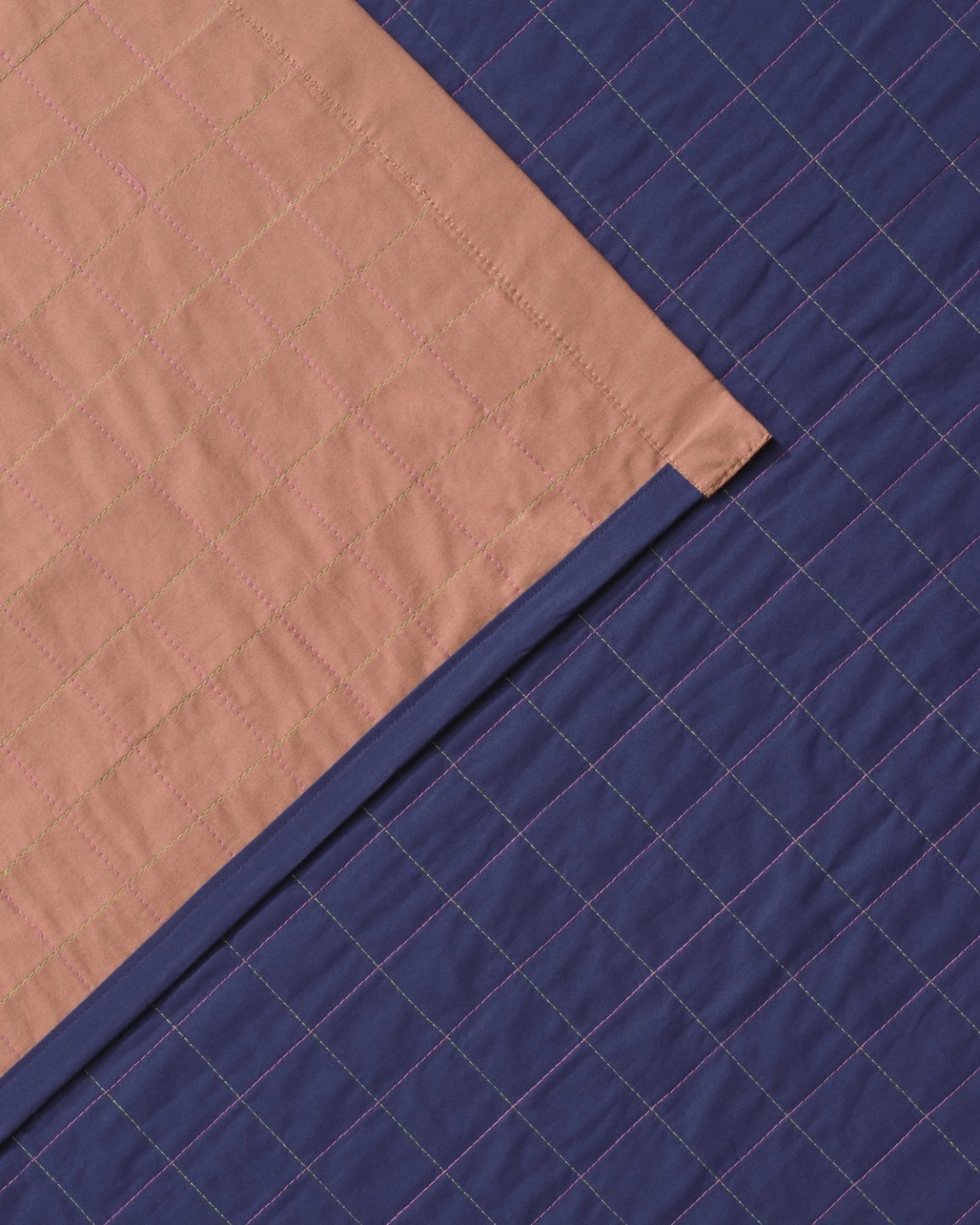
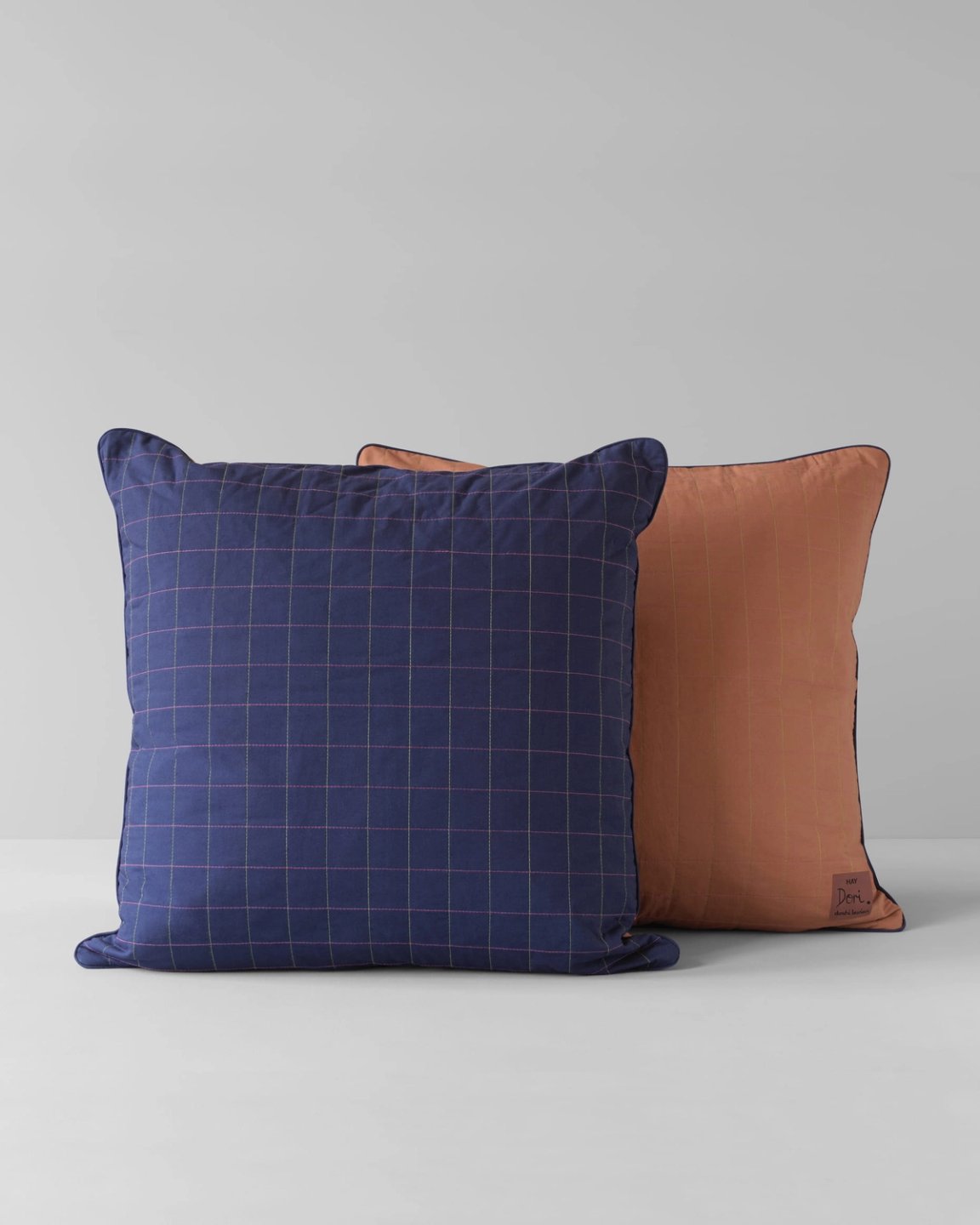
Dori cushions and bedspreads
Looking across these three projects, they all seem to invite participation. They ask us to imagine, interpret or complete them through use.
Yes, completely. What I like about Dori is how it brings these ideas into everyday life. It is a very accessible object, yet it still carries a sense of care. For me, design encourages us to engage with our surroundings more thoughtfully. Making the bed may seem like a very ordinary task, but I think there is something meaningful in beginning the day by shaping your environment with care.