Concrete Values
.webp?w=1152&q=85&fit=max&auto=format)
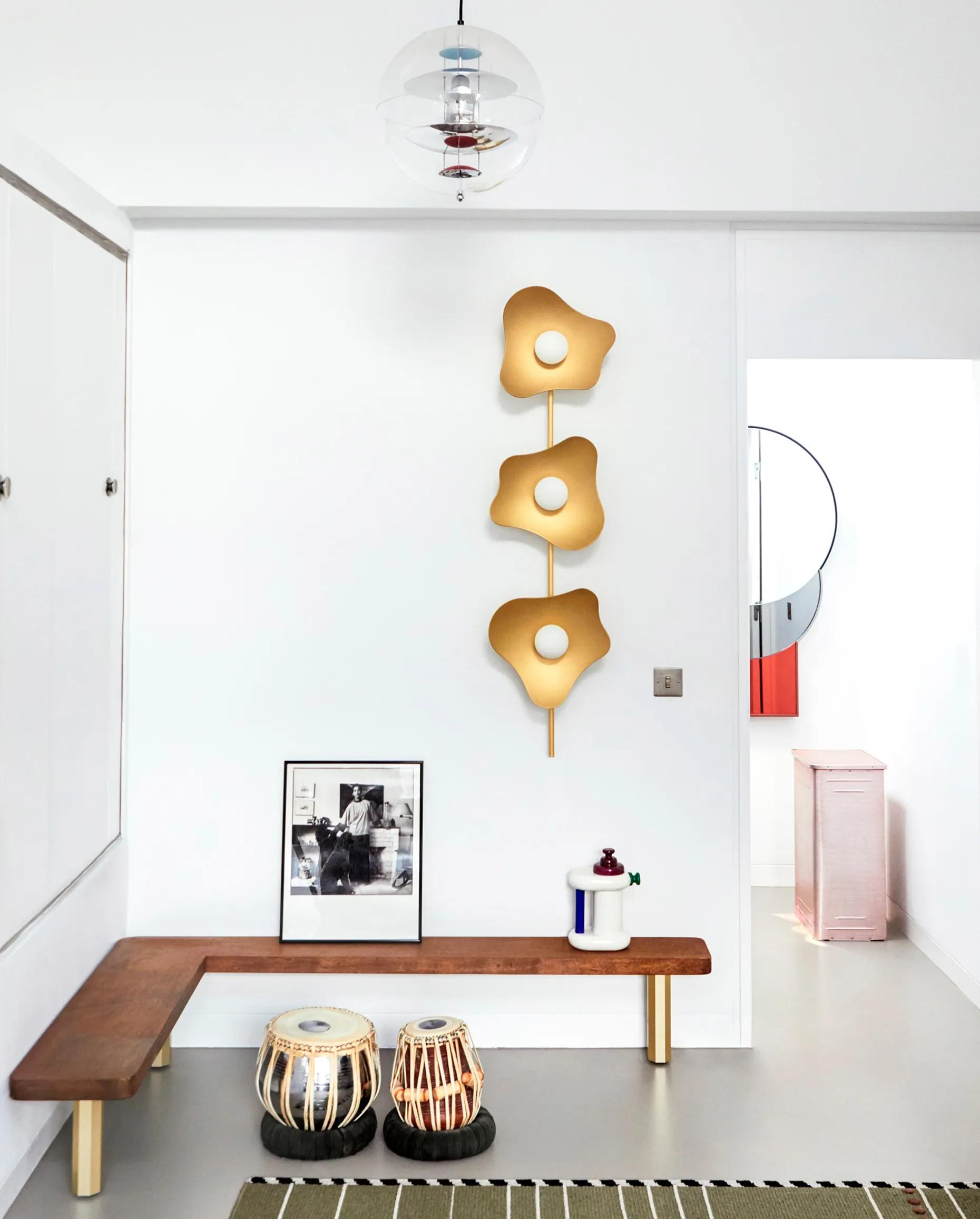
Triple Sconce light
London designers Nipa Doshi and Jonathan Levien's Barbican apartment brings Brutalist architecture to life. Nonie Niesewand sneaks a first look
"The Barbican is a bit of a maze," cautions designer Nipa Doshi ahead of our interview. She should know, since it's also her home. Built in the 1970s, the multi-layered complex, which houses over 2,000 apartments alongside art galleries, cinemas, a library, theatre and concert hall, remains London's best example of Brutalist architecture. On a grey day, its concrete towers can be forbidding. Ziggurat teeth on balconies reach for the sky, and walls hammered by hand with picks to resemble the moon's pitted surface seem straight out of a sci-fi movie.
Designers Nipa Doshi and Jonathan Levien, whose hero Le Corbusier coined the Brutalist label with his bare concrete (or Béton brut) buildings, love the modernist vibe of the Barbican. "Outside, the Barbican looks uniform, and inside the interlocking volumes are so intelligently designed," adds Levien about their home.
- Nipa Doshi
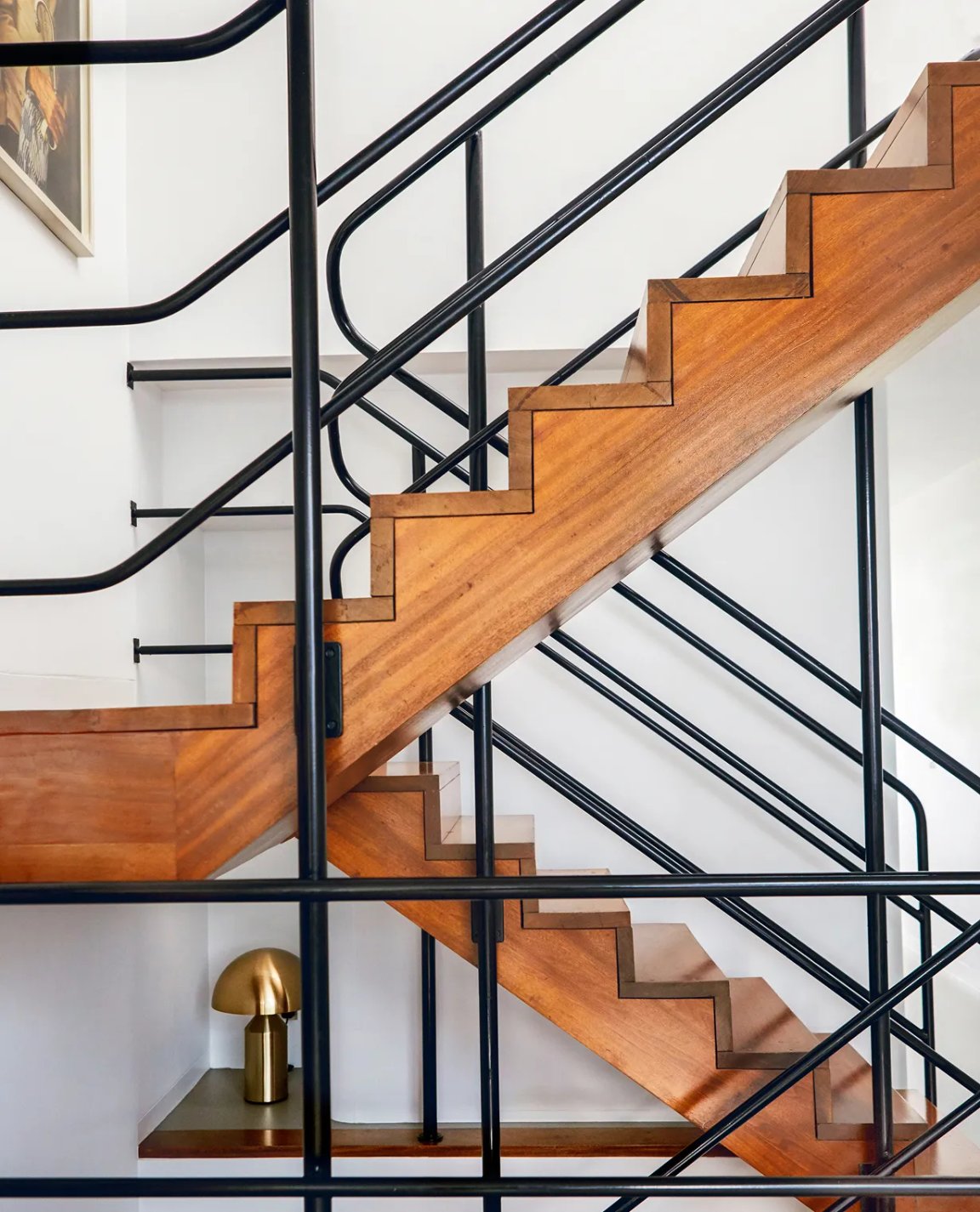
Staircase
.webp?w=1152&q=85&fit=max&auto=format)
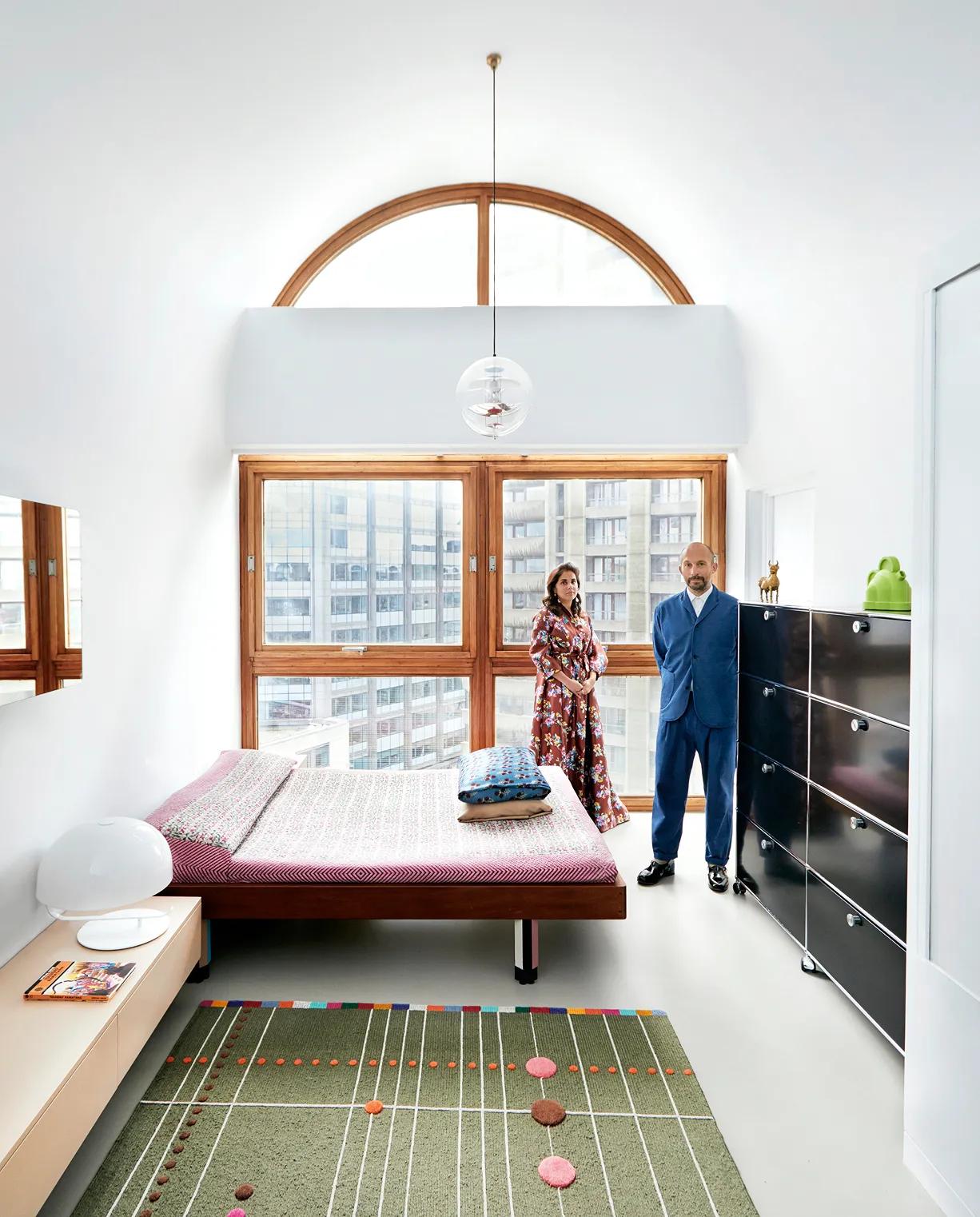
Nipa and Jonathan in their Barbican flat
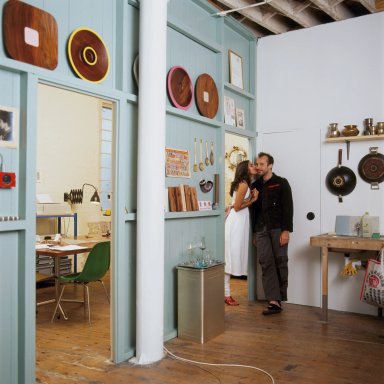
Since 2017, the couple and their 10-year-old son, Rahul, live in a triplex apartment bathed in natural light in one of the lower blocks, just six floors above the gardens. The walls and ceilings are white, floors silvery silicone, and shoes, in true Indian style, are left at the front door. It’s like stepping into a gallery of contemporary design furnished with a mix of mid-last-century modern classics and some of their own works. “Inside our triplex, there are no doors or walls defining different spaces, yet you have privacy and noise control as each floor has its dedicated function,” says Levien about their fluid living space. “The stairs make tremendous vertical connections across three floors of open plan living.”
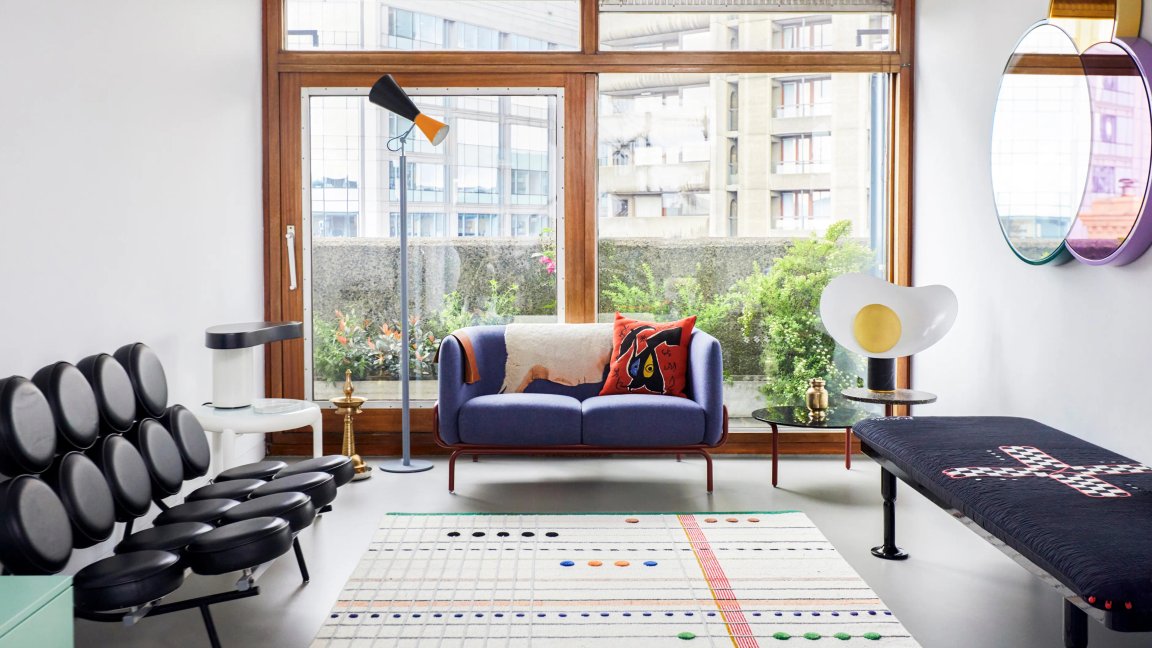
Living room
Laws of Attraction
While Levien fell in love with its intelligent design, Doshi was drawn to the place for reasons driven more by the heart than the head. “We first saw the Barbican while cycling past it from Spitalfields in East London, where we lived in a freezing warehouse above our studio,” she tells me. “We felt there was a sense of community. Also, I like living in the heart of a city. Rather than having a garden, I prefer being close to a cinema, theatre and places to eat. Maybe it has something to do with growing up with my Gujarati family in Mumbai and later as a student in the old walled city in Ahmedabad.” Doshi’s dual identity is obvious in the way she dresses. Today she’s in a Kashmir Loom black and red blouse, a swirling Raf Simons skirt and Ferragamo heels.
India is a daily reminder in the couple’s lives. Both study Hindustani music at The Bhavan school in West Kensington-Doshi plays the harmonium to accompany her Indian classical songs, while Levien is now a practised hand on the tabla. Their shared journey has only grown richer since they met at the Royal College of Art in 1997. By the end of their university years, they knew they liked being and working together. Levien is candid about his collaborator wife: “Nipa has different skills and comes from a different cultural background. With my European design training and craft, we knew that to combine our worlds would be good.”
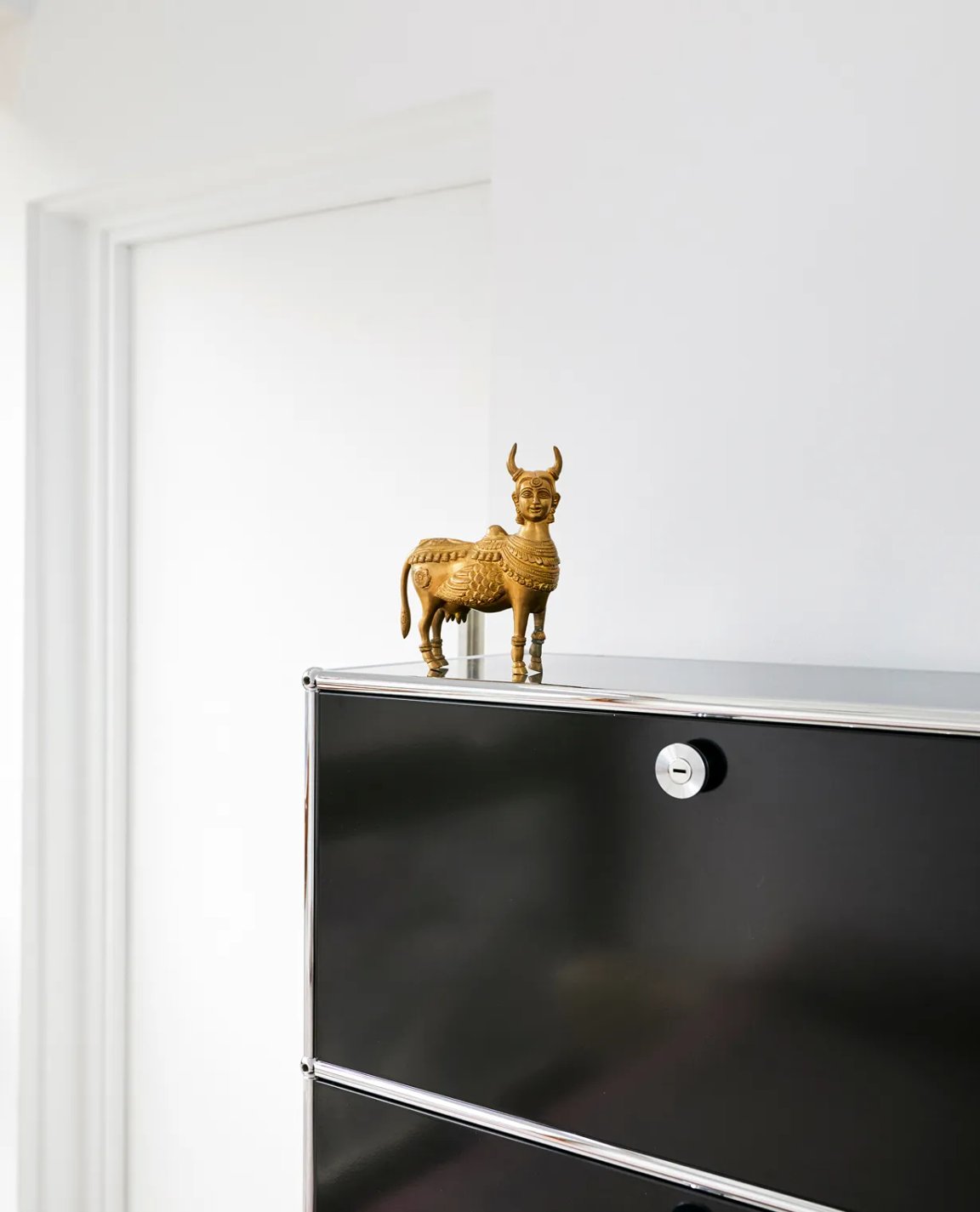
Kamadhenu in the bedroom
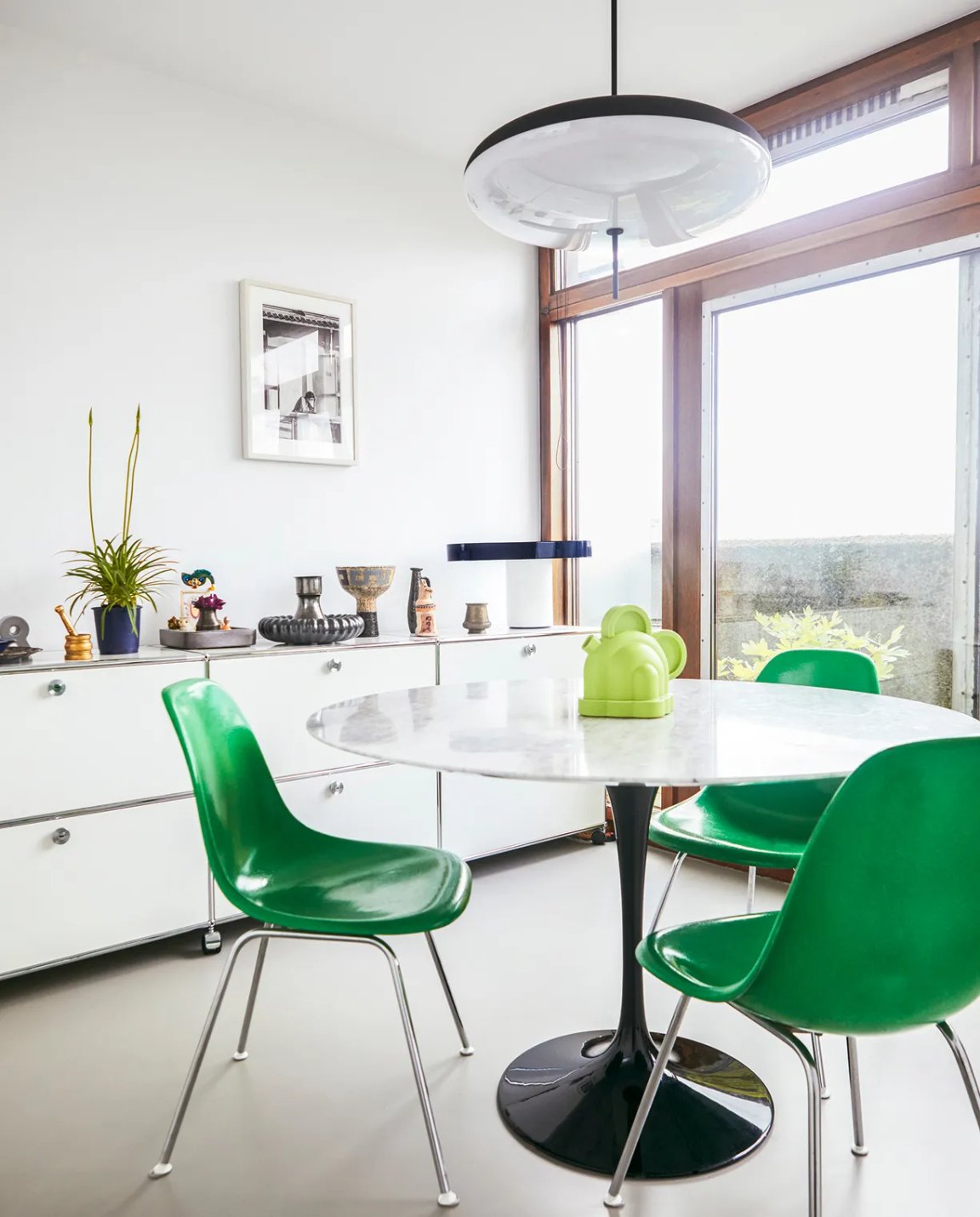
Kitchen-diner
The World at Home
There is evidence to prove that Doshi Levien was destined to be a winning combination – the pair started out in 2000, and within a year Tom Dixon commissioned them to design tableware and cutlery for Habitat. Doshi’s scholarly research into materials and painterly drawings before prototyping sum up the spirit of every project. On the other hand, even if rooted in industrial design, Levien’s problem-solving shows the sensuality of a maker’s hand, and a deep understanding of materials as different as ceramics for Tefal, tagine pots, or ice cream sculpted like the moon for Häagen-Dazs. Showcased at events from Milan to Miami and Dubai to Hong Kong, Doshi Levien designs stand out as they stretch materials to their limits. For Spanish brand Kettal’s Cala collection, knitted ropes cling to make tensile high-backed sofas, while for Moroso’s Armada chair billowing sails push the boundaries of upholstery. Designing for international brands like B&B Italia, Swarovski, BD Barcelona, Nanimarquina, Kvadrat and Galerie Kreo in Paris, 2019 is the first time they have developed their own collection with the Earth to Sky lighting line, which now highlights their own home.
- Nipa Doshi
Their apartment looks like an extension of their studio. With its all-white walls and stairway flowing like a stream, Doshi Levien’s geometric rugs anchor the space furnished with modern design objects. The George Nelson black leather Marshmallow sofa (1951) was exchanged for a lecture fee at Herman Miller, while they sit on bright green Eames chairs and eat at Eero Saarinen’s Tulip table. “We’re not making a design statement, just living with things we love. Every piece here means something to us,” says Doshi.
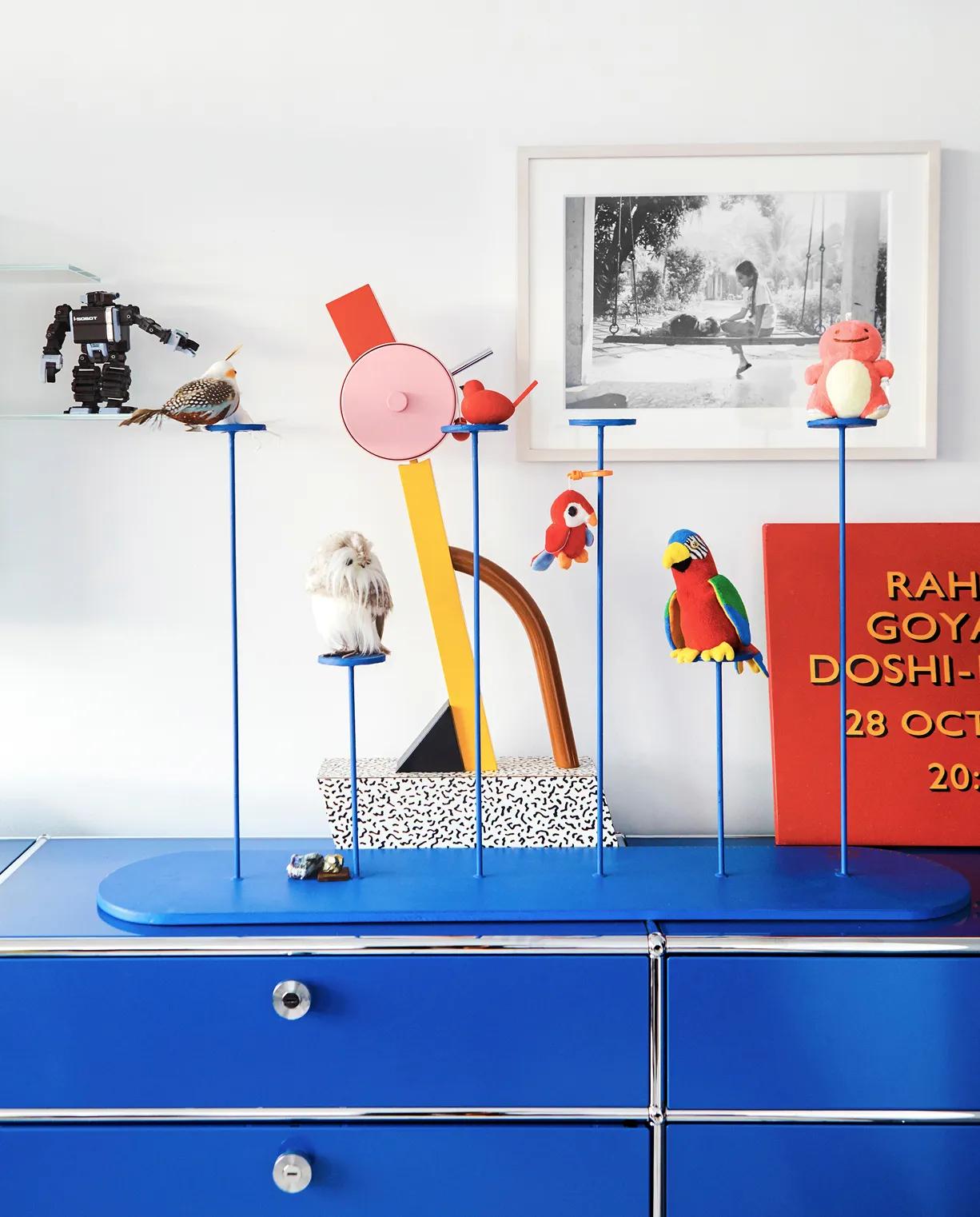
Quirky accessories add character to their carefully curated collection – some kitsch, like the Japanese pachinko machine, some sentimental, like their son Rahul’s handcrafted ceramic Egyptian Anubis dog. Other valuables include the Eames plywood panelled ESU storage (1949) and the Ettore Sottsass ceramic teapot and his Tahiti light as well as Swedish ceramics from Mari Simmulson. Since Doshi visits her family in India several times a year, household objects like a bronze lota, brass pestle and mortar and steel thalis are also in the mix. “India doesn't have a design tradition like the Western model,” she says. “Design is represented more by craftsmanship developed over centuries.”
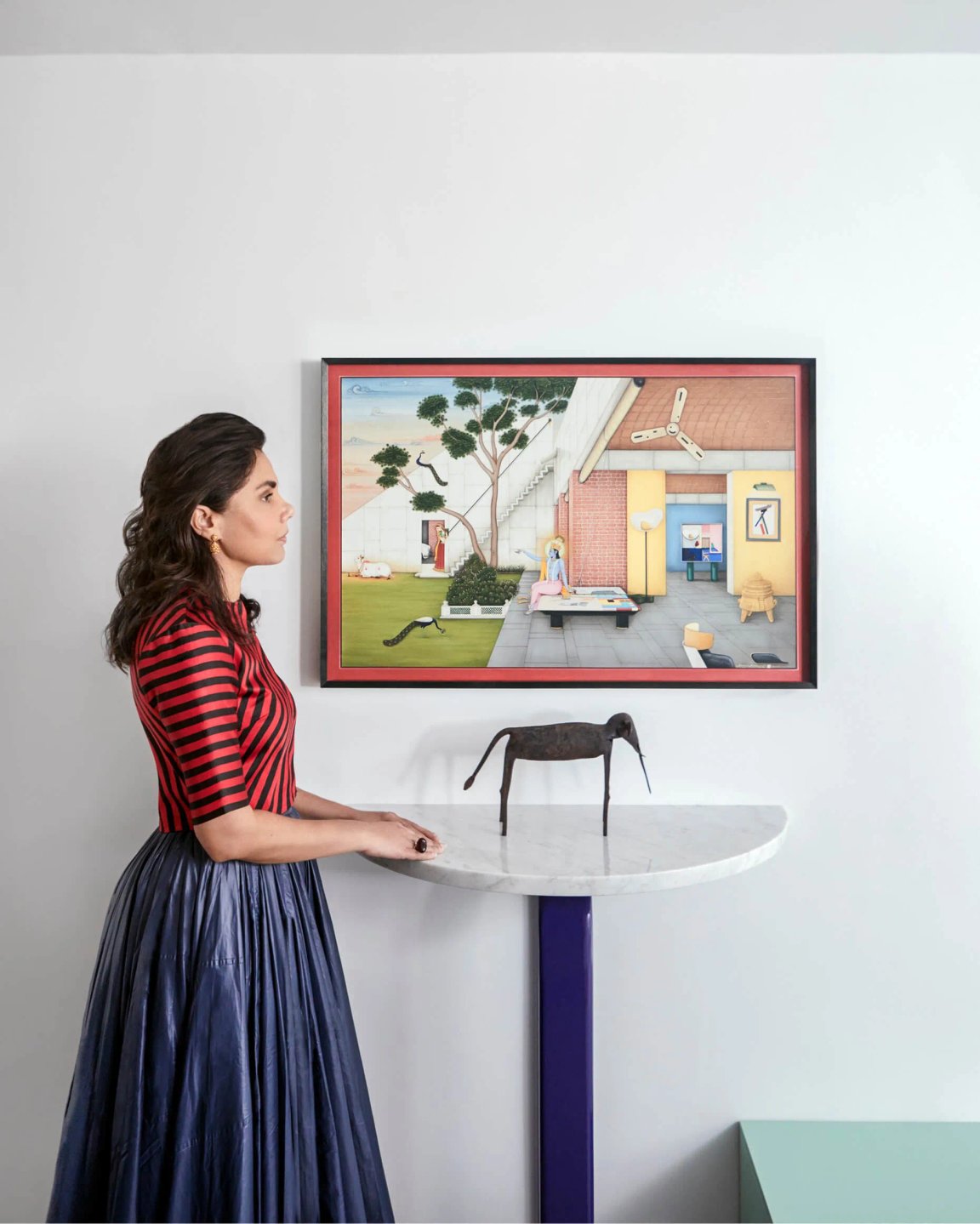
Nipa Doshi
.webp?w=1152&q=85&fit=max&auto=format)
Tahiti light and bird collection
Freeze Frame
Even the walls transport you to India with black and white photographs of everyday Indian life with children swinging and Mumbai’s Marine Drive captured by star photographers Dayanita Singh and Sooni Taraporevala. But the eye cannot miss their most recent acquisition – a painting they commissioned from Shammi Bannu, a seventh-generation Indian miniature artist based in Jaipur.
The painting is the most intimate portrait of their shared interests and an allegory of their deeply held beliefs. “We met with Shammi in his studio with no expectations but to see beautiful paintings,” says Levien. Inspired by the imaginative freedom of his work, they saw the possibility of a painting that combined narratives from different time periods.
In the painting, made using colours acquired from plants and minerals, three time zones co-exist. Celebrating the 10th to 14th centuries of Hindu mythology is Krishna from the poetic Adi Kaal period, while mid-last-century modernism pays homage to Le Corbusier's Villa Sarabhai in Ahmedabad, which is fictionally furnished with Doshi Levien’s contemporary designs. “Nipa and I share a utopian ideal of bringing together different worlds and influences in our work, so this was really a chance to express that in a pure way with an accomplished artist,” sums up Levien, explaining his romantic gesture to his partner in life and design.
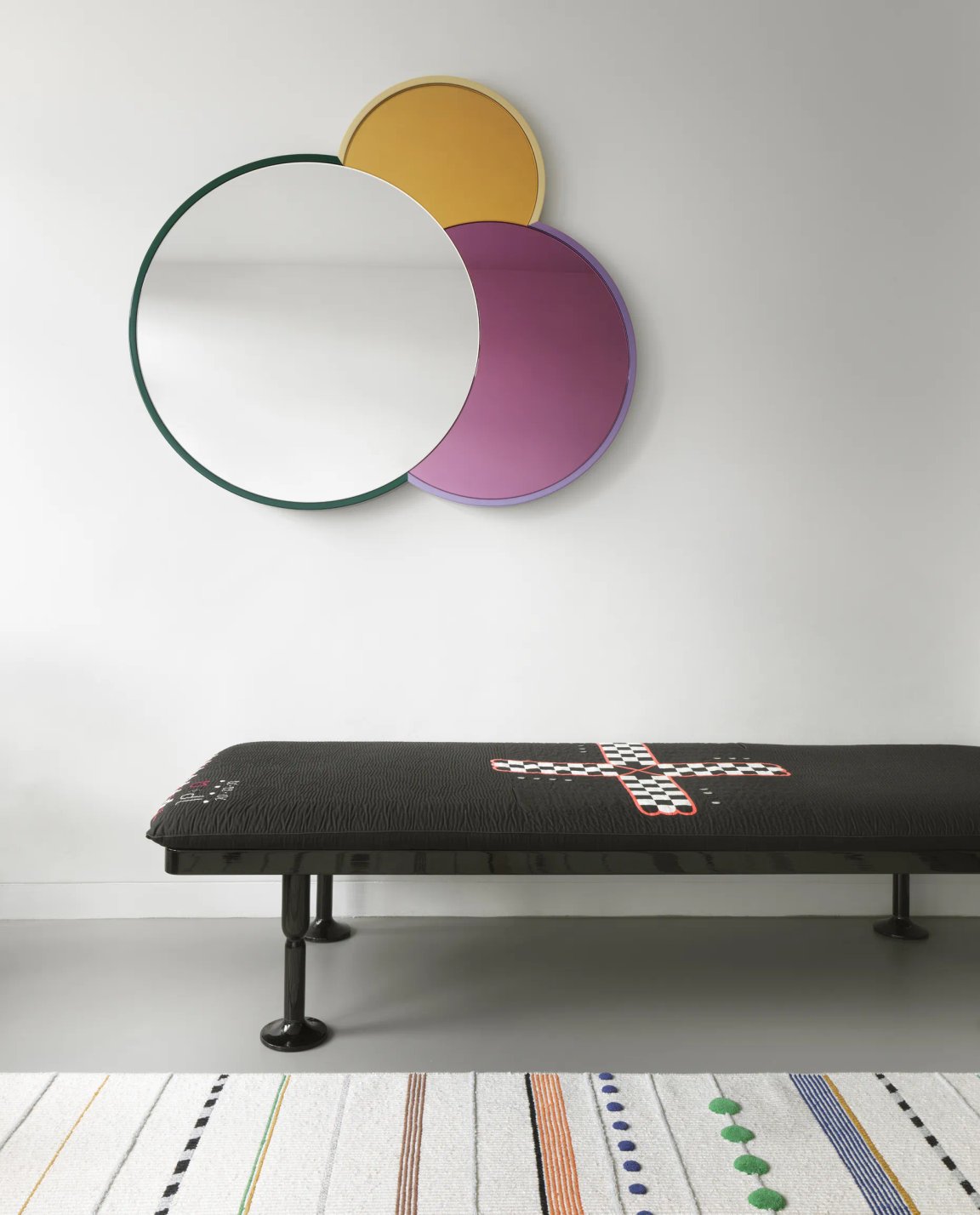
Squarable Lune mirror for Galerie Kreo

.webp?w=384&q=85&fit=max&auto=format)